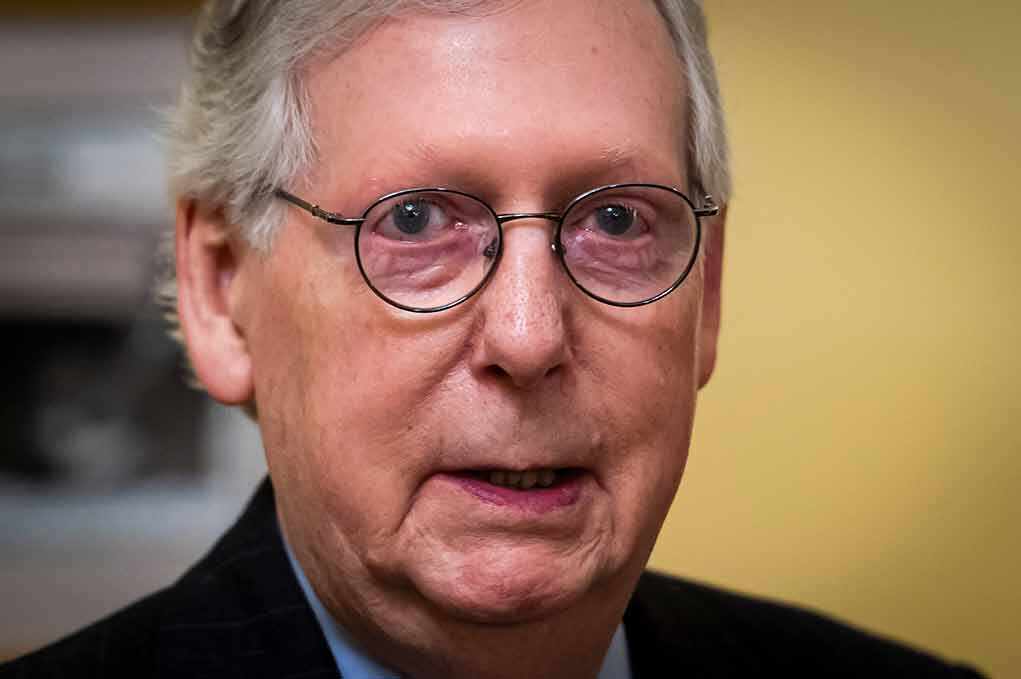
One day after a triumphant return to the Senate floor, Mitch McConnell touched off a political storm with his first move back.
Story Snapshot
- McConnell returned to the Senate after a months-long medical absence following a June fall.
- He announced he would cast his first vote since June and appeared on the floor Sept. 14.
- Coverage noted visible frailty and tight staff control on access and video.
- The quick return and next-day maneuver sparked partisan outrage and process debates.
A documented return after a summer off the floor
Senate Republican Leader Mitch McConnell stepped back onto the Senate floor on Sept. 14, his first public floor appearance since a June hospitalization after a bad fall and pneumonia. He posted that he would cast his first vote since the incident and said he looked forward to seeing colleagues again. National outlets recorded the scene, with photo desks placing him at the Capitol and describing his first public appearance in more than 90 days. ABC News framed it plainly: back on the floor after hospitalization.
NPR summarized the timeline cleanly: hospitalization in mid-June, rehab through the summer, and a Monday return that ended the long absence. His office had said in August that he left a rehabilitation center and would keep an intensive physical therapy schedule at home, which fits the ramp to a mid-September reentry. That arc tracks with the Senate’s calendar. Lawmakers reconvened after summer recess, setting a natural point for a comeback already signaled in coverage and planning chatter.
Health, optics, and the staff-controlled camera
Reporters noted strain in his gait and an older man’s careful pace, which does not dismiss the return but colors the picture of capacity. ABC News also pointed to limited visual access, saying staff did not allow broad video capture, which heightened curiosity about his condition and stamina. That does not change the base facts: he showed up, he engaged, and he said he would vote. One brief caveat applies in any such situation: an appearance and a pledge do not prove an immediate full workload.
Conservatives tend to prize duty, steadiness, and showing up when work calls. By that lens, a leader who returns when the chamber gavels in earns credit. At the same time, transparency matters. If staff constrain cameras too tightly, it invites noise that drowns out the simple truth of attendance. The better path is clear schedules, clear access, and clear statements, so voters judge by deeds, not rumors. That is common sense and good stewardship.
The next-day spark: why tempers flared fast
The uproar a day after his floor return was not about whether he came back. It centered on what he chose to do first. Senate leaders can trigger votes, hold them, or align floor time with strategy. When a leader reenters and quickly flexes process muscle, the other side often cries foul. That is Washington muscle memory. One camp reads it as strength; the other calls it sharp elbows. Neither reaction changes the core record of his return and vote pledge.
Process fights land harder now because margins are thin and calendars are tight. One absent member can stall a committee markup or swing a motion. That is why long medical breaks feed bigger conflicts than they used to. When a leader reappears and acts fast, he steps on pressure points that built up for months. The speed looks abrupt. It also looks like a bid to regain the wheel before the lane closes.
The deeper pattern: an aging Senate with no fitness rules
McConnell’s arc mirrors a recurring Capitol story. Congress has no formal fitness-for-duty system, no mandatory retirement age, and few health disclosure rules. Senior members often take long medical leaves and then return to work when ready. Offices keep services going in the meantime. Analysts have tracked these cycles for years and tied them to incumbency benefits, member age, and a culture that resists forced exits. The institution absorbs the strain but pays in missed votes and constant speculation.
Mitch McConnell Makes Long-Awaited Return to Capitol Hill
After nearly three months out of the public eye, 84-year-old Sen. Mitch McConnell returned to the U.S. Senate on September 14, marking his first public appearance since a fall at his Washington home in June led to… pic.twitter.com/5GK3ZVOs8E
— Mighty News (@Mighty__News) September 16, 2026
That is why this week felt familiar. A documented return drew real interest. A rapid tactical move drew fire. Then the bigger debate restarted about age, health, and rules. If Congress wants fewer drama spikes, it can set bright lines: temporary disability procedures, basic disclosure norms with privacy safeguards, and defined proxy tools for short absences. Those reforms protect voters first. They also protect members, by swapping rumor mills for rules and results.
Sources:
redstate.com, npr.org, 6abc.com, nypost.com, nytimes.com, abcnews.com, thehill.com
© targetliberty.org 2026. All rights reserved.