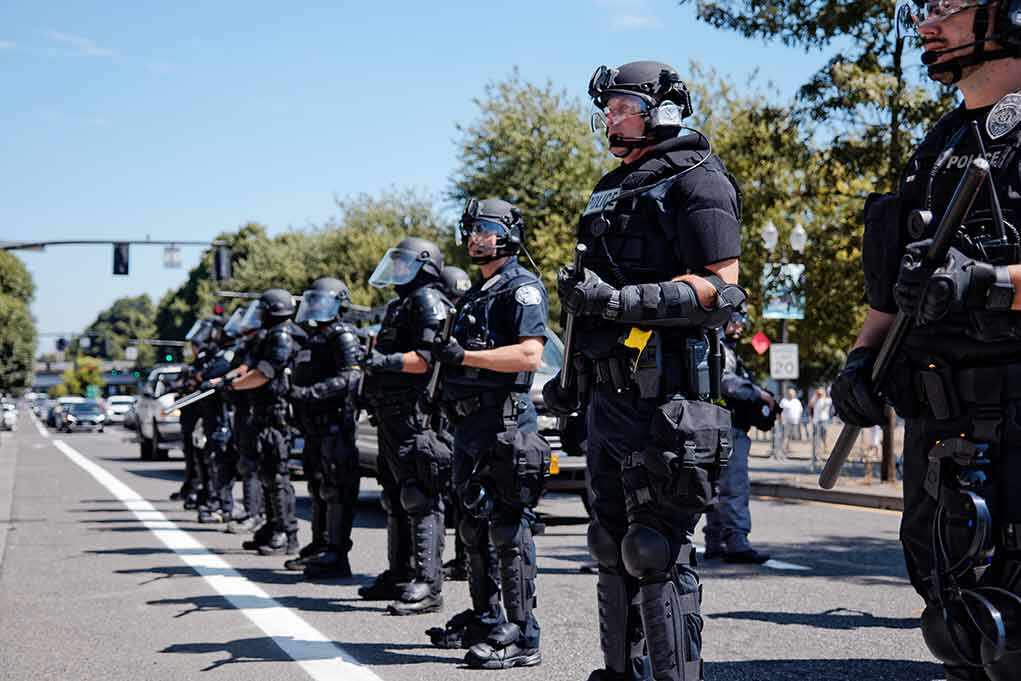
France moved to clamp down on two nights of violent unrest by ordering targeted curfews in northern cities.
Story Snapshot
- The prime minister told local officials to impose “local and partial” night curfews after looting and arson.
- The goal is to stop more rioting and protect businesses without a blanket nationwide shutdown.
- The government said a state of emergency remains an option but is not the first step.
- At least one northern city, Denain, set a 9 p.m. to 6 a.m. curfew for a full week.
Targeted Curfews After a Weekend of Fire and Looting
Prime Minister Sébastien Lecornu directed local authorities to set up night curfews in hard-hit areas after a weekend of violence across France. Reports described burned town halls, smashed storefronts, and waves of looting. Lecornu stressed the curfews would be “local and partial,” not a blanket order over the capital or the whole country. He framed the move as a quick tool to cool streets and protect businesses as night fell again on tense neighborhoods.
Lecornu’s order came with a clear aim: stop the nightly cycle of crowds, break-ins, and fires before it spreads. He said police and mayors would tailor hours and zones to local needs after fast consultations. Reporters noted that the government did not list every city or exact map at the time of the call. That left local leaders to announce details later in the day as they weighed risks and police capacity on the ground.
Keeping It Local, Holding Back Emergency Powers
The government drew a sharp line between these curfews and a national state of emergency. Lecornu said emergency powers are available “if needed,” but added that local curfews fit the moment better than sweeping national tools. That message signals a preference for the smallest rule needed to restore order, and it leaves room to adjust quickly as conditions shift in each city and suburb through the week.
The limited design sets a contrast with France’s 2005 approach, when the government used a 1955 emergency law to enable broad measures, including local curfews, bans on assemblies, and expanded police powers. That precedent shows curfews can be part of a rapid response to urban unrest. It also shows how fast a targeted step can pair with wider authority if violence escalates and spreads to new areas.
What Northern Cities Are Doing on the Ground
Local leaders in the north began to act. In Denain, Mayor Anne-Lise Dufour-Tonini announced a nightly curfew for both adults and minors from 9 p.m. to 6 a.m., running from October 18 to October 25. The order sets clear hours and signals that city halls are ready to use tight windows to make streets safer at night. This kind of defined, short-duration step fits the national call for “partial” curfews tied to specific trouble zones.
In a departure from promises made yesterday by President Macron not to impose curfew, the 🇫🇷French Prime Minister Sébastien Lecornu today announced “limited" and "localised" curfews in response to the nationwide riots.
The formerly know “student protests” escalated the last… pic.twitter.com/A04loew0jI
— Dovydas Vitkauskas (@Dovydas44444) October 19, 2026
Other cities prepared bans on gatherings or similar limits to support police. The point is to shrink the space and time for mobs to form after dark, when looting and arson most often hit shops and public buildings. While curfews can burden daily life, leaders argue that a time-limited night rule beats the harm of more burned town halls and ruined small businesses that cannot afford another lost week.
How This Fits Law, Order, and Common Sense
This policy channels a basic principle: restore order first, then ease restrictions fast. Narrow curfews put responsibility where it belongs—on those who would use the night to wreck property and threaten neighbors. They also protect the rights of peaceful residents by avoiding a broad shutdown. That balance tracks with a conservative reading of public duty: use the least forceful tool that works, protect livelihoods, and back the police with clear, time-bound rules grounded in local facts.
One caution belongs here and only once: early reports did not include a city-by-city blueprint or a quantified forecast of impact. Officials chose urgency over paperwork, which is common during civil disorder. The measure will stand or fall on results—fewer fires, fewer broken windows, and quiet nights that let stores reopen in the morning. If violence slows, the curfews can lift quickly; if it spreads, leaders kept stronger options on the table.
What to Watch Next
Residents should watch for posted maps, hours, and exemptions from each city hall and prefecture. Business owners should check guidance on closing times and deliveries to avoid fines or delays. Police staffing and arrest numbers will give the first read on whether the curfews bite. Insurance claims and fire-service calls through midweek will tell the rest of the story. If the streets calm by Wednesday morning, the case for a local, short rule over a national emergency will look much stronger.
Sources:
insiderpaper.com, france24.com, reuters.com, haberintelifi.aa.com.tr, pbs.org, charter97.org
© targetliberty.org 2026. All rights reserved.