

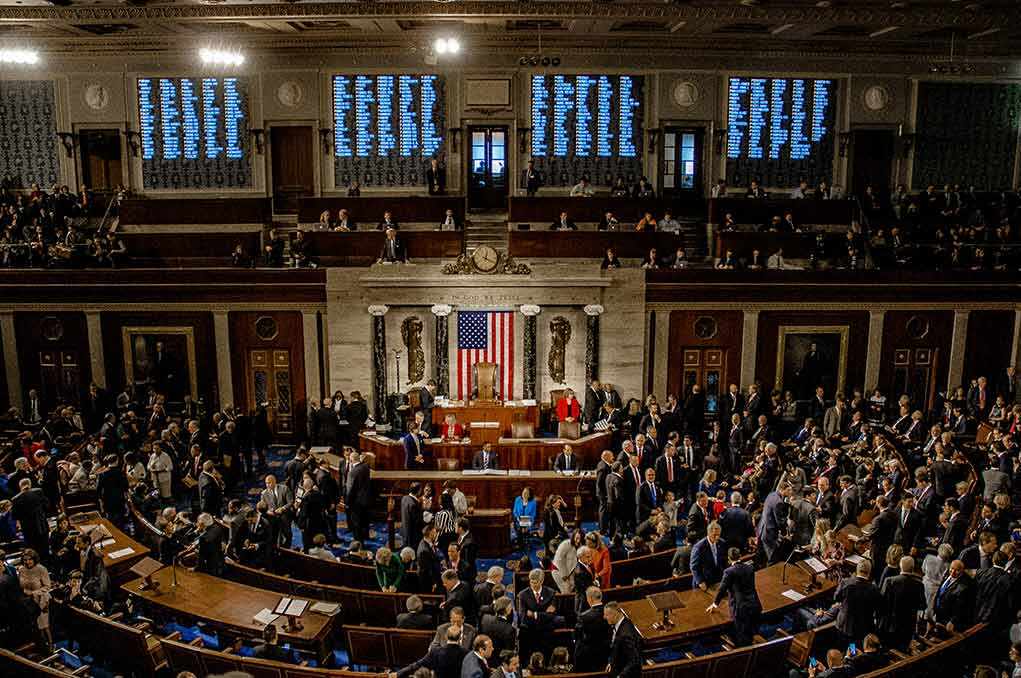
Speaker Mike Johnson says the Senate is sitting on a mountain of House-passed bills, and the clock is almost out.
Story Snapshot
- House Republicans point to hundreds of House-passed measures waiting in the Senate.
- Official trackers show heavy House output and far fewer enactments.
- Senate Majority Leader John Thune blames Democrats for blocking key votes.
- The Senate’s 60-vote rule and floor time shape what moves and what dies.
What Johnson Exposed About The Pileup
Speaker Mike Johnson flagged a backlog that feels like a traffic jam at the Capitol. Congress.gov shows the House has moved a large volume of bills and resolutions this term. Many sit without final action, which backs Johnson’s claim that a large stack awaits Senate movement. The official logs list thousands introduced, hundreds reported, and about a thousand passed by the House during the period, while only a fraction become law or get floor time across the Capitol.
The count matters because the calendar does. As the lame-duck window narrows, each day lost raises the odds that even bipartisan items miss a vote. House members can point to the record to show they did their part on many measures. Voters see something else: promises that stall in a chamber that runs by different rules, with fewer voting days and a higher bar to end debate.
How The Senate’s Rules And Priorities Bottleneck Bills
The Senate runs on consent and leverage, not speed. Ending debate usually needs three-fifths of the Senate, often 60 votes, to invoke cloture. That threshold shapes what leaders bring up and when. The Senate’s own resources show only a small set of bills “active” for possible floor action at any time, while most proposals wait on the runway for weeks or months. The weekly agenda underscores how little floor time exists for the volume sent by the House.
That gap creates the optics Johnson highlighted: the House churns; the Senate sifts. Some House bills are messaging vehicles that were never tailored to hit 60 in the Senate. Others could pass but lose to scheduling, holds, or policy tradeoffs. The result looks like paralysis even when committees keep working. The only metric voters care about is law on the books, and that number lags the press releases by a mile.
Thune’s Rebuttal: Blame The Blockers, Not The Calendar
Senate Majority Leader John Thune argues Democrats blocked votes on consequential items. He cites episodes where Democratic opposition kept bills off the floor or short of the 60-vote mark. Thune points to key fights, including elections and policy packages, as proof that the roadblock is partisan resistance, not Senate foot-dragging. He also says a Democratic-driven shutdown delayed spending work, crowding the calendar and squeezing floor time.
That defense matches another hard fact: with 53 Republicans, the Senate lacks the votes to overcome united Democratic filibusters on big-ticket items. Reported counts show the Safeguard American Voter Eligibility bill did not have the 60 votes needed under current precedent. Thune has acknowledged his conference lacks support to change the rules, which leaves him juggling limited time and an unforgiving vote math problem.
What Actually Moves In A Lame Duck
History says a lame duck rewards focus, not volume. Leadership tends to move what is time-sensitive, bipartisan, or tethered to a deadline. Recent logs show how must-pass items, like funding or short-term extensions, can still clear both chambers when leaders lock a path and members accept half a loaf. One continuing resolution became law after both chambers traded amendments at speed, proving the Senate can move when the stakes and text are aligned.
The common-sense read cuts through the spin: the House produced in bulk; the Senate filtered by rules, votes, and time. Johnson is right about the pile. Thune is right that opposition votes matter. But voters expect prioritization and backbone. Conservative governance prizes results that secure the border, protect elections, lower costs, and fund defense without waste. The test now is simple: pick the bills that can clear 60, force votes, and stop letting the clock do the Senate’s job.
Sources:
congress.gov, thune.senate.gov, roy.house.gov, cambridge.org
© targetliberty.org 2026. All rights reserved.