

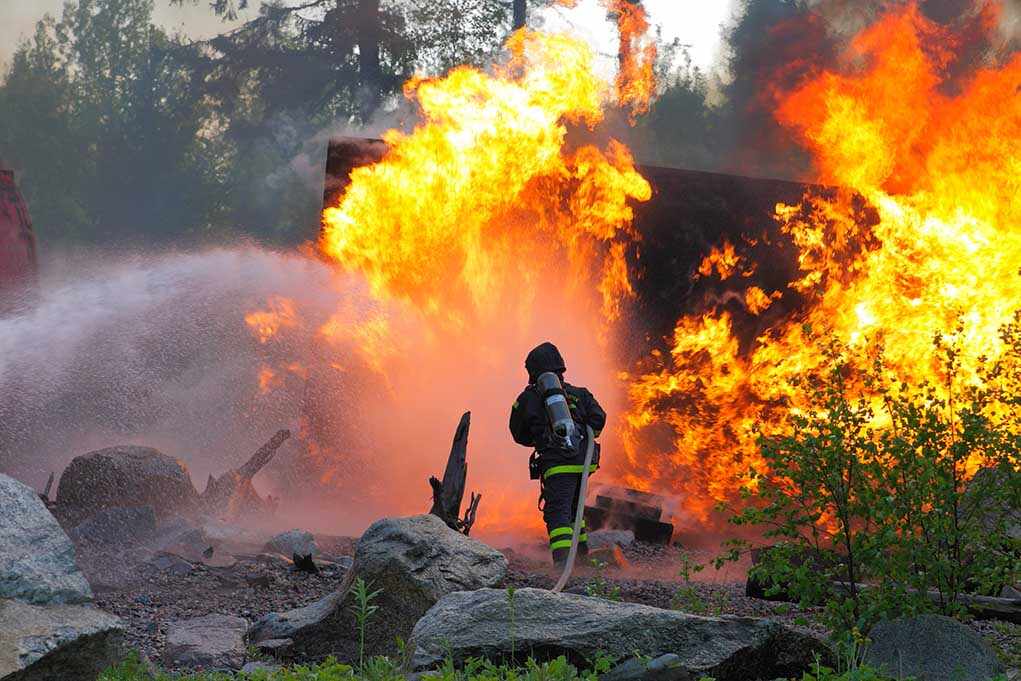
Canada’s defence minister confirmed deaths and injuries after a “serious incident” sparked a major fire at Canadian Forces Base Wainwright in Alberta.
Story Snapshot
- Officials confirmed fatalities and injuries on the base but gave no numbers.
- The fire began after a “serious incident” at CFB Wainwright, east of Edmonton.
- Royal Canadian Mounted Police and the military launched a joint investigation.
- The blaze crossed the base fence; no evacuation order was issued, officials said.
What Happened And Where The Danger Spread
Prime Minister Mark Carney said a serious incident at Canadian Forces Base Wainwright led to a major fire that burned through Saturday and pushed beyond the base perimeter in east‑central Alberta. Local officials reported flames crossing the fence line toward the surrounding district but stopped short of ordering evacuations, signaling confidence in fire breaks and response resources at that moment. Winds complicated ground efforts as crews worked to keep flames away from homes and infrastructure near the town of Wainwright.
Defence Minister David McGuinty told reporters that people were killed and others were hurt on the base. He did not provide a count, citing an active and delicate response, and he avoided any statement on cause until investigators finish their work. The Canadian Armed Forces coordinated with local fire crews on suppression while the Royal Canadian Mounted Police began gathering evidence. Early statements stressed safety for nearby residents and a clear chain of command across agencies.
What Authorities Confirmed And What They Are Probing
Officials confirmed four central facts: deaths, injuries, a major ongoing fire, and a formal investigation with both the Canadian military and the Royal Canadian Mounted Police involved. They did not say what set off the incident, what burned first, or whether training, equipment, or infrastructure played a role. They also did not link the confirmed deaths and injuries to a specific event mechanism on the base, pending findings by investigators. That restraint is standard in early emergency phases.
Municipal leaders said the fire reached beyond the fence but held off ordering evacuations as crews tried to box in the flames. That choice often rests on wind, fuels, terrain, and available water. It also weighs the risk of moving people against the pace of the fire. In Alberta range country, grass fires can race, then stall. Commanders must time back-burns, bulldozer lines, and air support to keep fire from jumping roads and shelter belts.
How This Fits A Known Pattern On Military Ranges
Canada has seen range-area fires before. In 2017 at Canadian Forces Base Suffield, a training activity tied to dealing with an unexploded shell was followed by a grass fire that left off-base damage. Officials then said the cause would be settled by investigation before they assigned responsibility or sequence. That case is a reminder: we often see smoke and heat long before we have clean answers on ignition and spread. The Wainwright response reflects that same method.
What we know about deadly explosion and fire at CFB Wainwright https://t.co/u08EySnkR6
— CTV News Toronto (@CTVToronto) October 19, 2026
For families, the confirmed loss is the only fact that truly matters right now. For leaders, the next facts must come fast and clean: who was where, what ignited, how the fire breached control lines, and which protocols worked. Conservative common sense says get the truth, fix what failed, and protect the force and nearby towns without spin. That means transparent timelines, range-safety reviews, and clear communications as the joint probe moves from scene work to findings.
Sources:
aljazeera.com, reuters.com, rmb.reuters.com, apnews.com, cbc.ca
© targetliberty.org 2026. All rights reserved.