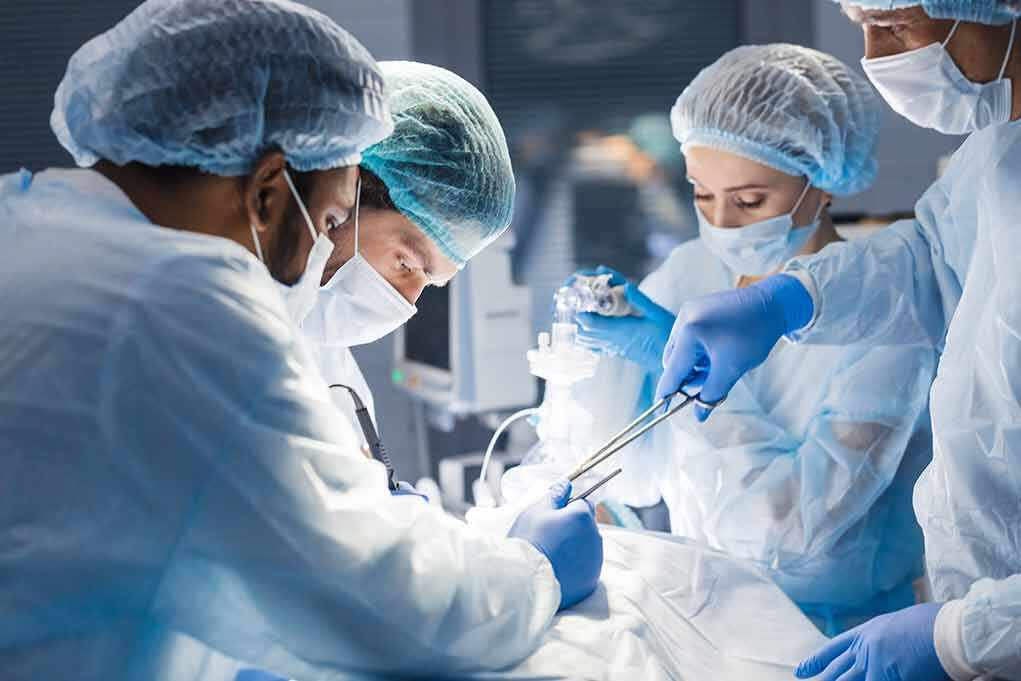
Twelve hours on an operating table in Moscow may have pushed human surgery into a new era—if the recovery proves it.
Story Snapshot
- Moscow’s Sklifosovsky Institute reported a 12-hour spinal cord transplant with donor tissue.
- Leaders said the graft stayed viable after surgery; function is still unknown.
- Officials framed it as a national first within newly expanded Russian transplant rules.
- Critics question the science behind spinal cord reconnection and the use of polyethylene glycol.
What the team says happened inside the operating room
Moscow Mayor Sergei Sobyanin announced that surgeons at the N.V. Sklifosovsky Research Institute for Emergency Medicine completed a “unique” 12-hour surgery, described as Russia’s first spinal cord transplant. Institute director Sergei Petrikov said the patient received a segment of donor spinal cord and that the tissues remained viable after the operation. Reports credit a large team of specialists from Russia and China. They also describe the use of polyethylene glycol as a type of biological glue to fuse cut ends.
The report places the surgery squarely at a named public hospital with a known director and a mayor as the messenger, not an anonymous clinic. That matters. It gives the claim an institutional home and a chain of accountability. Russia also changed its transplant rules on September 1, 2026, to allow transplants of nerves and spinal cord fragments, a detail that explains how surgeons could attempt such a step now. These facts set the floor for what we know, not the ceiling.
What “transplant” means here—and what it does not prove yet
Replacing a damaged spinal cord segment with donor tissue is a clear, concrete action. It is surgery, not science fiction. But a living graft does not prove restored movement, sensation, or bladder control. Petrikov cautioned it was too early to judge function. No public data show where the cord was cut, how long the graft was, how blood supply was handled, or whether axons reconnected. Without standardized scores, imaging, or nerve tests, this is a feasibility step, not a cure.
The field’s track record urges patience. Human studies with cell grafts—Schwann cells, olfactory ensheathing cells, stem cells—have shown safety in early trials but uneven gains. Reviews describe outcomes as modest and variable, with no large, repeatable jumps in motor recovery across trials. That base rate tells us to expect slow, incremental progress and to verify every claim with hard measures over time, not press lines on day one.
The friction point: biological plausibility and proof
Supporters cite polyethylene glycol’s potential to help nerve membranes fuse. Skeptics counter that the animal data are thin and not ready for people. Neuroscientist Jerry Silver criticized the published evidence for lacking proper controls and detailed tissue analysis, and said the data did not justify moving to humans. Medical ethicist Arthur Caplan echoed that view, saying this kind of procedure remained years away based on the studies at hand. That is a sharp bar to clear, and it should be.
🔴 Surgeons test spinal-cord fusion in pigs; head-transplant debate persists
Neurosurgeon Sergio Canavero and researchers at Moscow's Sklifosovsky Institute severed spinal cords in three pigs midway along their backs, then fused the severed nerve tissue using surgical sealant.… pic.twitter.com/oMuyeN3Vhf
— NewsTongue (@NewsTongueX) October 15, 2026
Transplant surgeon Mark Hardy raised a bigger red flag: concern about polyethylene glycol toxicity in humans and weak transfer from animal work to real patients. Those claims make a simple demand that aligns with common sense and conservative values: show the receipts. Release the operative report. Publish the consent and ethics approvals. Share blinded neurological exams, nerve tests, and scans at set time points. If the method works, evidence will speak louder than any announcement.
What to watch next: the proof package that will make or break this
Three milestones will decide how history books treat this day. First, an operative and technical dossier that maps the cut, the graft length, the micro-suturing, the blood supply, and the polyethylene glycol protocol. Second, independent outcomes: standardized motor and sensory scores, autonomic measures, electromyography, and magnetic resonance imaging with serial follow-up. Third, outside examiners who can verify the case without ties to the team. These steps are routine in good science and good medicine.
Russia’s positioning of the operation inside a legal and institutional framework gives this story more weight than a lone claim. The team’s own caution about function shows they know the hard part starts after the last stitch. If future data confirm real neural reconnection and recovery, this will stand as a landmark. If not, it will be a lesson in why medicine rewards proof over promotion—and why patients deserve nothing less.
Sources:
newscientist.com, cj.sina.cn, spinalsurgerynews.com, pcnews.ru, expert.ru, vestnikramn.spr-journal.ru, chicagotribune.com
© targetliberty.org 2026. All rights reserved.