
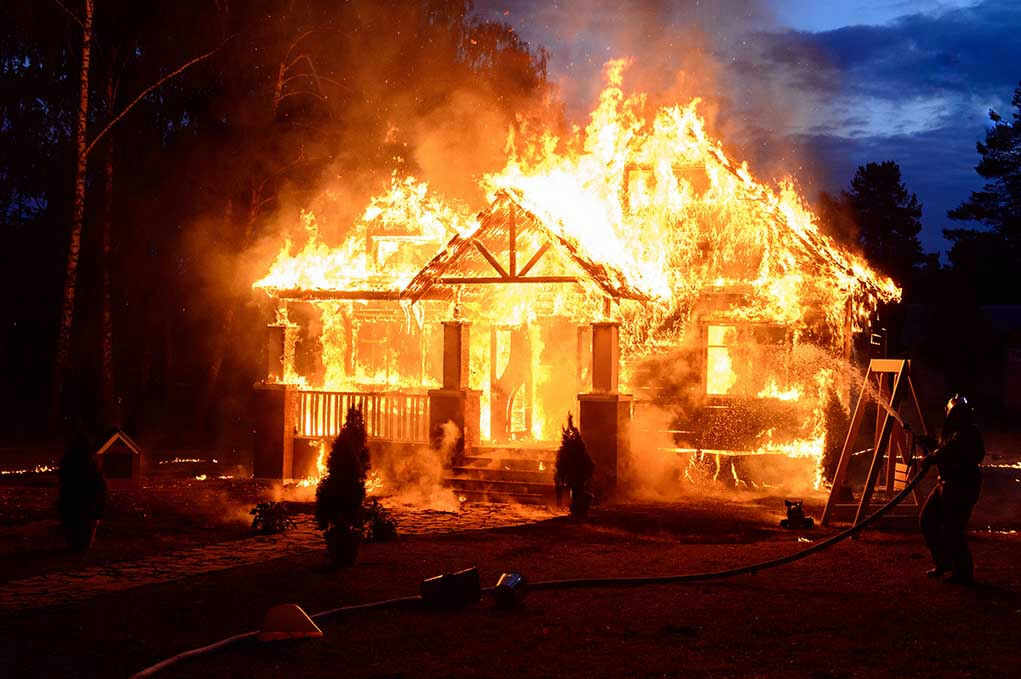
A volunteer firefighter is accused of igniting a town’s fear, then racing in with the hose to play hero minutes later.
Story Snapshot
- Police say three fires erupted within roughly 24–30 hours in two Pennsylvania communities [1][2]
- Investigators allege the same volunteer firefighter helped fight at least two of those fires [1][2]
- License-plate readers reportedly led police to the suspect’s car and identity [1][2]
- Officers say they found fire-starting materials in his vehicle; a report cites an alleged admission at one scene [1][2]
Allegations that turn a first responder into the first suspect
Local reporters say investigators arrested 29-year-old volunteer firefighter Justin Sholly on several felony arson counts following three blazes in Souderton and Franconia Township, separated by about a day’s span [1][2]. Police and prosecutors often speak carefully at this stage, but the framing here is unambiguous: a rapid cluster of fires, a single suspect, and a timeline that suggests intent, not accident. Broadcast coverage describes evacuations and property damage, reminders that property crimes cross into public safety the instant flames rise [1].
Reporters attribute a central claim to investigators: that after the fires ignited, Sholly rolled out with his fire company to respond, at least to two scenes [1][2]. If dispatch logs and arrival times confirm it, that is the sort of fact that turns a disturbing case into a chilling one. Americans instinctively trust uniforms that show up when alarms ring; when the same uniform is attached to the spark, confidence falters quickly. Proof will live in rosters, radio traffic, and apparatus logs—not vibes.
How police say the trail was built in hours, not weeks
Police reportedly leaned on license-plate readers to spot a vehicle match and trace movements tied to the fire windows [1][2]. Technology like this does what good policing should: use time and place to narrow the field fast. It also demands receipts. Timestamps, camera locations, and image-matching methods matter because the difference between “nearby” and “there” decides whether probable cause stands tall or wobbles. The best cases survive discovery precisely because those details are nailed down.
Officers say they found fire starter logs, lighter fluid, and a fire radio in the suspect’s vehicle [1][2]. None of that convicts anyone on its own, but combined with location data and a tight timeline, it creates a mosaic that prosecutors love to show juries. One broadcast account cites a police affidavit that the suspect admitted to igniting wood logs at one site before moving to a detached garage barn [2]. Admissions, when recorded properly, simplify trials; when vague, they complicate justice. Exact wording and context will decide which it is here.
Harm to neighbors, stress on crews, and the broader rarity of the pattern
Local coverage reports that evacuations affected roughly 18 civilians and that two barns and multiple vehicles suffered damage [1]. Neighbors endured fear and loss, while volunteer crews shouldered risk they did not sign up for. That is the quiet cost beneath the headlines. Still, step back: firefighter arson cases seize attention precisely because they are rare, not routine. Narratives compress uncertainty into certainty long before a judge does. Resisting that rush is not softness on crime; it is fidelity to process and proportionality.
A volunteer firefighter has been arrested for allegedly setting fires and then responding to them with his fire department, according to officials in eastern Pennsylvania.
Justin Sholly, a 29-year-old member of the Perseverance Volunteer Fire Company in Souderton, was arrested…
— Qᴀɢɢ.ɴᴇᴡꜱ (@qaggnews) June 3, 2026
Several gaps remain. The public has not seen the full affidavit, warrant returns, or laboratory analyses linking items to specific scenes [2]. The ignition method across all three fires is not mapped conclusively in open reporting, and dispatch records confirming who rode which rig remain offstage [1][2]. The standard conservative posture here is simple: applaud swift, tech-enabled policing when evidence is solid, demand the underlying records before crowning conclusions, and remember that heroes exist in the same departments even when one member stands accused.
Sources:
[1] Web – Volunteer firefighter arrested for setting blazes and responding to …
[2] Web – Volunteer firefighter in Montgomery County accused of setting fires …
© targetliberty.org 2026. All rights reserved.