
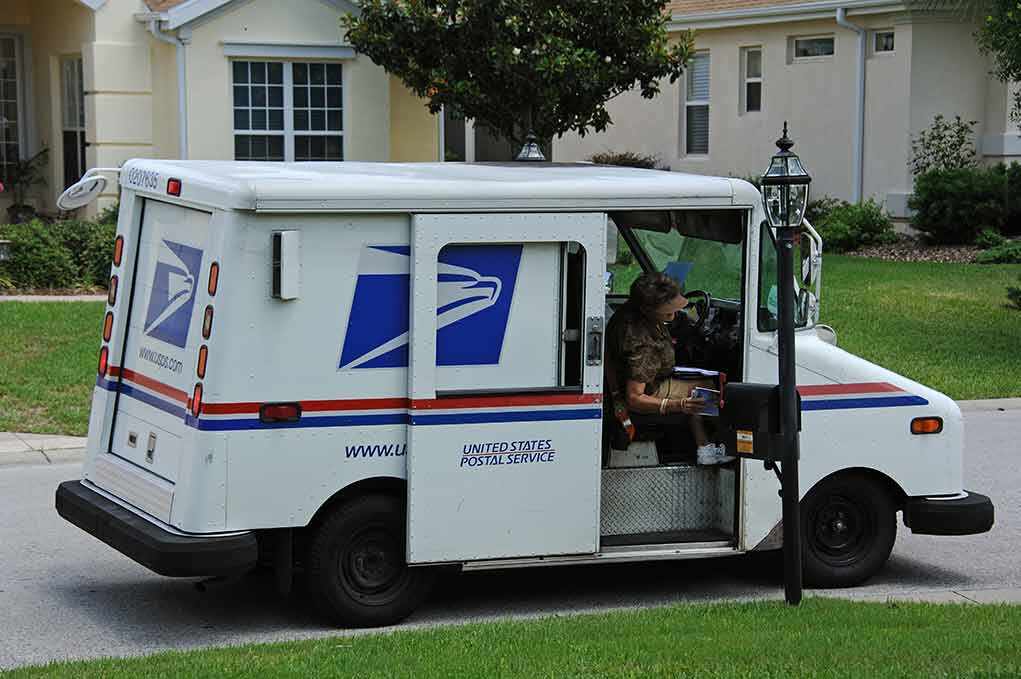
Federal prosecutors say a Fresno County mail carrier kept more than 8,500 pieces of mail, including tax and medical records, off his route for weeks.
Story Snapshot
- Federal prosecutors charged a 53-year-old former Fresno County carrier with keeping and not delivering mail.
- Court records cite more than 8,500 undelivered pieces from August to September 2024.
- The stash allegedly included tax records, medical mail, and bills tied to personal finances.
- The U.S. Postal Service Office of Inspector General investigated; the carrier went on leave, then resigned.
Prosecutors say thousands of sensitive letters never made it
Federal prosecutors charged Ronald Juckno, 53, a former Fresno County mail carrier, with keeping and failing to deliver mail. The U.S. Attorney’s Office publicly announced the charge and identified him and his former role. Court records referenced in local reporting say authorities found more than 8,500 pieces of mail in his possession, all from a span between August and September 2024. Prosecutors say the pieces included tax documents, medical correspondence, unemployment notices, insurance records, and household bills that should have reached customers.
The U.S. Postal Service Office of Inspector General led the investigation. Local reports named Assistant United States Attorneys Joshua Banister and Joseph Barton to prosecute the case. Reporting also states the Postal Service placed Juckno on leave during the probe and that he later resigned. A criminal charge is not proof of guilt, but the volume described in the filings suggests a pattern far beyond a late-day backlog. The government will need to prove intent under the specific mail obstruction laws at trial.
How 8,500 pieces turn a route problem into a federal case
Scale changes the story. One or two missed tubs can be a bad shift. Thousands of pieces over weeks become a public trust breach. The allegation points to mail that shapes daily life: electric bills, tax letters, insurance updates, and doctor notices. Missed bills trigger fees. Missed tax mail triggers headaches. Missed medical mail triggers risk. That is why federal law treats delayed or kept mail as serious conduct, and why the government moves fast when it sees a pattern like this on a carrier’s route.
Cases like this appear across the country every few years. They stand out because the facts are simple: a route, a worker, a pile of mail. The Office of Inspector General has told Congress that mail theft and diversion remain persistent threats, with hundreds of investigations closed and arrests made in a recent six-month period in 2024. While most carriers do the job well, the few who do not can cause wide harm with a few bad weeks.
What the investigation likely tracked and why it matters
Investigators in these cases usually start with complaints or anomalies in route metrics. They check undelivered volumes, scan data, and where-abouts of trays. They search vehicles, lockers, and sometimes residences. They then inventory each piece, record the address, and contact recipients. That process helps prosecutors show the number of pieces, the time window, and the types of mail in question. Local reporting says more than 8,500 items were counted here, a figure that suggests a detailed inventory exists in the case file.
Public records in this matter add two facts that tend to sway judges: the short time frame and the sensitive content. A tight window from August to September 2024 limits the defense claim that this was years of slow buildup. The inclusion of tax and medical mail increases the weight of potential harm. Prosecutors also lean on custody details that trace where the pieces were found and how they were stored. Those logs can decide cases when intent is disputed.
Why this fits a broader enforcement picture
The Office of Inspector General has pressed the Postal Service and the Postal Inspection Service on mail theft and diversion for years. Its fall 2024 report logged 773 mail-theft investigations closed and 258 arrests in half a year, showing steady enforcement against both outsiders and employees. The goal is simple: protect timely delivery of core documents that anchor family budgets and health care. When a carrier diverts that flow, the system must show zero tolerance. That is common sense and basic accountability.
Ronald Juckno — former Fresno USPS mail carrier indicted for keeping 8,500+ pieces of undelivered mail, including tax and medical records; placed on leave and resigned. Story: https://t.co/YSnVj1lf61
— CancelPeople.com (@cancelpeoplenow) September 15, 2026
American conservative values stress duty, property rights, and the rule of law. A mail route is a public trust built on all three. People earn, save, pay, and plan through those envelopes. If the government charges that a worker kept thousands of them, the right response is firm prosecution, fast restitution, and clear fixes. That means transparent audits, route-level controls, and clear signals to every carrier: deliver every piece, every day, or face federal court.
Sources:
nypost.com, kmph.com, fresno.courts.ca.gov
© targetliberty.org 2026. All rights reserved.