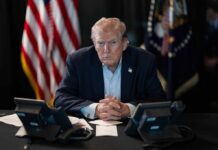

A senior Trump-appointed counterterrorism chief quit over strikes on Iran—then got publicly ripped as “weak,” exposing a real fault line inside the America First coalition.
Story Snapshot
- Joe Kent resigned as Director of the National Counterterrorism Center on March 17, 2026, objecting to U.S. strikes on Iran and disputing claims of an “imminent” threat.
- President Trump responded the next day with sharp criticism, calling Kent “weak on security” and “not smart” or “savvy,” signaling limited tolerance for public dissent.
- Kent alleged outside pressure—including from Israel and its U.S. supporters—helped drive the strikes, a claim GOP leaders and critics pushed back on as inflammatory.
- Kent later told Tucker Carlson that officials with doubts were blocked from directly advising Trump, raising questions about who is shaping war decisions.
Kent’s resignation put the Iran rationale under a microscope
Joe Kent, the Trump-appointed Director of the National Counterterrorism Center, resigned March 17, 2026, after U.S. strikes on Iran that began earlier in March. Kent said Iran posed no imminent threat and argued the justification for the operation shifted over time. His break was notable because he came into the job with a hard-edged national security résumé—Green Beret deployments and CIA work—alongside a political profile built around opposition to “nation-building” after the Afghanistan fallout.
Kent’s personal background also shaped public interest in the dispute. His wife, Navy cryptologist Shannon Kent, was killed in 2019 by a suicide bomber in Syria while fighting ISIS, and he later remarried while raising two sons. Coverage of the resignation frequently mentioned that story to explain his standing with many pro-military voters, even though the central policy fight was about Iran intelligence, the definition of “imminent,” and whether the strikes fit an America First framework.
Trump’s response underscored a demand for unity during conflict
President Trump responded on March 18 by criticizing Kent’s judgment and toughness, calling him “weak on security” and saying he was not “smart” or “savvy.” Trump’s comments, reported across outlets, framed the resignation less as an internal policy disagreement and more as a disqualifying worldview for a counterterrorism leader. For supporters who expect decisive command in wartime, the message was clear: public second-guessing from inside the administration will not be rewarded.
The same dynamic cuts the other way for voters who backed Trump to end endless wars and shrink the Washington foreign-policy machine. Kent was confirmed in July 2025 on a 52–44 Senate vote, meaning he entered as a formally vetted official, not a fringe activist. When someone with that status resigns and says the threat picture was overstated, it inevitably intensifies scrutiny over the briefings lawmakers received and the administration’s internal process for judging urgency.
“Imminent threat” claims collided with allegations about outside influence
House Speaker Mike Johnson said he received briefings supporting claims of an imminent threat, directly conflicting with Kent’s contention that Iran did not pose one. Kent also asserted that Israel and its U.S. lobby pressured Washington into action. Those allegations set off a political firestorm, because they blend foreign-policy disagreement with claims about domestic influence—territory that can quickly become reckless if not backed by documented evidence. The available reporting does not resolve who is right on the underlying intelligence.
Critics seized on Kent’s statements to argue he was veering into conspiratorial territory, and some high-profile Republicans framed his rhetoric as unacceptable. Senate Majority Leader Mitch McConnell characterized Kent’s Israel-related comments as “virulent anti-Semitism,” and the Anti-Defamation League pointed to a history they say reflects extremism. Kent’s defenders, meanwhile, focused on his service record and argued that questioning the case for war is not the same as attacking Americans of any faith.
Kent’s Tucker Carlson appearance highlighted an access and accountability problem
On March 19, Kent told Tucker Carlson that he was not allowed to share his concerns about the Iran war directly with President Trump and suggested other senior officials with doubts were similarly blocked. That claim, if accurate, matters because it shifts the debate from “one official quit” to “who filtered the information reaching the commander in chief.” The White House response described in coverage was limited, and no replacement for Kent was identified in the immediate reporting.
Trump Taunts Joe Kent for Remarrying After His Wife Was Killed in Line of Duty https://t.co/TVnKoGfx4p
— Mediaite (@Mediaite) March 23, 2026
The larger takeaway for constitutional-minded conservatives is procedural: major military action requires clear justification, clear lines of accountability, and honest definitions that don’t move with the headlines. The reporting also includes an important limitation for readers sorting rumor from fact: the widely shared premise that Trump “taunted” Kent about remarrying is not confirmed in the research provided, while multiple sources consistently focus on Trump’s criticism of Kent’s security stance and competence, not his personal life.
Sources:
Joe Kent resigns over Trump’s Iran war, says Iran posed no imminent threat
Top counterterrorism official Kent resigns over Trump’s Iran war, says Iran posed no imminent threat
Ex-counterterrorism official says he wasn’t allowed to share concerns about Iran war with Trump