
A journalist covering a public protest was violently assaulted by multiple attackers in broad daylight, and what happened next reveals a chilling reality about who truly threatens free speech in America.
Story Snapshot
- Turning Point USA reporter Savanah Hernandez was attacked by multiple assailants at an anti-ICE protest in Minneapolis after protesters identified her affiliation
- Three individuals face criminal charges while the FBI opened a federal civil rights investigation into the assault captured on video
- Hernandez warns the attack represents systematic violence by extremists who believe they can operate without consequences
- The incident raises urgent questions about journalist safety and press freedom as political polarization escalates to physical violence
When Reporting Becomes a Contact Sport
Savanah Hernandez arrived at the Whipple Federal Building in Minneapolis on April 11 with a camera and a press credential. She left with bruises, trauma, and a stark warning about America’s political future. The Turning Point USA Frontlines reporter was there to document an anti-ICE demonstration when protesters discovered her conservative media affiliation. What followed was captured on video: multiple individuals surrounded and physically attacked her in what she experienced as four to five separate assaults. A 250-pound man shoved her to the ground. Others joined in. This was not a shoving match or a heated exchange gone wrong. This was targeted violence against a credentialed journalist doing her job.
The Machinery of Accountability Kicks Into Gear
The response from law enforcement tells you everything about the severity of what happened. The Hennepin County Sheriff’s Office recommended charges against three individuals: Christopher Ostroushko, his daughter Paige Marie Ostroushko, and Lorenzo Amadeo Garcia. But the real indicator of how seriously authorities are treating this case came from Washington. Assistant Attorney General Harmeet Dhillon confirmed the FBI opened a federal investigation. Federal civil rights probes don’t happen for garden-variety assault cases. They happen when constitutional protections are at stake, when someone’s rights under federal law have been violated in ways that demand more than local prosecution.
A Pattern Emerges From the Chaos
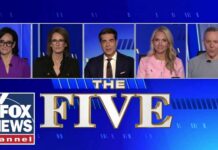
Independent journalist Andy Ngo watched the footage of Hernandez’s assault and said it “felt very personal.” That reaction matters because Ngo has documented political violence at left-wing protests for years, often while being targeted himself. His recognition of a familiar pattern points to something Hernandez articulated clearly in her Fox News interview: this is not an isolated incident. She described her attackers as “violent extremists who have been getting away with lawlessness for far too long and they think that this is how they’re allowed to operate now.” The characterization may sound harsh until you consider the video evidence and the brazenness of assaulting a journalist in public.
The Chilling Effect on Coverage
Hernandez told Fox News she is now “terrified to do my job.” She cannot interview people on the street without fear because simply reporting on anti-ICE activities resulted in her being brutally assaulted. This is how censorship works in practice when governments won’t do it directly. You don’t need official press restrictions when mob violence accomplishes the same goal. Conservative journalists covering left-wing activism now face a calculation: is the story worth the physical risk? When that calculation starts influencing coverage decisions, press freedom has already been compromised. The First Amendment protects the right to speak and report, but it cannot protect journalists from fists and bodies.
What the Silence Reveals
Notice what is missing from the public record: statements from left-wing activist organizations condemning the violence. Responses from anti-ICE protest organizers disavowing the attack. Commentary from civil liberties groups defending Hernandez’s right to report. The silence is deafening and revealing. When violence serves political ends, even implicitly, condemnation becomes inconvenient. Hernandez made a point that should resonate across the political spectrum: “This is not a right-wing issue.” Protecting journalists from assault should be a universal principle. When it becomes a partisan question, the entire foundation of free discourse is at risk.
The Line That Cannot Hold
Hernandez’s warning about a “dark new line” being crossed deserves serious consideration. Political violence in America has historically been constrained by shared norms about acceptable behavior, even in heated conflicts. Those norms are eroding. When journalists can be attacked for their affiliation rather than their actions, when video evidence of assault in public fails to generate widespread condemnation, when federal investigation becomes necessary to ensure accountability, we are witnessing not just isolated lawlessness but systematic breakdown. The question is not whether this line has been crossed. The video evidence confirms it has. The question is what happens next, and whether the machinery of law can restore boundaries before political violence becomes normalized.
Sources:
TPUSA contributor attacked during anti-ICE protest, federal probe underway