
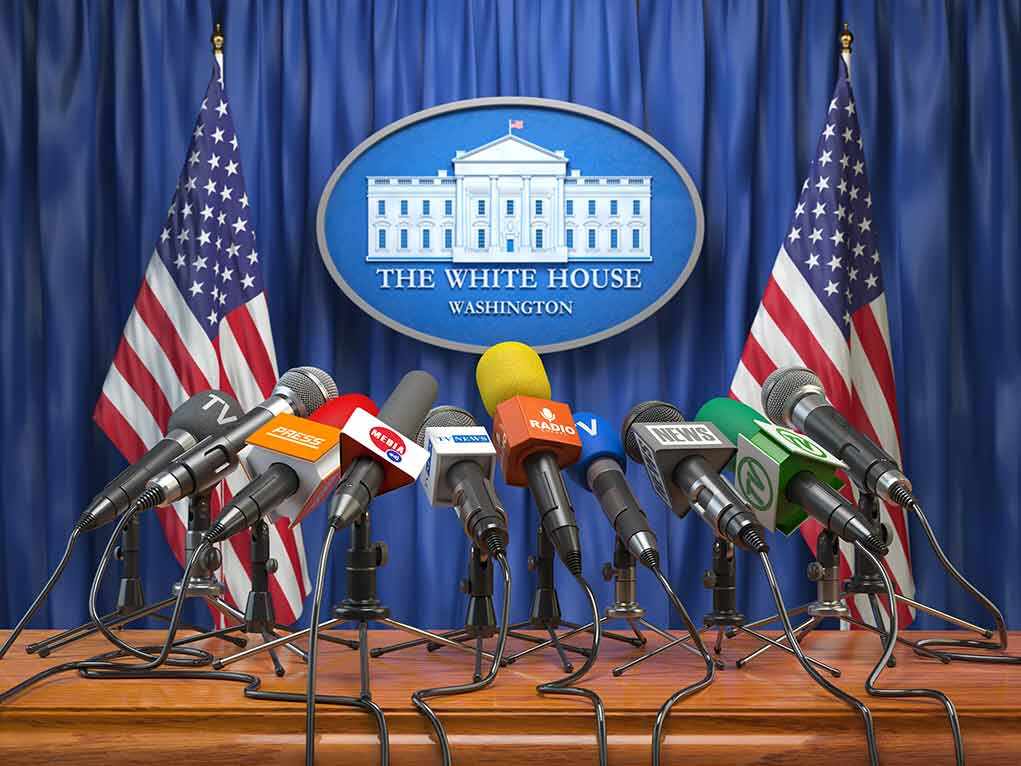
Three major newsrooms say they will sue after White House guards turned them away at the gate.
Story Snapshot
- President Trump announced bans on CNN, MS NOW, and Politico over “fake news” claims.
- White House security denied those outlets access the next day, blocking reporters on-site.
- Courts have split on past limits, allowing some venue controls but rejecting viewpoint bans.
- The outlets and press groups call the move unconstitutional retaliation against coverage.
What Happened And How Fast It Escalated
President Trump said he was banning CNN, MS NOW, and Politico from the White House, citing “constant ‘reporting’ FAKE NEWS!” The post set the tone and the timeline. By the next morning, security enforced it. Reporters from the named outlets were stopped and denied entry. Some said their hard passes were seized. The White House moved from rhetoric to action in less than a day, which made this not a threat but a policy in force.
The stated reason was broad and moral, not procedural. “Fake news” is a charge, not a rule. The administration did not publish written criteria, a notice, or an appeal path tied to any specific violation. That gap will matter in court. Judges do not referee media feuds; they test government actions against clear standards and process. A bare accusation without a record invites discovery and depositions that rarely go well for the issuer.
The Legal Ground: Where The Lines Are Drawn
Past fights show two lanes. First, the White House can run secure, limited spaces with reasonable, neutral rules. Courts upheld some controls on small venues that function more like work areas than public forums. Second, the government cannot pick winners and losers based on viewpoint once it opens press facilities to a broad group. That is the line that triggered prior rulings against viewpoint-based exclusions.
The Associated Press case set a live template. A court said excluding a news outlet because of its coverage likely violated the First Amendment when access was generally open, yet an appeals panel allowed tighter control in very limited spaces. That split result gave the White House partial cover on logistics and hurt it on viewpoint discrimination. The lesson is simple: neutral rules pass; retaliation fails.
The Arguments Each Side Will Push Next
The administration will argue capacity, security, and order. It will likely say the ban targets conduct, not content, and cite rulings that treat the Oval Office, Air Force One, and similar spots as restricted areas. It may also claim a temporary suspension while standards are reviewed. That framing leans on precedent that grants the executive branch room to manage small, nonpublic spaces when it applies neutral criteria.
Washington has been jerking off to the same corpse for months. Trump is unraveling. The midterms are slipping. Iran is a disaster. The walls are closing in again, same hymn, same choir, same pile of career cowards waiting for a funeral that will not stay shut.
Kimball’s point is…
— Flopping Aces (@FloppingAces) September 21, 2026
The suing outlets will press a simple through-line: the President said the quiet part out loud. The stated trigger was disfavored reporting. That is viewpoint-based retaliation. They will cite on-the-ground denials, seized passes, and the lack of written standards or due process. Press groups already call the action flatly unconstitutional and say it will chill coverage. That claim fits the pattern courts have frowned upon in prior access fights.
Why This Fight Matters Beyond The Gate
Americans do not need a press room to be open to everyone, everywhere, all the time. They do need rules that do not change with the headline. Government power requires guardrails, or it turns into a tool to reward praise and punish scrutiny. When the White House admits some and singles out others over coverage, it crosses the line courts have drawn for decades. That principle protects both a Republican White House today and a Democratic one tomorrow.
Conservative common sense favors clear rules, equal treatment, and consequences for actual misconduct. If a reporter disrupts events or breaks security rules, write it down and enforce the same rule for all. If the issue is disagreeing with stories, win on facts and transparency. Voters can smell the difference between order and retaliation. Courts can, too. That is why the lawsuits the outlets promise will likely focus on the President’s own words as Exhibit A.
What To Watch In The Lawsuits
Watch for the written policy the White House files. If it is viewpoint-neutral, venue-specific, and predated the ban, the administration gains ground. If it appears after the fact, tailored to this clash, the challengers gain leverage. Watch for whether the bans cover all grounds access or only small, restricted rooms. Courts have treated those very differently. And watch for any internal emails about “fake news” or targeting, which could decide the case on intent.
Speed will matter. Reporters will seek emergency relief to restore access while a court hears the case. Early orders often set the tone for settlement or a narrower policy. A limited, neutral standard can survive. A ban tied to disfavored coverage likely will not. That is not media special treatment; it is the Constitution doing its job so that government power does not decide which questions get asked.
Sources:
bbc.com, cnn.com, npr.org, nbcnews.com, apnews.com, nytimes.com
© targetliberty.org 2026. All rights reserved.