
South Korea just sentenced a former president to 30 years in prison for drones, martial law, and what judges called a “manufactured” national crisis.
Story Snapshot
- A South Korean court says ex-president Yoon Suk Yeol used military drones to help justify martial law.
- Judges ruled the 2024 drone flights into North Korea served private political goals, not national defense.
- Prosecutors framed the operation as a plan to “manufacture” a crisis and benefit the enemy.
- Yoon’s defense says it was a lawful response to North Korean trash balloons and a legitimate act of self-defense.
How a drone mission became a 30-year prison sentence
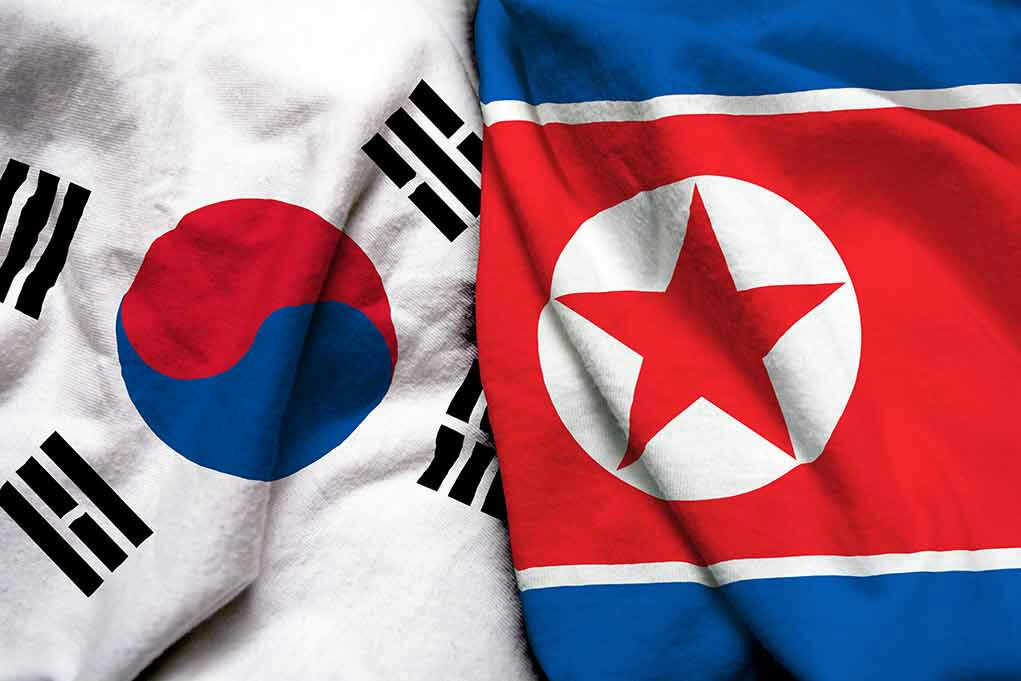
South Korea’s Seoul Central District Court did not treat the Pyongyang drone flights as a routine security operation. Judges found that former president Yoon Suk Yeol ordered or approved sending military drones into North Korea in 2024 to provoke a reaction from Pyongyang, then use the fallout to justify his later martial law declaration.[1][2][3] The court said he aimed to “heighten inter-Korean tensions and manufacture a national crisis,” language that sounds closer to a coup script than a border patrol.[1][2][3]
The ruling went beyond motive and focused on harm to South Korea itself. Judges said the drone operation exposed South Korean military capabilities, undermined future operations, and prompted North Korea to harden its defenses.[3][5] They concluded this “entailed the use of South Korea’s military capabilities for private purposes,” not for the country’s survival or security.[1][2][5] On that basis, they convicted Yoon of benefiting the enemy and abuse of power and handed down a 30-year sentence.[1][2][3]
From trash balloons to talk of treason
Yoon’s defenders tell a very different story. His legal team argues the drones were a legitimate response after North Korea sent balloons filled with trash across the border in 2024.[1][2][6] They say he did not order the incursion as a political stunt and that the flights were a lawful act of self-defense in a long-running pressure campaign from Pyongyang.[6] In their view, prosecutors and judges took a hard-line political reading of a standard deterrence move every serious state considers.
Prosecutors, backed by the special counsel, saw those same facts as something closer to a setup. They argued Yoon and senior aides wanted to trigger “armed or equivalent acts” by North Korea, then present the blowback as proof that South Korea faced an emergency requiring martial law.[2][3][4] For them, the trash balloons were the backdrop, not the cause. They said the “Pyongyang Drone” plan was calibrated not to stop the North, but to scare South Korean citizens into accepting extraordinary power in the president’s hands.[3][4]
The martial law shadow over everything
This drone verdict does not stand on its own. The same court has already sentenced Yoon to life in prison for rebellion over his short-lived martial law declaration in December 2024.[1][2][3] He is appealing that case, and prosecutors there even asked for the death penalty, which shows how extreme they see his actions.[3] When the court later looked back at the 2024 drone flights, it saw them as one step in a single political project, not as a separate military event.
Judges stressed that powers like supreme command of the armed forces and the authority to declare martial law must be used only to protect the nation, not a politician’s career.[1][2] They said Yoon treated those powers as tools “for his own political gain.”[1][2][5] That judgment lands hard with anyone who values limited government: using the army to engineer a domestic crisis crosses a bright red line. From a conservative, rule-of-law view, that is exactly the sort of behavior that demands stiff punishment.
Security, politics, and the danger of manufactured crises
This clash exposes a problem bigger than one Korean politician. Modern leaders operate behind a national security curtain, with drones, cyber tools, and intelligence assets the public rarely sees. When a government uses those tools, citizens must ask a simple but crucial question: was this done to defend the country, or to move the polls? Yoon’s case shows how the same drone launch can be sold as deterrence by one side and as a staged crisis by the other.[3][4][6]
1/11 👉 From the failed December 2024 martial law to today’s massive treason sentencing—here is the complete inside story of the historic downfall of former South Korean President Yoon Suk-yeol. How did a powerful leader end up behind bars for life? Let’s break it down.
👇… pic.twitter.com/0bS09cznie— NANO-CHANAKYA (@satyacric2bat) June 12, 2026
For Americans watching from afar, the lesson cuts close to home. Strong defense and firm posture against hostile regimes matter, but so do bright, enforced limits on how leaders can use the military in domestic politics. South Korean judges sent a clear message: you do not get to gamble with your own people’s safety to cling to power. When a commander in chief turns war planning into campaign strategy, that is not strength; it is state-level corruption in uniform.[1][2][3]
Sources:
[1] Web – South Korea’s ex-president gets 30 years over North Korea drone …
[2] Web – Former President Yoon Suk Yeol was sentenced to 30 … – Instagram
[3] Web – Former S. Korean President Yoon sentenced to 30 years in drone case
[4] Web – Former President Yoon Suk Yeol was sentenced to 30 … – Facebook
[5] Web – South Korea’s ex-President Yoon gets 30 years over drone operation
[6] Web – Former South Korean President Yoon Suk Yeol has been sentenced …
© targetliberty.org 2026. All rights reserved.