

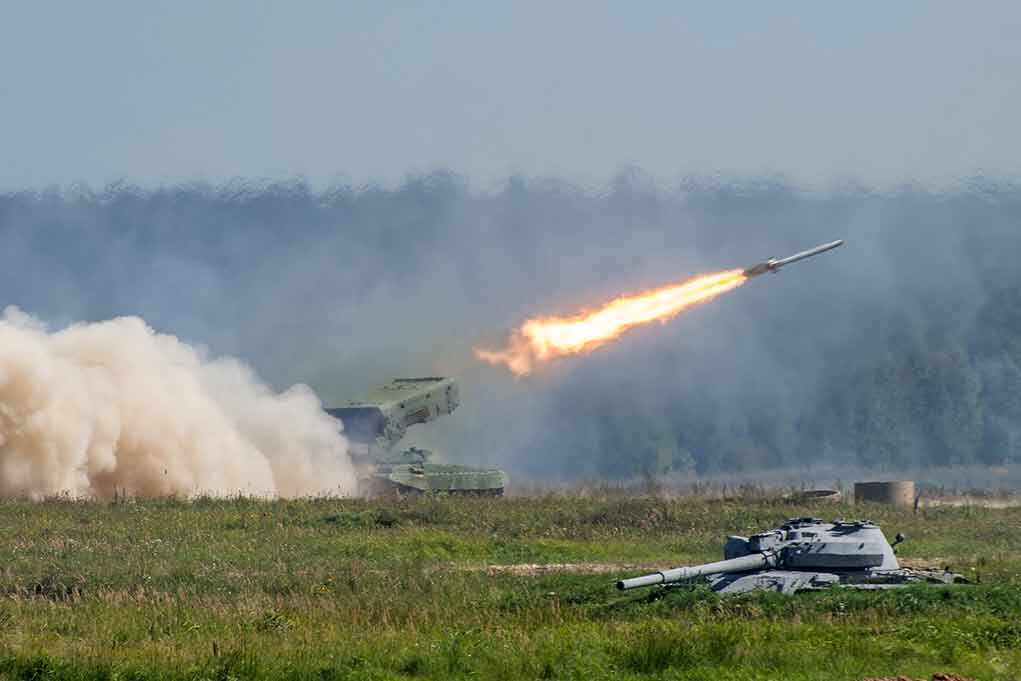
Bright orange rocket trails over stormy Taiwan skies were not a war start — they were a warning shot against one.
Story Snapshot
- Taiwan used U.S.-supplied HIMARS rockets in its first coastal live-fire drills facing China.
- The drills are framed by Taiwan as unscripted, defensive war games to repel an invasion, not launch one.
- China and its media call the same rockets a “deep counterstrike” threat and highlight them as a major danger.
- The real battle is over narrative: deterrence versus provocation, and who looks like the aggressor.
Taiwan fires, China watches, and the whole world reads it like a Rorschach test
Taiwan’s army rolled a U.S.-made High Mobility Artillery Rocket System onto its western coast, swung the launcher toward waters facing China, and lit off live rockets in bad weather while cameras rolled.[2][3] Officials described the drill as part of a larger anti-landing exercise near Taichung, meant to test how fast units can move, set up, fire, and relocate under combat pressure.[2][3] Nothing about that looks casual or symbolic. It looks like a rehearsal for the worst day in the neighborhood.
Those rockets did not land on Chinese soil. They splashed into designated waters inside Taiwan’s operating area. But the system’s advertised reach tells a different story. With a range of about 300 kilometers when loaded with long-range missiles, the rockets launched from Taiwan’s coast could, in wartime, hit ports and airfields in China’s Fujian province across the strait.[4] Chinese planners know that. American planners know that. So do traders, insurers, and anyone whose pension is tied to global supply chains.
Han Kuang drills are built around invasion, not adventure
Taiwan did not hide what it was doing. Officials openly tied the HIMARS live fire to the island’s most important annual war games, known as the Han Kuang exercises.[4][7] Senior officers say these drills are unscripted and built to mimic full combat conditions, starting with enemy attacks on command and communication networks and moving into a full invasion scenario.[4] That is not theater for television. That is a country that expects its cities, runways, and power grid to come under real attack someday.
The same officers are clear about the political intent. They say the drills aim to show China, the United States, and the wider world that Taiwan is determined to defend itself against any attack or invasion.[4] That lines up with other coastal exercises where Taiwan tests anti-landing tactics, artillery, and drones to blunt an amphibious assault.[2][5] From this angle, HIMARS is one more piece in a layered defense, not a magic sword to swing at the mainland on a whim.
Beijing brands the rockets a “deep counterstrike” threat
China’s leadership reads the pictures very differently. Chinese state television recently ran its own drills that singled out Taiwan’s HIMARS as a major threat, with officers talking about confirming targets and ordering long-range counterstrikes against the system.[6] Chinese military experts quoted in Taiwanese reporting describe HIMARS as ideal for “deep counterstrikes” against Chinese rocket units and logistics hubs, thanks to its high accuracy.[6] In other words, they accept the range and precision as real and treat it as a core problem.
🚨 Taiwan has conducted its first live-fire HIMARS exercise on the island's western coast, the area widely considered the most likely corridor for a potential PLA amphibious invasion.
During the drill, 32 of 36 planned rockets were successfully launched, while 4 misfires are… pic.twitter.com/Vo31IggYn5
— Global Frontline News (@OmeyLad23) June 10, 2026
This is where the narratives split hard. From Beijing’s view, American-made precision rockets on Taiwan’s shore look less like a shield and more like a forward strike base. That framing fits a broader Chinese line that activity in the Taiwan Strait is an “internal affair” and that foreign weapon sales are outside meddling.[6] State media leans on that to paint almost any Taiwanese upgrade as destabilizing, no matter how clearly defensive the exercise scenario appears on paper.
Range, deterrence, and the conservative common-sense test
Strip away the slogans and ask a simple question: who benefits from deterrence that works, and who benefits from fear that keeps Taiwan disarmed? HIMARS does not change the basic map. China still fields a larger military and has been flying more aircraft and sailing more ships near the island.[3] But long-range, accurate rockets raise the cost of a sudden strike. Port facilities, staging bases, and invasion fleets would sit under real threat the moment they massed.[4][6]
From a conservative American lens, that kind of hard deterrent tracks with basic common sense. A small democracy that buys proven U.S. systems to make invasion more expensive looks different from a regime trying to redraw borders by force. Taiwan’s drills may look edgy on social media clips, but they are public, scheduled, and anchored in invasion-defense scenarios.[2][4] China’s answer has been more encirclement drills and sharper rhetoric, not offers of de-escalation.[6] That contrast tells you who is nervous about free people staying armed and ready.
What this coastal rocket show really signals
The HIMARS salvos off Taiwan’s west coast were about more than rockets and splash zones. They showed that the first eleven systems from a planned fleet are not museum pieces; they are integrated into real war plans and practiced under stress.[1][4][7] The exercise also broadcast two messages at once. To China: an invasion will not be a quick land grab. To Washington and other partners: Taiwanese forces are serious enough to justify continued support.
For anyone watching from afar, the key is to separate feelings from facts. The same launch can look like provocation or prudence depending on what story you prefer. The facts on the ground say this: China has built up pressure around Taiwan, and Taiwan is training to survive the first wave and hit back hard enough to buy time. Live-fire HIMARS drills facing China are one more blunt way of saying they do not plan to go quietly.[3][4][6]
Sources:
[1] Web – Taiwan Fires Rockets in China’s Direction from a US-Supplied Mobile …
[2] Web – Taiwan deploys advanced US HIMARS rockets in annual drills
[3] Web – China highlights Taiwan’s HIMARS as major threat in latest military …
[4] YouTube – Taiwan Tests US-Made HIMARS Rockets Ahead Of Drills
[5] Web – Frustrating the Fait Accompli: How Rocket Artillery Changes the …
[6] Web – Taiwan tests US-made HIMARS ahead of drills – Facebook
[7] Web – M142 HIMARS – Wikipedia
© targetliberty.org 2026. All rights reserved.