

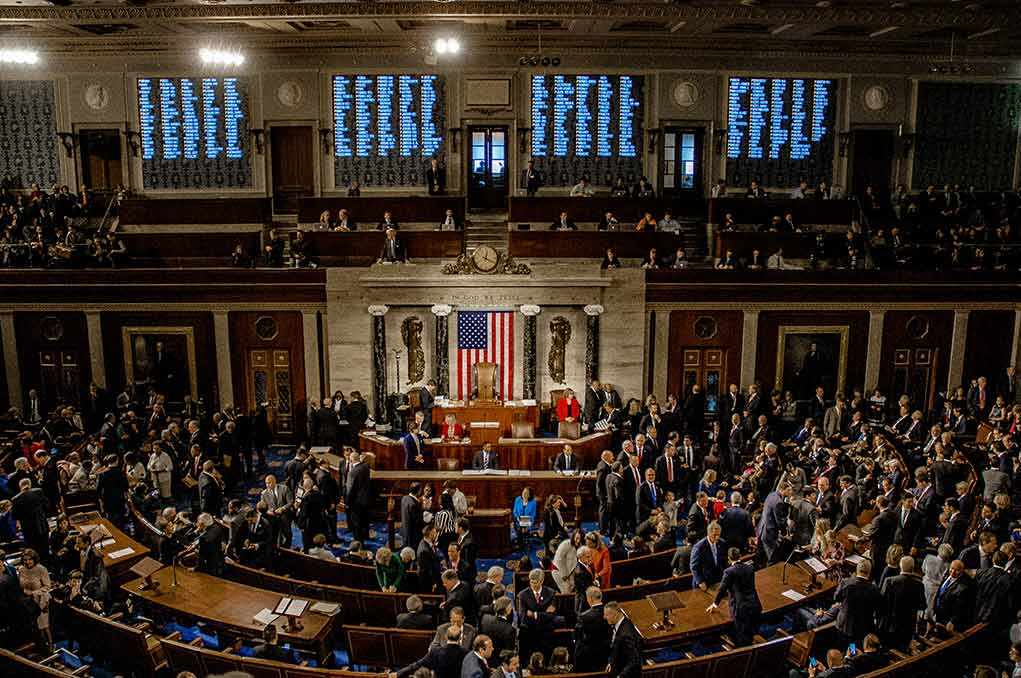
One paper move by Rep. Anna Paulina Luna could force Congress to choose between cash and credibility.
Story Snapshot
- Rep. Luna filed a formal discharge petition to force a House vote on a tough stock-trading ban for lawmakers and their families.
- The petition targets H.Res. 725 to bring H.R. 1908, which bans trading and ownership of individual stocks, to the floor.
- Supporters argue Congress should end the conflict of interest structure, not just police it.
- Opponents of rival bills say weaker bans have carveouts and do not go far enough.
The Concrete Step: A Discharge Petition With Teeth
Rep. Anna Paulina Luna filed Discharge Petition No. 11 to yank a stock-trading ban out of procedural limbo and onto the House floor. The petition seeks a rule, H.Res. 725, to consider H.R. 1908, a bill that would prohibit stock trading and ownership by Members of Congress and their spouses and dependent children. Congress’s official tracker confirms the discharge motion was filed under House rules on December 2, 2025. That move bypasses leadership bottlenecks if 218 colleagues sign on.
Public support for a true ban is high because the trust cost is obvious. When voters see members trade stocks tied to committees and taxpayer funds, they assume the game is rigged. Research shows that exposure to news about political stock trading drops trust, spikes perceptions of corruption, and weakens respect for the law across party lines. That is not a messaging issue; it is a structural problem that rules, not press releases, must fix.
Why Policing Trades Is Not Enough
The Stop Trading on Congressional Knowledge Act of 2012 made clear that members are not exempt from insider trading laws and required disclosures. Yet the core conflict remains: lawmakers often own assets they can influence. That design invites suspicion even when no case is proven. As the Congressional Research Service notes, the 2012 law affirmed liability but did not erase this conflict-ridden structure. Banning ownership and trading of individual stocks removes the gray zone that breeds doubt.
A clean ban tracks basic American conservative values: equal rules, fewer loopholes, and accountability close to the ground. If a city council member cannot vote on a contract that pays his family, Congress should not set softer standards for itself. Divestment or blind trusts for individual stocks are not radical. They are the bare minimum to align incentives with the public interest, not private gain. That clarity lowers compliance burdens and restores basic fairness.
The Political Crossfire And Claims Of “Scam” Bans
Competing proposals have muddied the waters. House leaders advanced bills that block only new purchases but allow existing holdings and broad carveouts. Those designs invite arbitrage: keep what you own, trade around it, and disclose later. Critics on the left called one such bill “a scam” for helping the wealthiest members preserve current positions while touting reform. That charge lands because the dispute is not about slogans; it is about whether the rule ends the conflict or renames it.
Process fights will continue. A discharge petition needs 218 signatures, and leadership in both parties tends to resist rules that bind their members. Early counts showed dozens, not hundreds, of members ready to sign, which reflects how reform often dies by calendar rather than conscience. Yet discharge is the one tool rank-and-file can use to break the logjam. If signatures climb, the House must vote. Then each member owns a simple choice: serve the public’s trust or serve their portfolio.
What A Real Ban Should Say And Do
A real ban is not complex. First, prohibit ownership and trading of individual stocks by Members, spouses, and dependent children during service. Second, require divestment or placement of covered assets into a genuine blind trust within a short deadline. Third, set strong penalties and rapid, public reporting for any breach. Fourth, align committee service with extra care around sector-linked assets. H.R. 1908, as routed by H.Res. 725, aims squarely at those pillars without carveouts that gut the rule.
Congress can still invest through broad index funds and Treasury securities. That protects retirement planning while ending the stock-picking temptations that distort judgment. Voters want this because they know human nature. If you can move a line item, you might. If your family can profit, someone will try. The cleanest standard is also the easiest to enforce. End the conflict, and the scandals dry up before they start. That is how adults run institutions.
The Stakes: Legitimacy Or Drift
Trust, once broken, does not bounce back with talking points. It returns when leaders give up perks the rest of us do not get. Luna’s petition tests whether Congress will accept a hard limit to protect the country’s faith in its laws. The alternative is the slow leak of legitimacy that eats at everything else. Lawmakers swear an oath to the Constitution, not to the market. Put the oath first, and let the Dow fend for itself.
Sources:
luna.house.gov, congress.gov, breitbart.com, cnbc.com, journals.law.harvard.edu
© targetliberty.org 2026. All rights reserved.