
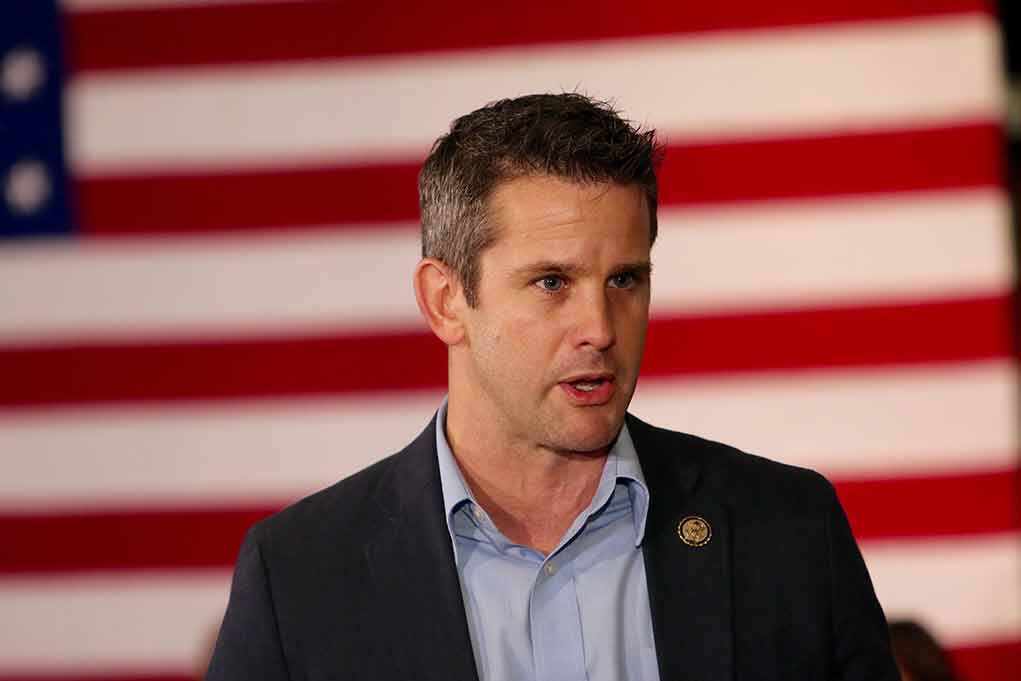
A federal market cop is asking a simple, stunning question: did Adam Kinzinger bet cash on his own pardon.
Story Snapshot
- Regulators are reviewing Kalshi trades tied to whether Kinzinger would get a presidential pardon.
- Kinzinger says he placed the bets, under $1,000 total, and denies any inside info.
- Kalshi reportedly flagged the account to the regulator and called the review routine.
- The case tests how “own-outcome” betting fits insider trading rules on event markets.
What sparked the probe and what is actually known
Politico and CNN reported that the Commodity Futures Trading Commission is reviewing Kalshi trades linked to Adam Kinzinger that focused on his potential pardon in December 2024 and January 2025. Kinzinger confirmed he made the trades and tied them to whether he would receive a pardon. CNN put the total under $1,000 across two related markets and said he bet that President Joe Biden would pardon him. No public enforcement filing has been posted, so the legal posture remains a reported inquiry rather than a charged case.
Kalshi, a regulated prediction market, reportedly flagged the account and sent it to the Commodity Futures Trading Commission for review, which a Kalshi source framed as routine. Reports describe Kalshi’s stance as policing activity that looks like insider trading and barring users who are direct participants in the event at issue. The fact pattern here is narrow but striking: a trader wagering on his own result. That alone can draw scrutiny even without proof of nonpublic information.
Kinzinger’s defense and the limits of the record
Kinzinger says he read the platform rules and believed the wagers were allowed at the time. He denies any advance knowledge of a pardon and says he discussed it with no one, including anyone near the White House. Multiple outlets quote him calling the trades a dumb bet, not a secret-information play. Those claims, if accurate, speak to judgment more than law. But they do not resolve whether platform rules barred self-referential bets then, or whether regulators see an unfair edge in any “own-outcome” trade.
The press accounts do not identify any specific nonpublic tip or document that Kinzinger may have used. They also do not publish the exact Kalshi rule text in force during the trades. That leaves two key questions open: what the rulebook said on those dates and whether the Commodity Futures Trading Commission believes “own-outcome” wagers create an illegal advantage even without a classic tip. Until filings surface, the case lives in the gray space between ethics and enforceable law.
Why event markets treat “own-outcome” bets as a red line
Event markets look more like financial exchanges than a sports book. The Commodity Futures Trading Commission has told platforms to police misuse of nonpublic information and manipulation on these markets, and it has cited prior cases where a candidate bet on his own race as potential violations of anti-fraud rules. Kalshi also suspended political candidates this year for betting on their own contests, showing the platform treats “own-outcome” trading as high risk for fairness and public trust.
Feds Investigate Kinzinger Over Alleged Kalshi Bets On Own Pardon | Tyler Durden, Zerohedge
Former Republican Rep. Adam Kinzinger is reportedly under investigation by the Commodity Futures Trading Commission over prediction-market trades tied to an unusually personal event:… pic.twitter.com/Vyb7kRPOaO
— Owen Gregorian (@OwenGregorian) October 1, 2026
Common sense matches this logic. A person is closer to their own outcome than any outsider. Even without a leak, they may have signals the public lacks. American conservative values emphasize equal rules, clean markets, and accountability. If a platform lets insiders or subjects of the wager trade, regular traders get a stacked deck. That does not prove Kinzinger broke a law. It explains why a regulator looks hard at any self-focused bet that can shake faith in a fair market.
What to watch next and what it means
Three items will define the ending. First, whether the Commodity Futures Trading Commission issues a formal action or quietly closes the matter. Second, whether Kalshi’s archived rules in late 2024 and early 2025 clearly banned self-referential pardon markets. Third, whether trade logs show timing that lines up with any nonpublic cue. If none of that appears, this may close as a reprimand or nothing. If it does, the case could set a sharper line for “own-outcome” bans on all event markets.
Prediction markets will survive this, but they will grow up faster. Platforms will tighten know-your-customer checks, ban trades by subjects of a contract, and deepen surveillance. Traders will face clearer rules that mirror securities law on material nonpublic information. And public figures will learn the oldest rule in politics and markets: when you hold the trust of the crowd, do not bet on yourself, because everyone else has to trust the price they cannot see behind the curtain.
Sources:
twitchy.com, edition.cnn.com, politico.com, finance.yahoo.com, thehill.com, nymag.com
© targetliberty.org 2026. All rights reserved.