

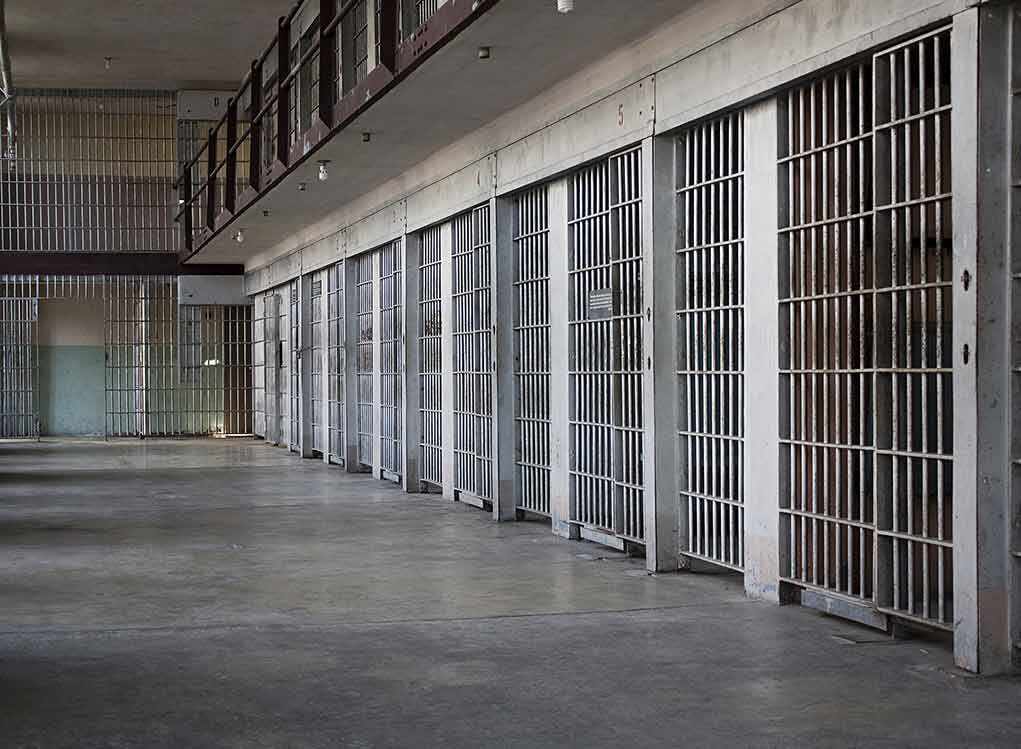
New York’s National Guard troops have spent almost a million hours standing watch inside state prisons, a mission that began as an emergency fix and has now stretched well past its first birthday.
Quick Take
- An illegal corrections officer strike in February 2025 forced Governor Kathy Hochul to mobilize thousands of Guard troops to secure 42 of New York’s 45 state prisons.
- More than 2,000 officers were fired when the 22-day strike ended, leaving a staffing hole the state still has not filled.
- As of early 2026, nearly 3,000 Guard members remain on duty, with the total response costing taxpayers over $1 billion.
- State officials confirm the same vacancy numbers exist today as when the strike began a year ago.
The Strike That Forced Guard Members Into Prison Uniforms
The crisis started February 17, 2025, when corrections officers walked off the job at two facilities in an unauthorized work stoppage. Within days it spread to 42 of the state’s 45 prisons. Hochul warned she had ordered Guard mobilization if the illegal action did not end, and more than 8,200 Soldiers and Airmen, backed by the Naval Militia, answered the call.
A state judge ordered the strike to stop, but it dragged on for 22 days. When it finally broke, the state fired over 2,000 corrections officers for defying the court order. Commissioner Daniel Martuscello said the Guard would stay behind in a support role while the department launched an aggressive hiring push. That “temporary” arrangement is still running today.
A Billion-Dollar Bridge With No Clear End Date
By mid-March 2025, more than 6,000 Guard members were still working alongside roughly 10,000 remaining security staff to keep facilities running. That deployment has not shrunk fast. State records show about 3,000 troops remained assigned to 34 prisons as of late January 2026, pushing the total taxpayer cost of the response past $1 billion. Guard duty was supposed to be a bridge, not a permanent staffing plan.
New York’s own numbers explain why the bridge keeps getting longer. Before the strike, the state already employed roughly 13,500 corrections officers and sergeants against a target of 14,600. Four months after the walkout, the security ranks were still 4,700 officers short of what the department says it needs to run every housing unit and program properly.
One Year Later, The Same Holes Remain
State military officials reported that 2,939 troops were still on duty inside correctional facilities as of December 31, 2025, under an operation named Task Force Sentinel. Over the full year, 9,241 different service members rotated through that mission at some point. That rotation is what pushes the cumulative hours worked toward the million-hour mark reported by the state.
Union leaders say the pain has not eased much. A regional vice president for the corrections officers’ union put the current shortage at about 4,500 officers, though 24-hour shifts have finally stopped. Martuscello himself acknowledged at a recent budget hearing that vacancy numbers have not moved since the strike began a year earlier. Some prisons still lock incarcerated people in their cells for up to 20 hours a day because there simply are not enough guards to run normal schedules.
New York Has Been Here Before
This is not the first time Albany has leaned on the Guard to run its prisons. In 1979, Governor Hugh Carey activated more than 12,000 Guard members during a statewide strike, the largest corrections walkout in the state’s history at that time. That earlier deployment even produced a landmark court case, Engblom v. Carey, after officers challenged the state’s decision to house Guard troops in their off-duty living quarters without notice.
History suggests these deployments end slowly, if they end at all. Other states facing similar vacancy crises, including Florida and West Virginia, have leaned on their own Guard units for extended stretches before finding a permanent fix. New York’s version has now outlasted its first year, and with vacancies unchanged, taxpayers should expect the bill and the borrowed troops to keep climbing until Albany builds a real recruitment plan instead of another emergency patch.
Sources:
taskandpurpose.com, fingerlakes1.com, spectrumlocalnews.com, governor.ny.gov, police1.com, corrections1.com, cbs6albany.com, nationalguard.mil, en.wikipedia.org, prisonpolicy.org
© targetliberty.org 2026. All rights reserved.