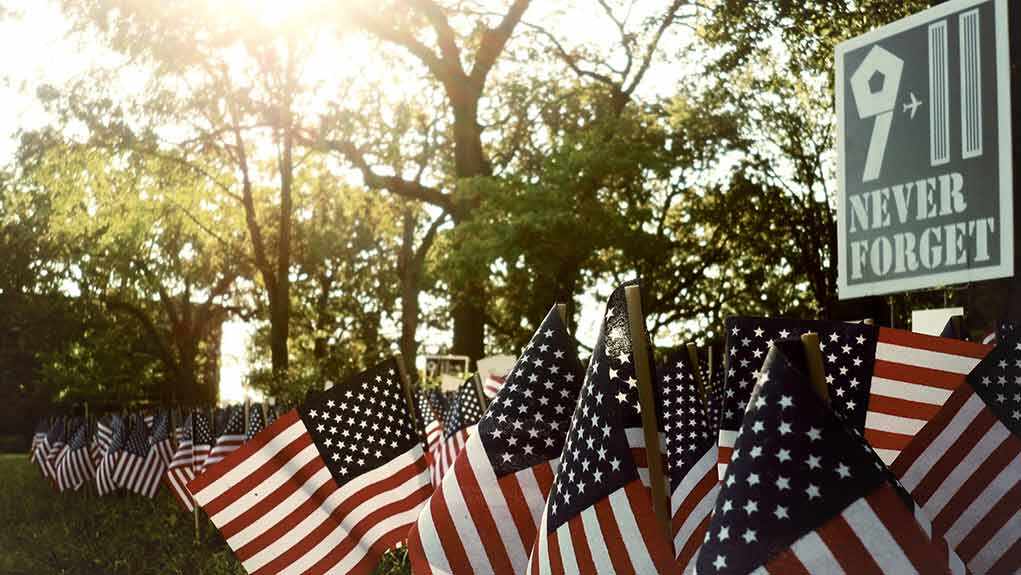
On the 25th anniversary of 9/11, a field of 2,977 small American flags at a California campus was found marked with political slogans.
Story Snapshot
- Organizers placed 2,977 flags, one for each life lost on 9/11.
- Some flags were marked with “Free Palestine,” “Blowback,” and “161”.
- The university said campus police received a report and opened an investigation.
- Young America’s Foundation condemned the act as disrespectful to victims.
Memorial Of 2,977 Flags Marked On 9/11 Anniversary
California State University, Stanislaus students and volunteers set up a 9/11 remembrance with 2,977 American flags. The number matched the victims of the attacks, a hallmark of the Young America’s Foundation “9/11: Never Forget” project used nationwide. By the end of the day, volunteers reported ink on some flags. Messages read “Free Palestine,” “Blowback,” and “161.” Photos shared with reporters showed blue ink on flag fabric and sticks, suggesting quick, on-site marking.
The university responded with a short statement. It said the University Police Department received a vandalism report and was actively looking into the situation. No names were released. No charges were announced. Young America’s Foundation called the markings disgraceful and an insult to the dead. The group often frames these flag displays as a quiet act of civic memory. That frame helps explain the strong reaction when the display becomes a message board for other causes.
What The Messages Likely Sought To Signal
“Free Palestine” has become a common campus protest phrase tied to the Israel-Hamas war and broader Middle East debates. “Blowback” is a term used to argue that past United States actions invite retaliation. “161” is sometimes linked to anti-fascist networks in Europe, though meaning can shift by context. The presence of these phrases on a 9/11 memorial turns grief into a proxy fight over foreign policy and identity. That tactic mirrors past campus clashes over 9/11 flag fields and memorial rocks.
Similar incidents have surfaced for years. At Michigan State University, a 9/11 memorial with 2,977 flags and a “Never Forget” sign drew red handprints and political messages days after set-up. At Washington University in St. Louis, a student removed hundreds of the memorial flags and later defended the act as political speech about war and Islamophobia. These cases differ in detail, but the pattern is steady: small memorials draw outsized political messages because they are visible, symbolic, and easy to alter quickly.
The Line Between Protest And Desecration
Public universities must protect free speech while enforcing rules against vandalism. That balance is hard when the same space hosts approved displays and walk-up protest. Legal scholars describe campus quads and landmarks as traditional forums for expression, yet they also note that property rules and time, place, and manner limits still apply. Defacing or removing another group’s permitted memorial crosses a line most Americans see as basic respect, not censorship.
Common sense backs that view. You can speak your mind without writing on someone else’s tribute to the dead. If you hate a message, answer it with your own sign, not a marker on a flag. That is how a free society avoids rule by the loudest disruptor. Young America’s Foundation urges campuses to set clear rules, guard memorials during sensitive dates, and punish vandals when proof exists. That clarity protects both remembrance and speech going forward.
Why This Keeps Happening On Campuses
Memorials compress big ideas into simple symbols. That power makes them tempting targets for anyone who wants to hijack the stage. Researchers who study protest note that people often use monuments and memorials as canvases because a single mark flips the meaning for passersby. On 9/11, that flip lands hardest. A blue scrawl on a flag near a victim’s number jolts people who came to remember, not to argue geopolitical history.
Schools can reduce the risk without turning quads into police zones. Post clear permits at displays. Add simple signs that explain the event, the sponsor, and how to report tampering. Place low-cost cameras or assign volunteers in shifts during high-profile dates. Afterward, publish short police summaries with photos when rules are broken. Quick, transparent action drains drama and shows the standard is even-handed, not political. That calm, firm approach honors the 2,977 and keeps debate where it belongs.
Sources:
nypost.com, news5cleveland.com, yaf.org, afn.net, jns.org, kslm.news
© targetliberty.org 2026. All rights reserved.