

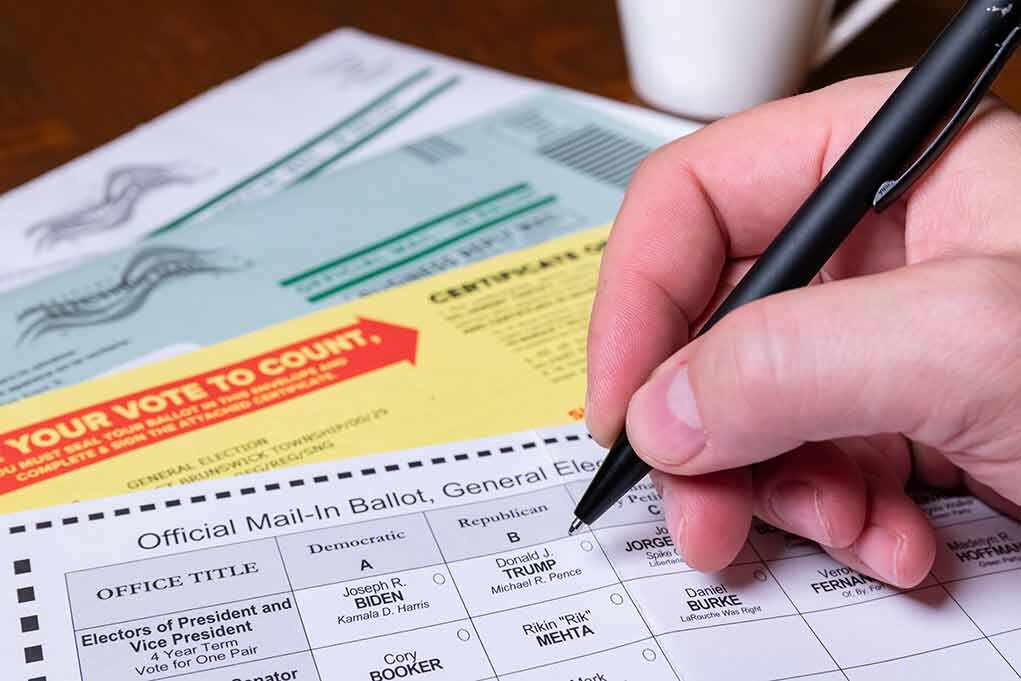
Two Dan Sullivans on one Alaska ballot was not a coincidence, investigators say it looked planned enough to probe.
Story Snapshot
- Texts and interviews reportedly show allies of Mary Peltola and national Democrats encouraged Daniel J. Sullivan Jr. to run.
- An Alaska official first ruled the filing aimed to mislead voters, though the state’s high court kept him on the ballot.
- Governor Mike Dunleavy ordered a public safety investigation; the Justice Department moved in court on certification risks.
- Peltola’s campaign and the Democratic Senate committee denied involvement; the candidate said he ran by choice.
How Alaska Ended Up With Two Dan Sullivans
The New York Times reporting, echoed by major outlets, described texts, interviews, and documents tying Peltola-linked figures and national Democrats to the recruitment of Daniel J. Sullivan Jr., a retired teacher with the same first and last name as the Republican incumbent, Senator Dan S. Sullivan. The plan matched a known tactic: seed a same-name candidate to shave a few points off an opponent in a close race. The ballot listed both men, one an incumbent Republican, the other unaffiliated, on the same U.S. Senate line.
An Alaska elections official initially concluded Daniel J. Sullivan Jr.’s filing was submitted “with a purpose to confuse or mislead,” and therefore threatened the ballot’s fairness. That conclusion lit a fuse. Governor Mike Dunleavy directed the Alaska Department of Public Safety to investigate whether the scheme broke state law and whether charges or civil actions were warranted. At the federal level, the Department of Justice pursued litigation to delay or block certification if confusion tainted results.
Courts, Cops, And The Narrow Lane Of Election Law
The Alaska Supreme Court kept Daniel J. Sullivan Jr. on the ballot, finding the challenge did not meet the statute to bar his candidacy. That ruling did not bless the tactic; it said the law, as written, did not justify removal. This is a key lesson for voters who want clean elections: election law punishes proven fraud, but it often permits sharp tactics unless they cross a clear legal line. That gap invites gamesmanship and demands better rules.
Denials arrived fast. Mary Peltola’s campaign said it had no involvement with either Sullivan and did not recruit candidates; the Democratic Senatorial Campaign Committee said it had no role with Daniel J. Sullivan Jr.. Daniel J. Sullivan Jr. said he entered the race on his own. Those claims, if true, frame this as hardball coincidence. The reporting, if accurate, suggests coordination among associates. That clash is exactly why the probes matter.
What Investigators Will Look For Next
Probes like this turn on receipts, not vibes. Investigators will want the full text threads, not curated snippets; phone and email logs; and any travel, filing, or consulting costs tied to the candidacy. If party or campaign-linked funds paid filing fees or aided signatures, that is a high-impact proof point. If aides drafted paperwork or coached messaging, that shows coordination. If none of that surfaces, the case weakens into rumor and clever timing rather than a plan.
The top federal prosecutor in Alaska confirmed the existence of a criminal investigation related to an alleged scheme to confuse voters by putting a Senate candidate on the ballot with the same name as the Republican incumbent.
Follow the link in our bio for more details. pic.twitter.com/3TjaubbtfB
— First Alert 6 (@WOWT6News) October 31, 2026
Quantifying harm is the hardest step. Analysts must test whether same-name confusion moved votes. Alaska’s ballot did label the incumbent and list affiliations, which helps voters. But even a one or two point drop can swing a tight race. That is why the Department of Justice asked a court for room to act on certification if confusion decided the outcome. If the data show minimal crossover or spoiled choices, the legal firepower fades even if the tactic was ugly.
Fair Play, Free Choice, And A Conservative Common Sense Test
Free speech lets people run for office. Fair play demands they do not run as decoys. Conservative common sense says the process should reward clear choices, not traps. If operatives gamed the ballot to trick casual voters, that insults the voter, not just the rival. The initial state finding of intent to mislead, the governor’s probe, and the federal litigation together meet a threshold of seriousness that justifies sunlight and, if warranted, sanctions.
Still, one truth can hold with another. Courts did not find a crime. Denials stand on the record. The Times reporting and follow-on coverage point to a plausible scheme, but proof means documents, direction, and dollars that tie back to accountable hands. Alaska can lead here. Close the rulebook gaps that allow same-name ambushes, demand stronger ballot labeling, and keep the voter—not the consultant—at the center of the count.
Sources:
abc7.com, afp.com, washingtonexaminer.com, nativenewsonline.net, bbc.co.uk
© targetliberty.org 2026. All rights reserved.