
targetliberty.org — When a small country tells the world’s biggest international body to lose its number, it is not just a diplomatic spat – it is a declaration about who gets to define moral authority in a war.
Story Snapshot
- Israel has moved from grumbling about the United Nations to formally cutting contact with multiple United Nations agencies and now the United Nations Secretary-General himself.
- Jerusalem frames the break as self-defense against deep institutional bias and bloated bureaucracy inside the United Nations.
- The United Nations leadership insists it is simply doing its job: condemning Hamas terror, warning about civilian harm, and pushing humanitarian law.
- This clash exposes a bigger question for Americans: who guards the guardians when unelected global institutions sit in judgment of democracies fighting terror?
Israel escalates from complaints to a formal diplomatic rupture
Israel’s foreign ministry did not whisper its frustration into some anonymous briefing; it issued an order. Foreign Minister Gideon Sa’ar directed the “immediate severing of contact” with a list of United Nations-linked agencies, and the ministry said Israel would “immediately sever all contact” with additional international bodies tied to the United Nations system.[1][2][4] That kind of language is not symbolic. It tells every Israeli diplomat, every ministry, and every liaison office that business as usual with these institutions is over.
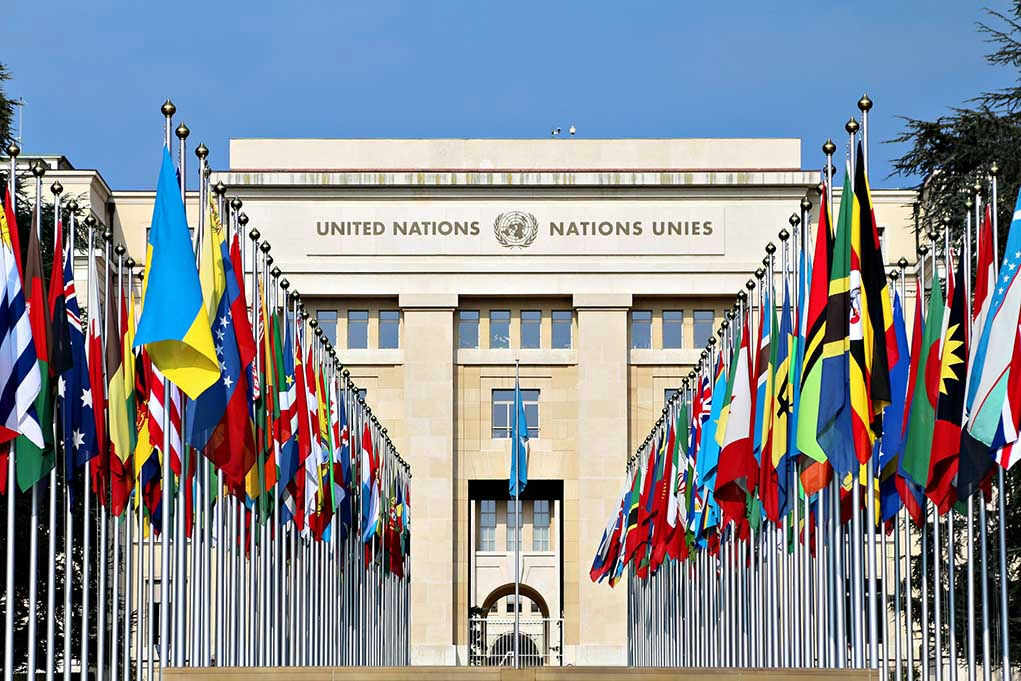
The decision came after months of escalating friction. Reports describe Israel halting cooperation with seven United Nations agencies and affiliated organizations, including United Nations Women, the United Nations Conference on Trade and Development, the United Nations Economic and Social Commission for Western Asia, and the Office of the Special Representative for Children and Armed Conflict.[1][2][3][4] This was not one meeting canceled in anger. It was a methodical cutting of cords with what Israel views as a hostile ecosystem inside the United Nations.
Bias, bureaucracy, and the Gaza war as the stated trigger
Israeli officials justify the severing with two blunt charges: chronic anti-Israel bias and useless bureaucracy. Coverage of the move quotes Jerusalem accusing these agencies of a pattern of slanted reporting and political activism dressed up as expertise, combined with “ineffective bureaucracy” that adds cost and pressure but little value.[2][4] The Gaza war sharpened those grievances. Israel’s decision is explicitly tied to criticism from these United Nations bodies over its conduct in Gaza and mounting international condemnation of the campaign.[3][4]
From a conservative, common-sense perspective, that logic resonates. No sovereign nation is obligated to keep feeding legitimacy to institutions it believes are stacked against it. When the same international complex reliably singles out the world’s lone Jewish state for censure while giving terror groups and authoritarian regimes softer treatment, it is not paranoid to see structural bias. However, the evidence provided so far remains mostly circumstantial; it cites patterns and rhetoric, not a detailed charge sheet documenting each agency’s misconduct.[1][2][3][4] That leaves plenty of room for critics to call this politics, not principle.
The secretary-general becomes a target, not just the machinery
The rupture did not stop at faceless agencies. Israel’s ambassador to the United Nations publicly called for Secretary-General António Guterres to resign after his remarks to the Security Council on the Israel-Hamas war.[5] That is an extraordinary step. Ambassadors gripe about resolutions all the time; demanding the head of the world body step down is something different. It crystallizes Israel’s view that the problem is not just rogue committees but the tone and framing set from the top of the United Nations pyramid.
Here the facts get more uncomfortable for the “the United Nations never condemns terror” crowd. Guterres stated plainly, “I have condemned unequivocally the horrifying and unprecedented 7 October acts of terror by Hamas in Israel,” and added that “nothing can justify” deliberate attacks on civilians. Those are not the words of someone cheering on Hamas. The clash is not about whether the October 7 atrocities were evil. It is about what comes next: how the United Nations weighs Israel’s military response, how it talks about proportionality, and whether it treats a democracy fighting for survival as morally equivalent to a terror organization.
What is missing from the public record – and why that matters
Notice what we have not seen yet. The available reporting does not include the full Israeli foreign ministry directive or internal legal reasoning explaining precisely why contact with the secretary-general, personally, had to be severed.[1][2][4] Nor do we have an itemized list of specific acts by Guterres that would meet a clear standard of misconduct. We see anger and rhetoric; we do not see a detailed indictment. For readers used to American due process, that gap should matter.
The same opacity exists on the United Nations side. The secretary-general’s office and wider United Nations apparatus emphasize their mandate to highlight civilian suffering and uphold humanitarian law, but they have not laid out in public a systematic rebuttal of Israel’s long-running bias claims. That silence allows media outlets and activists to fill in the blanks with their own narratives. In a polarized environment, criticism of a war easily gets read as criticism of a country’s right to exist, and that is exactly the line Israel insists the United Nations keeps crossing.
Israel has broken all contact with the UN secretary-general Antonio Guterres, its ambassador says.
🔴 More on https://t.co/5H0QqpfIYw pic.twitter.com/FgUWffOGXw
— Al Jazeera Breaking News (@AJENews) May 28, 2026
The deeper fight: who defines legitimacy in an age of terror
Underneath the headlines is a larger struggle over who gets to sit in moral judgment. Israel’s moves fit a broader pattern where democracies under attack push back against unelected global bodies that claim the right to referee their wars.[1][2][3][4] For many conservatives, the instinct is clear: national governments answer first to their citizens, not to international bureaucrats who never face voters, never bear the risk of rockets, and never send their own kids to the front line.
At the same time, any serious friend of Israel has to ask the hard question: does walking away from the United Nations secretary-general and multiple agencies make Israelis safer, or does it simply cede the microphones to their adversaries?[1][2][4] The record in hand does not show whether the break improved security, humanitarian access, or diplomatic leverage. It shows a line being drawn. Whether that line protects Israel’s legitimacy or isolates it further depends on what comes next – and whether the country can back its accusations with the kind of hard evidence that persuades more than the already converted.
Sources:
[1] Web – Israel breaks all contact with UN secretary-general: ambassador
[2] Web – Israel cuts contact with UN bodies, prompted by US withdrawals
[3] Web – Israel severs ties with UN agencies over bias, inefficiency
[4] Web – Israel severs ties with UN agencies over criticism of Gaza war
[5] Web – Jerusalem severs ties with 7 UN agencies, citing anti-Israel bias
© targetliberty.org 2026. All rights reserved.