
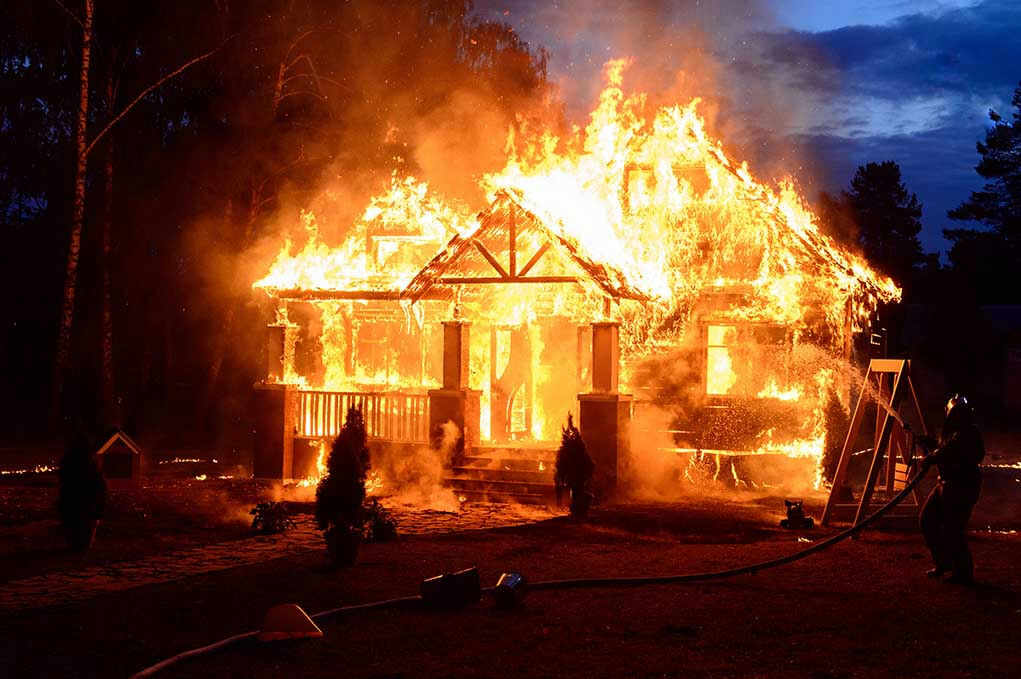
Thousands of Californians watched walls of flame lunge toward their neighborhoods this week and learned, in real time, that the only thing thinner than a property line is the margin for delay when a wildfire takes off toward homes.
Story Snapshot
- Fast-moving wildfires near Simi Valley and Chino Hills triggered urgent evacuation orders as flames pushed toward hundreds of homes.[1][2][3]
- Live footage showed structures burning, at least one home destroyed, and parents scrambling as schools sheltered students indoors because of smoke.[2][3]
- Authorities juggled chaos: issuing evacuation zones, tracking zero-containment fire lines, and trying to avoid traffic gridlock.[1][2][3]
- Fire veterans repeat the same blunt lesson: if you wait for perfect information or a knock on the door, you may wait too long.[3][4]
When The Hills Light Up And Your Phone Starts Screaming
Television anchors broke into programming with aerial shots that looked uncomfortably familiar: orange tongues of flame racing uphill, neighborhoods framed in smoke, and reporters repeating the phrase “evacuations underway” like a drumbeat.[1][3] On the ground near the Sandy Fire in Simi Valley, correspondents described flames running through dry brush, driven just fast enough that sheriffs did not haggle with residents about risk; they simply ordered people out and cleared room for engines and aircraft.[1][2][3]
Viewers heard the numbers escalate before the fire crews could draw a clean box around the incident. Broadcasts put the fire’s size around 184 acres while containment still sat at zero, meaning firefighters were fighting to slow the spread, not finishing the job.[3] Reporters on scene showed at least one property already damaged, confirming that this was not just a “scenic” brush burn in the distance.[3] Families in nearby tracts watched the glow grow brighter and listened for the word nobody wants to hear: “mandatory.”[1][2][3]
The Tractor, The Wind, And The Limits Of What Anyone Knows At First
During the first few hours, the cause narrative started forming the way it usually does—through scanner chatter and witnesses rather than signed investigative reports. An eyewitness told local police that a tractor clearing brush might have thrown the first spark that became the Sandy Fire, a detail repeated on air but not confirmed by any official investigator.[3] That kind of half-formed story sticks fast, even though fire investigators often take weeks to separate rumor, faulty memory, and actual ignition evidence.[3]
Something similar unfolded in Chino Hills when a crashed vehicle ignited what became the Grand Fire along the hillside above subdivisions.[1] Flames quickly threatened as many as 650 homes, and crews from the Chino Valley Fire District and the California Department of Forestry and Fire Protection converged with helicopters, bulldozers, and twenty engine companies.[1] Residents saw fire engines sprint past their driveways while officials decided, street by street, who had to go immediately and who could stand ready with keys in hand.
How Evacuation Decisions Actually Get Made When Minutes Matter
Authorities declared mandatory evacuations for several Simi Valley neighborhoods as the Sandy Fire burned structures and moved near the Ronald Reagan Presidential Library, while some facilities and outlying homes fell into the “warning” category—watchful readiness rather than immediate flight.[1][2][3] That split frustrates people, but it reflects a simple operational reality: law enforcement must move the most at-risk residents first, then expand the circle as the fire’s trajectory becomes clearer and resources tighten.
Chino Hills officials used the same tiered approach as the Grand Fire crept above the houses near Grand Avenue Park.[1] Mandatory orders landed first on streets pressed right up against the burning slope—Falling Star Lane, Millstream Drive, Valley View Lane, and Sweet Grass Lane—while a wider band of blocks received warnings to pack up and be ready to go.[1] An evacuation center at the Chino Hills Community Center opened quickly, taking both residents and pets, while road closures on Grand Avenue and Chino Hills Parkway cleared a corridor for engines and aircraft.[1]
Why Conservative Common Sense Says: Leave Early, Then Ask Questions
California’s own Ready for Wildfire “Go” guide does not mince words: if officials suggest you evacuate, the smart move is to leave right away, because in big wildfires “there’s no time for door-to-door warnings.”[4] That guidance lines up with basic conservative instincts about personal responsibility and risk: government can send alerts, but it cannot babysit every driveway. When dry hills, afternoon winds, and chaparral align, the only rational choice is to get your family out of the way and let professionals work.[4]
Wildfire Races Toward Homes in Southern California, Forcing Evacuations https://t.co/Y1CJIVOd6R pic.twitter.com/xYBuQQvcnS
— Dan Novotny (@DanNovotnyReal) May 18, 2026
Parents near the Sandy Fire saw that principle in action when schools kept students indoors, not because flames licked the playground fence but because smoke degraded air quality and evacuation routes needed to stay clear.[3] Broadcasters relayed reassurances that “students are safe and secure,” yet also made clear that fire behavior could change quickly.[3] Adults in the audience faced an uncomfortable test: trust that the situation was under control, or accept that no plan survives first contact with a wind shift and act early.
Turning A Frightening Night Into A Standing Policy At Home
Fire agencies and city governments have quietly spent years posting the playbook that residents rarely read until a helicopter camera points at their house. Cities such as Chino Hills urge homeowners to clear combustibles within thirty feet of their structures, prune trees so lower branches do not form a ladder for flames, and keep hoses connected so firefighters can quickly wet down a roof.[3] They also urge every household to map two ways out, assemble a grab-and-go kit, and practice leaving before adrenaline scrambles thinking.[3][4]
The Grand Fire ended up holding at about thirty acres, with all evacuations lifted roughly three hours after the first sparks, a reminder that not every scary night becomes another statewide catastrophe.[1][2] But crews stayed on the line through the dark to make sure embers did not relight the hillside as winds shifted.[1] That combination—aggressive professional defense and citizens willing to step aside when told—turned what could have been a tragic headline into something closer to a near miss. The next fire will offer the same test, but not necessarily the same margin for hesitation.
Sources:
[1] YouTube – Evacuations underway as fast-moving Sandy fire threatens …
[2] YouTube – Live Coverage: Wildfire burns structures in Simi Valley
[3] YouTube – Brush fire burning in Southern California, evacuations …