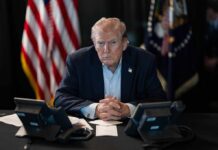

“We were getting ready to do a very major attack tomorrow”—and then the pause button was hit at the request of Gulf royals, if the reports are right.
Story Snapshot
- Trump reportedly said a U.S. strike on Iran was scheduled for “tomorrow” before he postponed it at Gulf leaders’ request [1][4].
- Names cited include leaders of Qatar, Saudi Arabia, and the United Arab Emirates, though direct confirmations from them have not surfaced in the provided record [2].
- Coverage varies on targets: Iran generally vs. Iranian energy infrastructure and power plants [1][3].
- No primary-source post or official order is included in the supplied material, leaving key details unverified [3][4].
What Was Allegedly Planned And Why It Matters
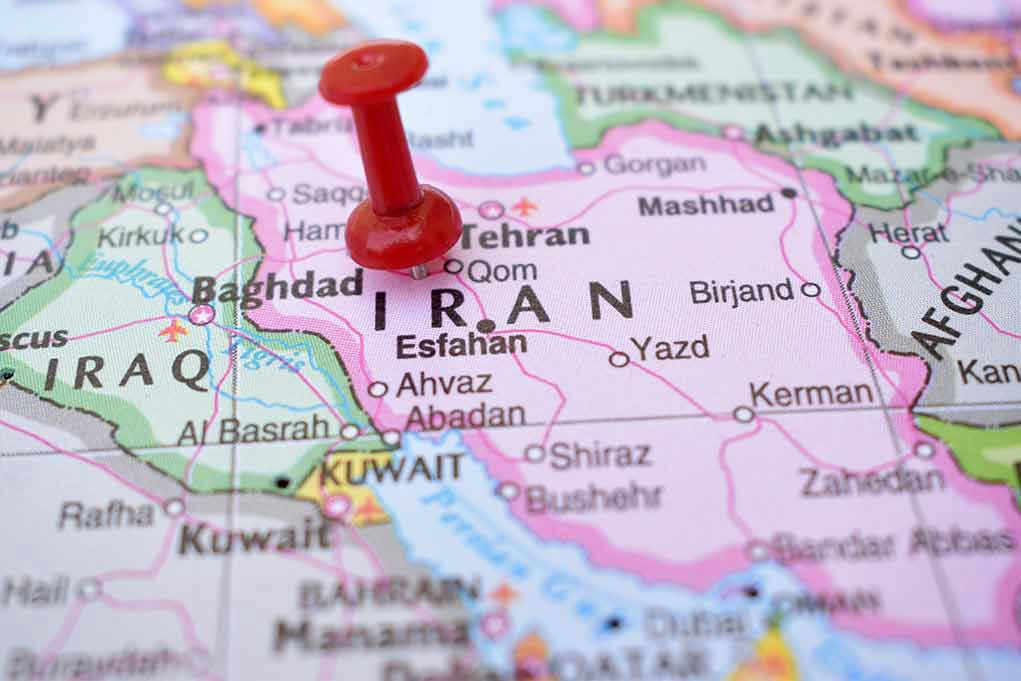
Reports quote Donald Trump saying he postponed a U.S. military strike on Iran that had been “scheduled for Tuesday,” framed as “tomorrow,” after appeals from Gulf leaders. Broadcast segments and write-ups describe a pause affecting strikes on Iranian energy infrastructure and power plants, not necessarily a wider campaign, though language differs by outlet [1][3][4]. Axios reporting aligns on the central claim that Trump said he paused a plan at the request of several Arab leaders, reinforcing that this was presented as a real option on the table [4].
Conflicting descriptions of the target set complicate the picture. Some clips emphasize energy facilities; others imply a broader attack. This divergence could reflect the normal fog of rapid reporting or shifts inside the planning process. Wikipedia’s summary of ongoing negotiations notes that United States Central Command had presented attack options to the president, which supports the existence of a military pathway under discussion without proving a final go-order existed [3]. That ambiguity keeps the door open to both interpretations: a genuine stand-down or a coercive signal.
Gulf Pressure As The Stated Brake
Coverage attributes the delay to appeals from leaders of Qatar, Saudi Arabia, and the United Arab Emirates. One video segment paraphrases or quotes a statement listing those leaders by name, asserting they urged a postponement and that senior U.S. military officials were instructed to halt the operation [1][2]. The supplied research, however, does not include readouts or statements from those governments confirming their role. Without their corroboration, the claim stands as Trump’s stated rationale rather than a jointly verified account [2].
From a conservative, common-sense angle, the logic of Gulf intervention tracks with regional risk management. The Gulf states live within missile and drone range of Iran. They carry outsized exposure to energy-market whiplash and infrastructure retaliation. If the White House floated a narrow strike on energy nodes, Gulf rulers would plausibly want time to harden defenses, coordinate with Washington, and avoid a spiral that imperils shipping lanes and domestic stability. That interest alignment does not prove the call happened, but it explains why such a request would be credible [1][4].
Verification Gaps And What They Mean
The absence of a primary-source post, official White House transcript, or Pentagon document in the supplied material leaves open questions about exact wording, timing, and tasking. Misspelled names and caption glitches in some clips raise the risk of quote drift. Axios reports Trump said he paused a plan at Arab leaders’ request, which supports the topline but still relies on on-the-record statements rather than declassified orders [4]. Wikipedia’s round-up shows negotiations and options in play but does not resolve whether a strike package was fully greenlit before being stopped [3].
Out of respect for the aforementioned leaders, I have instructed Secretary of Defense Pete Hegseth, Chairman of the Joint Chiefs of Staff General Daniel Kane, and the United States Armed Forces that we will not carry out tomorrow's planned attack on Iran,
— Маrina Wolf (@volkova_ma57183) May 19, 2026
Policy-wise, the difference matters. A paused, fully scheduled strike implies the commander in chief crossed the threshold into execution planning, then stepped back due to allied pressure. A paused option implies leverage-building—show the gun, keep diplomacy moving, and maintain market stability. American conservatives typically favor peace through strength: keep credible options ready, make adversaries believe them, but avoid entangling escalations without clear objectives and exit criteria. The record shown supports the existence of leverage; it does not conclusively prove a near-execution reversal [3][4].
How To Read The Signal Without Overreading It
Strategic ambiguity is a tool, not a typo. Leaders routinely publicize the possibility of imminent action to coerce adversaries, reassure partners, or shape negotiations. If Trump’s messaging produced a pause narrative, that alone could serve deterrent and bargaining aims—especially if Tehran faced the prospect of targeted hits on critical energy infrastructure. Yet prudence demands documentation before upgrading a signal into a fact pattern. Until a primary-source post, call readouts, or declassified orders surface, treat this as a stated pause, not a proven stand-down [3][4].
Sources:
[1] YouTube – Trump halts planned Iran attack after Gulf leaders intervene amid …
[2] YouTube – claims to postpone Iran attack on Gulf leaders’ request
[3] Web – 2025–2026 Iran–United States negotiations – Wikipedia
[4] Web – Trump says he’s pausing plan to attack Iran – Axios