
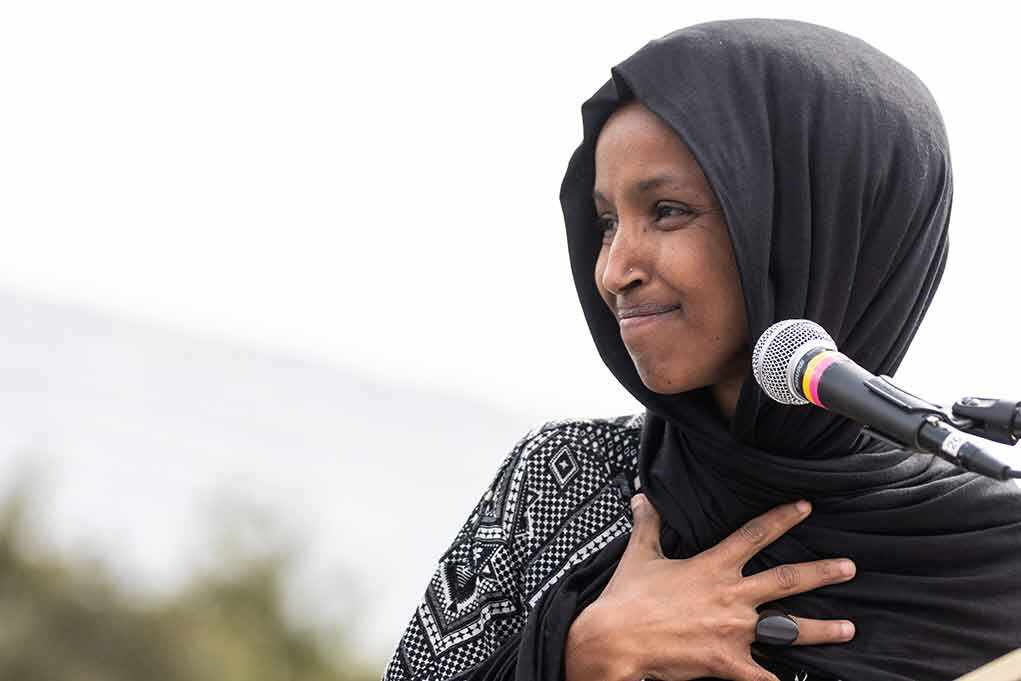
A decorated Somali army officer’s name now sits at the center of a federal probe into a U.S. lawmaker’s past.
Story Snapshot
- Reports describe Ilhan Omar’s father as a Somali army colonel under Siad Barre.
- A former fellow officer said he played a key role in the war with Ethiopia.
- Omar’s family lived in a Kenyan refugee camp and entered the United States in 1995.
- A federal warrant reportedly targets possible immigration fraud and false statements.
What the record says about the father’s rank and loyalties
Published accounts identify Nur Omar Mohamed as a senior officer in the Somali National Army during Siad Barre’s rule. Reporting cites an obituary that said he trained in Soviet Russia, rose to colonel, and led a regiment in the late 1970s war against Ethiopia. An Oxford historian, Mohamed Haji Ingiriis, was quoted describing him as loyal to the regime until the end. A former officer, Yusuf Ismail Faraton, reportedly said Nur played a significant role in Somalia’s war with Ethiopia. These statements frame the father’s career and loyalties.
Human Rights Watch documented the Barre government’s systematic abuses against the Isaaq people during the late 1980s. Reports describe mass killings, torture, and the destruction of cities like Hargeisa under military command in that period. The Africa Watch record, a division of Human Rights Watch, further details targeted atrocities in northern Somalia, including strategies that aimed to crush the Isaaq population and drive survivors into exile. These sources establish the brutality of the state that Somali officers served.
What is and is not established about personal responsibility
Available reporting does not show a formal legal record tying Nur Omar Mohamed to specific atrocities. No public court case, truth-commission finding, or official investigative report attributes ordered or personal acts to him by name. The reporting places him in the military hierarchy and links him to the Barre regime. That link matters for public judgment. But rank and loyalty, by themselves, do not prove personal criminal conduct, which must rest on specific evidence in law.
Separating what is proven from what is implied is essential. The historical record on Siad Barre’s government and the Isaaq campaign is strong and chilling. The record on one officer’s direct actions is thinner in what is publicly available. American conservative values prize both accountability and due process. The right reaction is to keep both ideas in hand: condemn the regime’s crimes, and demand solid proof before assigning personal guilt to any named individual.
The refugee path and the focus of the federal inquiry
Associated Press reporting summarized by the Anchorage Daily News says Ilhan Omar spent about four years in a Kenyan camp before entering the United States in 1995 at age 12. That timeline confirms a real refugee journey. The same report describes a federal probe that focuses on possible immigration fraud, conspiracy, and false statements connected to old documents, including questions about birth dates, citizenship papers, and whether military service was disclosed. The reported warrant sets the legal scope.
Two claims now run side by side in public debate: the father’s service under a vicious regime, and whether the family misstated facts in refugee or immigration files. The first rests on named-source reporting about rank and loyalty, alongside well-documented state crimes. The second sits with investigators, who will have to match forms, dates, and sworn statements against records. That is how a system worthy of trust sorts history from paperwork and decides what, if anything, breaks the law.
Sources:
thegatewaypundit.com, washingtonexaminer.com, westernjournal.com, timesnownews.com, newsweek.com, tierneyrealnewsnetwork.substack.com
© targetliberty.org 2026. All rights reserved.