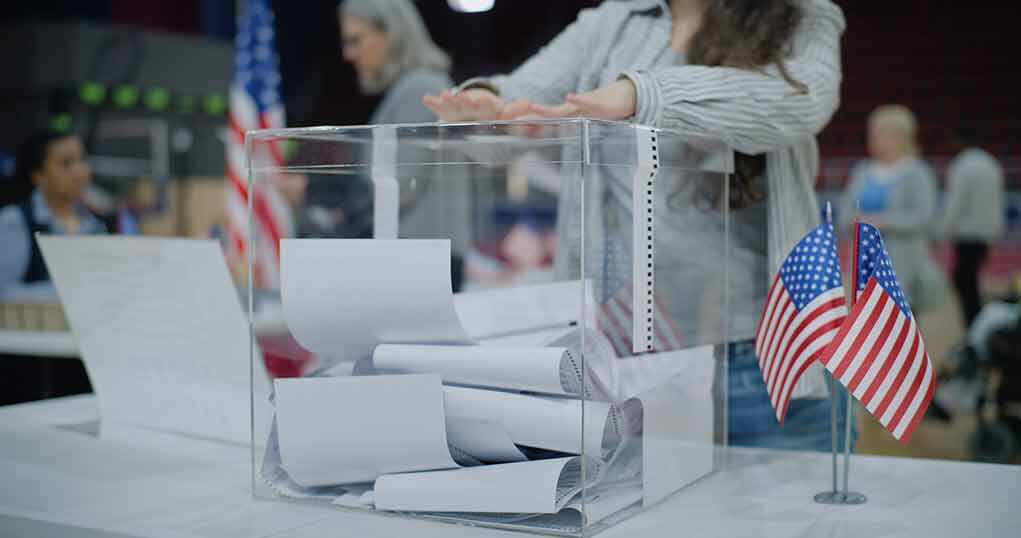
A last-minute software change stranded ballot scanners across Westchester, but the paper votes stayed safe and countable.
Story Snapshot
- State officials traced the failure to an incomplete programming update deployed unevenly.
- Scanners with old programming rejected ballots rather than miscounting them.
- Voters still filled paper ballots, secured under bipartisan oversight for later scanning.
- Technicians worked to restore at least one working scanner per polling place.
What Broke And Why It Mattered
The New York State Board of Elections said a programming update after testing caused Election Day trouble across Westchester County. A change for one municipality triggered new election programming. That update was applied for early voting and for that municipality’s Election Day machines, but not to other Election Day machines in the county. Machines with the old files could not recognize the live ballots. They rejected them instead of miscounting, which is a key distinction for public trust.
State officials emphasized there was no identified problem with ballot paper or printer stock. The failure arose from mismatched ballot definitions on scanners, not from thick paper or smudged ink. That technical cause aligns with known risks in optical-scan systems, where configuration errors can block recognition without touching vote totals. The core safeguard worked: rejection beats a wrong count. It alerts poll workers fast and triggers the fallback plan, which is exactly what happened.
How Voting Continued Without Chaos
Poll sites shifted to emergency ballot procedures already written into law. Voters kept marking paper ballots. Poll workers placed completed ballots in sealed, color-coded emergency bags. Bipartisan teams monitored custody and security. After technicians restored compatible programming or routed ballots to working scanners, those ballots would be scanned and included in the canvass. News outlets on the ground reported those orange emergency bags and the security steps at polling places that kept lines moving and votes safe.
Countywide response teams aimed to bring at least one functioning scanner online at every polling location. That strategy limited backlogs and reduced later central processing loads. Syracuse.com reported technicians were deploying the correct election media, a practical fix when a software image or memory device is out of sync. This is standard field recovery: confirm the ballot definition, update the device, test a few sample ballots, then resume precinct scanning.
Competing Explanations Faded As Facts Firmed Up
Early statements from local officials pointed to a paper issue and even paper thickness. That theory shifted once the state board detailed the programming mismatch. The county executive called the situation unacceptable and promised a review to assign accountability. Those comments reflect normal crisis management, but the technical trail put software first, not paper. The state’s written account set the record: recognition failure from uneven deployment, not mis-tabulation or physical-ballot defects.
One clear lesson stands out for any county. Change control must be airtight in the final days before polls open. If a contest changes in one town, the county must prove every machine got the update or was barred from service. That means logs, checklists, and sign-offs that match machine by machine. Conservative common sense says measure twice, cut once. Elections demand the same discipline, with receipts that the public can inspect after the count.
What Stronger Transparency Looks Like Next Time
Officials can reduce doubt with a post-election record dump. Publish the programming-change tickets, deployment logs, acceptance tests, and a list of machines that did and did not receive the updated files. Add a reconciliation that matches every emergency-bag ballot to precinct check-ins and final scanner totals. That package would show that every lawful ballot moved from voter hand to secure bag to scanner to canvass, cleanly and completely.
🚨 UPDATE: Major voting machine issues in Westchester County, NY!
Police are now escorting ballots directly to the Board of Elections.
Watch the count like a HAWK! 🇺🇸👀 pic.twitter.com/8n9z8WHeBC— Ryan Fournier (@RyanAFournier) November 4, 2026
Optical-scan systems fail in predictable ways that do not require fraud. Paper jams, humidity, printer drift, and configuration errors happen. The safety net is paper-first voting with tested backups and clear custody. Westchester’s experience fits that pattern. The systems rejected what they could not read, humans secured the paper, and technicians restored proper programming. That is what a resilient election looks like when something breaks—and why every ballot can still be counted.
Sources:
townhall.com, elections.ny.gov, westchestercountyny.gov, netswire.usatoday.com, westchester.news12.com, thecrotonchronicle.substack.com
© targetliberty.org 2026. All rights reserved.