

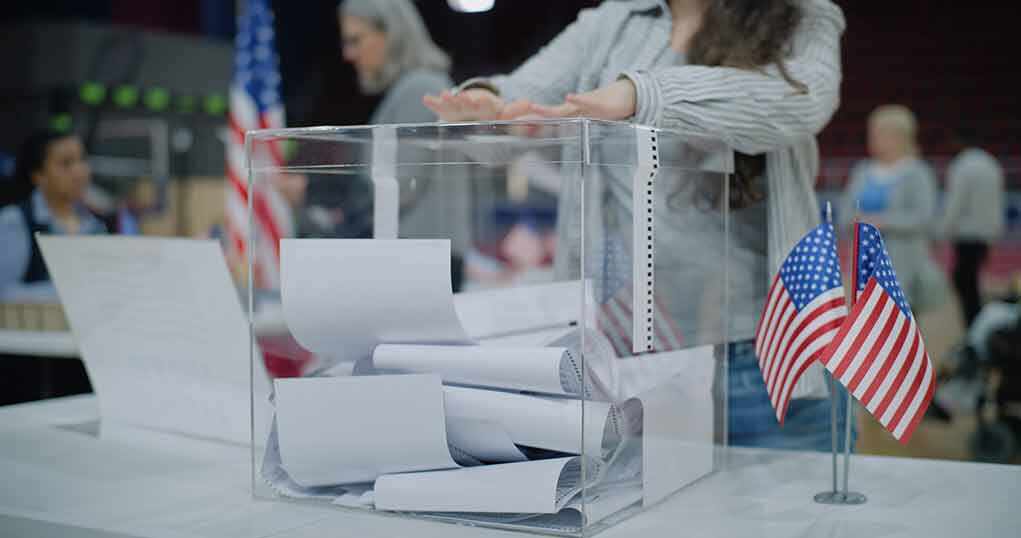
When scanners failed across Westchester County, orange bags—not machines—became the ballot box.
Story Snapshot
- Reports said scanners were down at most Westchester polling sites on Election Day.
- Voters filled paper ballots that went into sealed orange “emergency” bags for counting.
- Officials cited ballot thickness while noting the exact cause was still unclear.
- Results were delayed as officials prepared to count the bagged ballots first.
What Happened And Why It Mattered
Most Westchester polling places reported ballot scanners that would not accept ballots on November 3, 2026. Local television outlets said the problem looked countywide. The timing was high stakes because the county helped decide a key congressional race. Poll workers issued paper ballots and routed them to bright orange emergency bags. County officials said those ballots would be counted, and that voters should stay in line and keep voting.
The Westchester County Board of Elections told reporters that ballot thickness might be the reason scanners rejected ballots. Other reporting repeated a broader statement from the county that the exact cause was not yet known. Some observers mentioned software or ballot printing as possible causes, but no final answer was offered that day. The through-line stayed the same: complete your paper ballot, place it in the orange bag, and it will be counted.
How The Process Shifted Mid-Stream
Poll workers followed a backup plan most voters never see. They checked voters in, issued paper ballots, and secured marked ballots in orange bags. Officials said those bagged ballots would go to the Board of Elections for counting and might be tallied before the machine-cast ballots, which could push results later into the night. That plan kept voting open while putting more pressure on chain-of-custody steps and reconciliation after the polls closed.
Reports did not claim votes were changed or lost. They documented scanner rejection, emergency bagging, and a promise to count every ballot. That is the difference between a breakdown and a breach. A breakdown creates delays and extra steps. A breach changes outcomes. The record on the day showed disruption and detours, not proof of manipulation. Skeptics should focus on records, not rumors, to judge the final canvass.
What A Serious Review Should Prove Next
County officials should publish a full incident report. Start with where the scanners failed, how many ballots went into bags, and how many scanners later came back online. Add the intake logs for every orange bag, with seal numbers and bipartisan signatures. Match those counts to voter check-ins and the final hand tallies for each site. That evidence answers the only question that matters to voters: did every lawful ballot end up in the totals?
Every ballot scanner in Westchester County went down this morning, in one of the most competitive House districts in the country. Voters are still casting paper ballots, which go into secure orange bags to be counted. Stay in line and vote. Do not let a broken machine decide this…
— Lc (@ryukd) November 3, 2026
Technical answers should be tested in daylight. If paper stock caused rejections, show the purchase orders, paper specs, and vendor certificates. Release scanner error codes and technician notes. If printing or software played a role, document the fix and prove it with test results. Transparency builds trust among conservatives and liberals alike. Process errors happen; cover-ups should not. Publish the receipts, and people will judge the system by facts, not spin.
The Common-Sense Bottom Line
Voters did their job. They showed up, filled in ovals, and followed instructions. Government must now do its job. Count every ballot that was sealed in those bags. Show the math from sign-in to final tally. If the county wants faith in the result, it must earn it with records, not press lines. Confidence comes from clean books and open books. Push for both, and we can fix problems without feeding myths next time.
Sources:
townhall.com, abc7ny.com, nbcnewyork.com, fox5ny.com
© targetliberty.org 2026. All rights reserved.