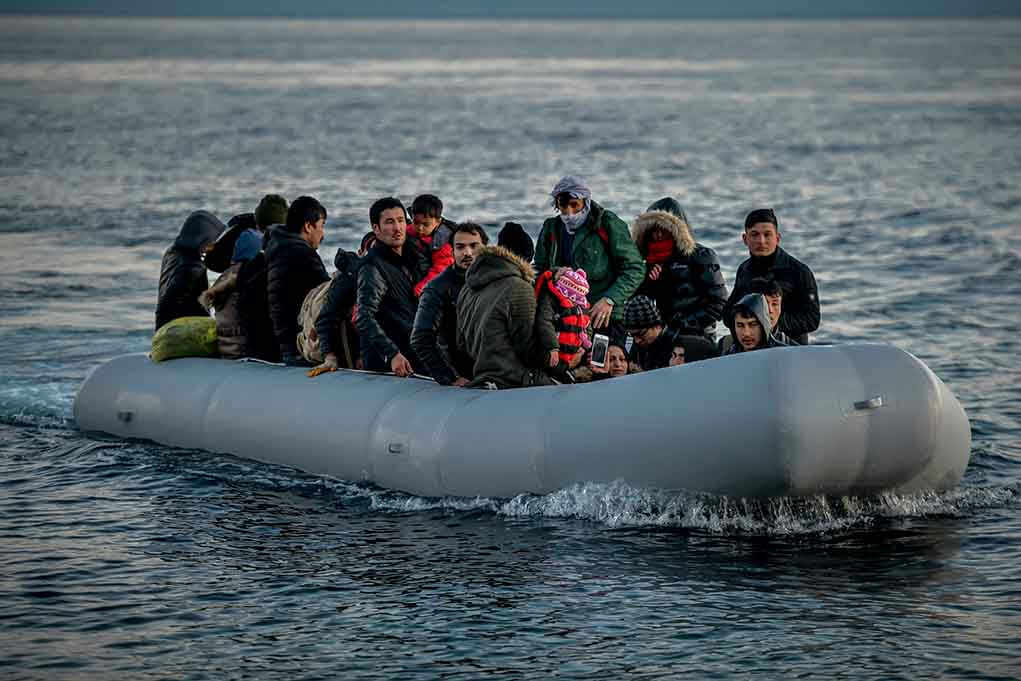
A deadly migrant-boat wreck off Greece once again exposes how Europe’s open-borders dogma keeps fueling human tragedy and lawless migration toward the West.
Story Snapshot
- A packed inflatable migrant boat capsized south of Crete, killing at least 17–18 and leaving many more missing.
- The disaster highlights a growing Libya–to–Greece sea route driven by smugglers exploiting weak European border enforcement.
- Greek Coast Guard and EU Frontex assets mounted a large search-and-rescue operation after a Turkish cargo ship found survivors.
- Years of EU “managed migration” and NGO pressure against tough deterrence keep pushing desperate people onto deadly boats.
Deadly Capsize South of Crete Shocks the Mediterranean
Early in December 2025, an overloaded inflatable boat carrying migrants trying to reach Europe capsized roughly 40 kilometers south of the tiny Greek island of Chrysi, off Crete. Reports confirm at least 17–18 people dead, with about 15 more initially feared missing as search teams combed the area. A Turkish merchant ship first spotted the half-sunken vessel, pulled two survivors from the water, and alerted Greek authorities, triggering a multi-asset rescue and recovery mission.
Greek Coast Guard vessels, a Frontex ship and aircraft, a Greek helicopter, and several merchant ships joined the search in rough seas south of Crete. The rescued survivors were taken to Crete for medical treatment and questioning, while bodies were transferred to local facilities for identification and autopsy. Authorities have not yet confirmed the boat’s exact departure point or the nationalities of those onboard, underscoring how opaque and chaotic these smuggling routes have become.
How Open-Border Policies Created a New Deadly Route
Greece has long been a main gateway into the European Union for migrants and asylum seekers leaving the Middle East, Africa, and Asia. During the 2015–2016 crisis, more than a million people flooded in through short crossings from Turkey to Aegean islands, after Brussels and left-leaning governments signaled that Europe’s doors were effectively open. When the EU–Turkey deal and tougher patrols in the Aegean curtailed that path, smugglers simply shifted tactics instead of stopping altogether.
Today, trafficking networks increasingly launch longer, far more dangerous journeys from Libya toward Crete and mainland Greece. These trips cross open water in the Libyan Sea, where winds and currents are stronger and flimsy inflatables stand little chance if weather turns or engines fail. Over the past year, Greek and international reporting has documented a notable rise in boats using this Libya–to–Crete corridor. Each fresh tragedy confirms that when politicians avoid real enforcement, criminal gangs quickly adapt around the edges.
Smugglers Profit While Europe Debates
On the water, the power dynamics are brutally simple: migrants depend on smugglers to arrange passage, on nearby merchant ships to spot them, and on coast guards to pull them out alive. Smuggling rings, driven by profit, cram people into cheap inflatable boats never designed for long crossings, cash in up front, and vanish long before anything goes wrong. Greek officials and Frontex are left to clean up the fallout, spending precious resources on repeated search-and-rescue operations instead of stopping departures at the source.
Meanwhile, EU institutions, NGOs, and human-rights advocates argue over legal obligations, safe routes, and burden sharing, while deaths at sea mount. Security-minded voices push for stricter border control, tougher action against smugglers, and robust deterrence so fewer boats launch in the first place. Humanitarian groups counter that tightened borders force people onto even riskier paths and demand more legal channels into Europe. Caught between these camps, practical enforcement on the water often lags far behind the scale of the problem.
What This Means for American Conservatives at Home
For readers watching from the United States under President Trump’s renewed push for strong borders, this Greek disaster is a warning about where endless compromise on illegal migration leads. Europe tried “managed migration,” offshore deals, and complex burden-sharing schemes instead of clear, enforced limits. The result has been years of mass inflows, emboldened smugglers, and an almost routine drumbeat of shipwrecks. When government refuses to draw firm lines, criminal networks set the terms instead.
More feared dead as migrant boat capsizes off the coast of Greece https://t.co/3LEX9xgKOh pic.twitter.com/fCvTQobU8O
— The Independent (@Independent) December 8, 2025
American conservatives frustrated with past open-border policies, sanctuary cities, and lax enforcement can see a direct parallel. Greece’s experience shows that once illegal routes solidify and activist pressure erodes deterrence, it becomes far harder to regain control without enormous human and financial costs. Strong borders, consistent enforcement, and clear national sovereignty are not only about upholding the rule of law—they are also about preventing desperate people from being lured into deadly journeys by false promises and lawless profiteers.
Sources:
At least 18 migrants die as inflatable boat sinks south of Greek island of Crete; 2 rescued
18 drown after migrant boat sinks off Greek island
More feared dead as migrant boat capsizes off the coast of Greece