
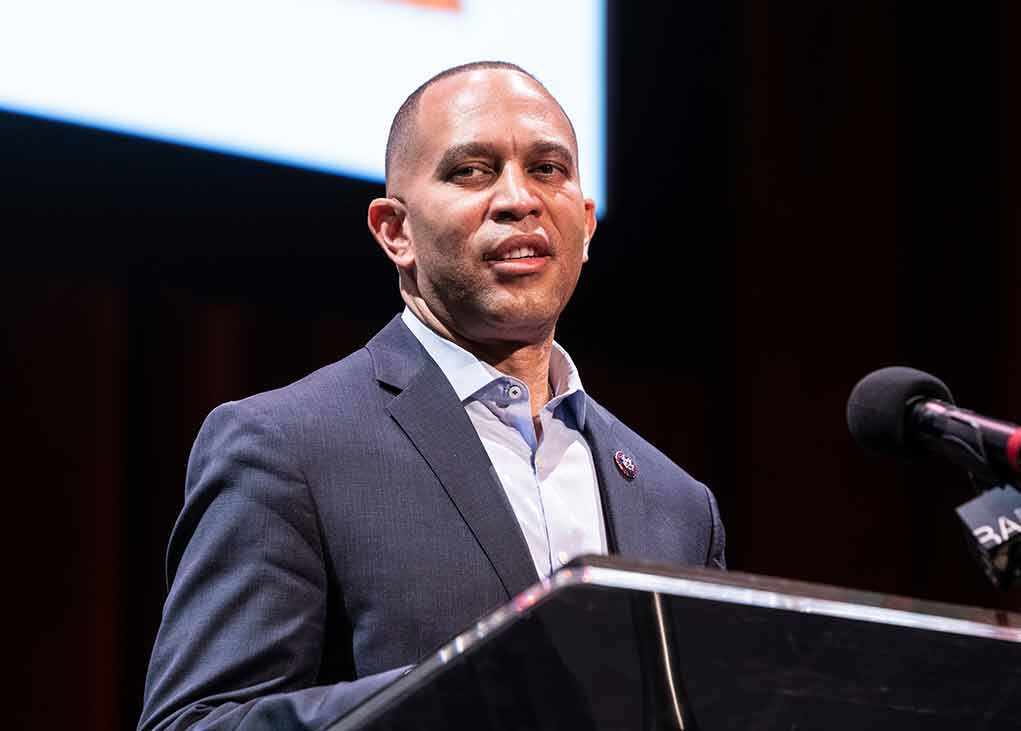
Progressive Democrats are pressuring Hakeem Jeffries on impeachment and donor ties just as he lines up the speaker’s gavel.
Story Snapshot
- Jeffries says Democrats will focus on affordability, not leading with impeachment.
- Grassroots critics cite his donor network, including pro-Israel giving, as a red flag.
- Reporting shows a real split inside the caucus on impeaching President Trump.
- Jeffries formally asked colleagues for support and cast his bid as accountable, not vengeful.
A leadership test collides with a base revolt
Hakeem Jeffries won a sweeping Democratic majority and moved to lock down votes for speaker. He told colleagues he will drive an agenda to lower the cost of groceries, gas, housing, and health care, while holding corrupt actors to account. He also asked members in writing to back his speaker bid, stressing unity and discipline after the win. That pitch puts economic relief first and frames oversight as targeted and serious, not a non-stop impeachment circus.
Progressive activists want a sharper edge. They argue that a second Trump term warrants immediate impeachment inquiries and maximal confrontation. They also point to Jeffries’s financial backing as proof he will slow-walk bold action. Investigations by the outlet Sludge traced large support to donors tied to the American Israel Public Affairs Committee and to executives in defense-adjacent tech firms, raising alarms on the left about access and influence. That funding map gives critics an easy rallying cry and a clean villain.
What Jeffries promises, and what progressives demand
Jeffries has sketched a two-track plan: drive down costs and run real oversight. He vows to “hold the crooks accountable,” but he pairs that with a pledge to center bread-and-butter issues that voters feel every week at the store and the pump. He does not make impeachment the banner headline. That choice is strategic. It keeps focus on prices and services that decide suburban seats. It also avoids promising outcomes before committees gather evidence.
Progressives counter that restraint looks like retreat in the face of alleged abuses. They cite past debates over Israel policy, where Jeffries backed continued military aid, as proof he resists their priorities. The Wall Street Journal described his uneasy ties with an energized left, and reported caucus disagreement over impeachment risks and rewards. On this record, the tension looks like a classic party family fight: win the middle now or rally the base hard and risk blowback.
Do donors decide, or do voters?
Campaign money fuels suspicion, and not only on the left. Sludge reported that the American Israel Public Affairs Committee’s political arm directed record support to Jeffries-linked committees, while his network drew from high-tech and finance figures. That reporting gives a concrete number for activists to cite and a narrative to tell. Skeptics ask if such donors will pull the speaker to the center on foreign policy and surveillance, or cool his drive on tech and crypto rules. From a common-sense view, transparency and floor votes are the cure.
Democrats need new leadership and a new direction.
I support Hakeem Jeffries for Speaker. He has the temperament and political instincts to lead, set the agenda and appeal to a broad electorate.
But he needs an equally feisty House Whip who can unite our big… pic.twitter.com/GY1XwMT7bc
— Fred Trump (@FredTrump_) November 9, 2026
Empirical research on money and voting shows mixed effects. Some studies find limited direct sway on roll calls once you control for district and member ideology. Others find that money nudges lawmakers toward moderation where donors cluster. Voters should demand daylight on meetings, amendments, and markups. If Jeffries keeps committee work and whip counts in the open, donors lose their shadow. If he buries votes, suspicion grows. That is the fairness standard most Americans expect.
Impeachment math and political risk
Impeachment sounds decisive, but it carries tradeoffs. Political science work on past impeachments suggests that national outcomes often ride more on the economy and local issues than on impeachment alone. The Wall Street Journal’s account of caucus doubts reflects that reality: some Democrats see impeachable acts; others see a midterm trap that could hand swing districts back to Republicans. Jeffries’s posture nods to this data. He keeps the door open to accountability while guarding the price-of-living brand.
Conservatives will see a tell here. If Democrats truly believed impeachment helped them, they would already be marching. They are not. That implies even many liberals know voters punish political theater when groceries cost more. On the merits, evidence-driven oversight beats cable-ready outrage. If committees develop clear records and refer crimes where proven, the public will back consequences. If leaders paste “impeachment” on thin charges, the public will tune out. That is basic civic common sense.
The likely path from here
Jeffries will likely secure the gavel. His caucus values stability after a chaotic era, and his written appeal framed a broad coalition message that can hold moderates and many progressives alike. He will then face a first hundred days test: pass cost-of-living bills, put credible oversight on the rails, and show that donors do not set the docket. Sludge’s findings guarantee watchdogs will track every markup and rule. If he delivers visible wins on prices and clean, public oversight, the grassroots fury will fade.
Sources:
pjmedia.com, readsludge.com, newsweek.com, cnn.com, academic.oup.com, tandfonline.com
© targetliberty.org 2026. All rights reserved.