

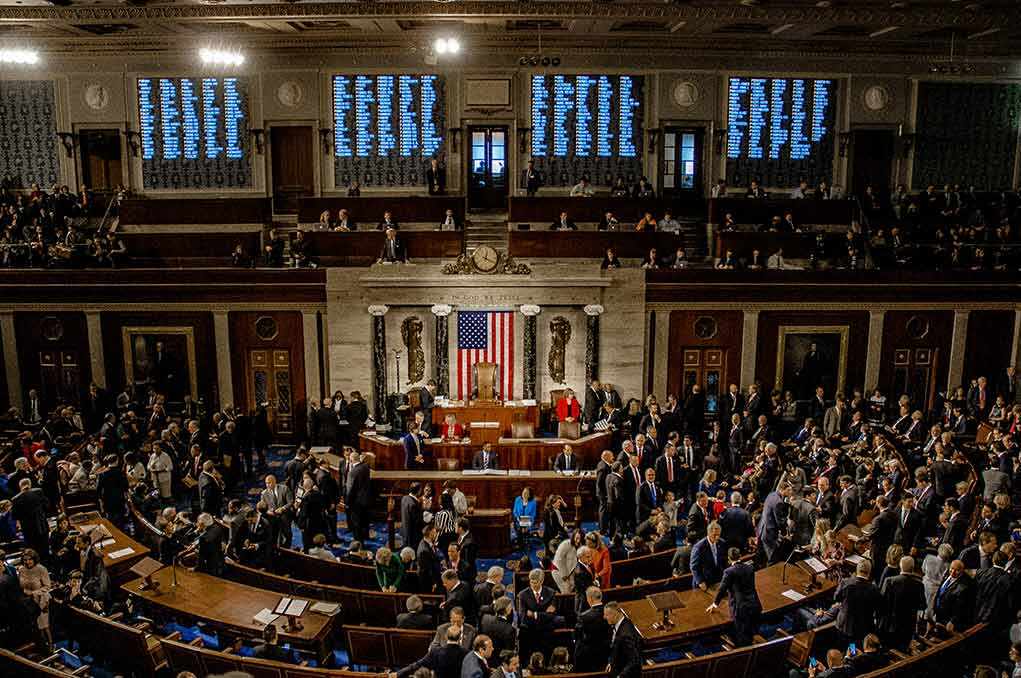
Trump said he might step in if House Republicans deadlock on their next leader, but he expects they will settle it themselves.
Story Snapshot
- Trump signaled a conditional endorsement in the House Republican leader race.
- Jim Jordan and Steve Scalise are competing to lead House Republicans next term.
- Trump also said he planned to stay out unless members reached an impasse.
- House leadership elections are decided by secret ballot inside the party conference.
Trump’s Conditional Signal To Break A Tie
President Trump said he “might” endorse in the House Republican minority leader race between Jim Jordan and Steve Scalise if members cannot reach a decision. He paired that with a clear expectation that the conference will choose its leader without him, saying he does not think he will have to step in. The message lands as Republicans regroup after losses and prepare for a closed-door vote to set their leadership team for the next Congress.
Trump also told reporters he would stay out of the leadership fight for now. He left the door open only if talks stall and members want a push to break a tie. That two-part stance signals restraint first, leverage second. It mirrors how modern party leaders keep options open in internal races. They respect process but keep influence ready if the room freezes and a decision is overdue.
What’s At Stake For Jordan, Scalise, And The Conference
Representative Jim Jordan of Ohio, who chairs the House Judiciary Committee, and Representative Steve Scalise of Louisiana, the current House Majority Leader, have both announced bids to lead House Republicans in the minority. Each has a long relationship with Trump and strong ties to different blocs inside the conference. Their race will test coalition strength, fundraising reach, and the promise to take the fight to a Democratic majority without losing discipline.
Jordan brings a hard-charging oversight brand and a base-first message. Scalise brings leadership experience, member outreach, and a reputation for managing floor fights. Both pitch unity after a bruising election. Both also claim they can put points on the board fast. Members will weigh who can defend incumbents, recruit credible challengers, and set a contrast message that hits crime, costs, border security, and American energy first—priorities that align with conservative goals of order, growth, and national strength.
How The Election Actually Works Inside The House GOP
The House Republican Conference elects its leaders by secret ballot at an internal meeting. The rule bars proxy voting and keeps tallies inside the room. That privacy lets members vote their judgment without public backlash. It also dulls outside pressure since no one sees the count. Formal power rests with members, not the White House or outside groups. That structure is designed to keep the party’s choices grounded in its own ranks and rules.
🚨JUST IN: President Trump announces he will NOT be getting involved in the race for House Minority Leader.
"We'll stay out of it. The speaker was fantastic. The people under him were fantastic. All good people, I guess."
47 mentioned Jim Jordan, who has announced his… pic.twitter.com/I10aEi1rvn
— Nick Sortor (@nicksortor) November 4, 2026
Endorsements can still matter. A president can move votes by shaping expectations on access, messaging, and support. Yet a secret ballot tests real loyalties. If Trump weighed in during a deadlock, it could offer a face-saving exit for holdouts and a fast close. If he stays out, the two campaigns must lock down commitments the old-fashioned way—call lists, member-to-member trust, and clear plans for committee strategy, fundraising, and a disciplined contrast with Democrats.
Reading Trump’s “Might”: Signal, Not Squeeze
Trump’s phrasing reads as a signal, not a squeeze. He affirmed the conference’s role first and left intervention as a last resort. That order matters. It respects the institution and conservative instincts about local control and accountability. It also keeps his political capital fresh. Spending it only to break a tie shows prudence. Voters prefer leaders who set broad goals and let teams execute, stepping in only when delay harms the mission.
The stronger case is that this stance helps, not hurts, Republican unity. It gives Jordan and Scalise room to build coalitions on policy and management, not just personal loyalty. It assures members they will not be steamrolled from outside the room. And it leaves a clear backstop if talks stall. The conference can choose first. If it cannot, the president can offer a nudge, and the party can move on with a single voice into oversight, messaging, and recruiting season.
The Bottom Line For Conservatives
Process discipline and party unity are not at odds here; they reinforce each other. A secret-ballot choice honors member judgment. A measured presidential backstop preserves momentum if the contest locks up. That balance reflects conservative common sense: settle your business in-house, keep your powder dry, and act when action prevents drift. Trump said he might act only if needed. The House Republican Conference now has the floor to prove it will not need the help.
Sources:
thegatewaypundit.com, politico.com, rollcall.com
© targetliberty.org 2026. All rights reserved.