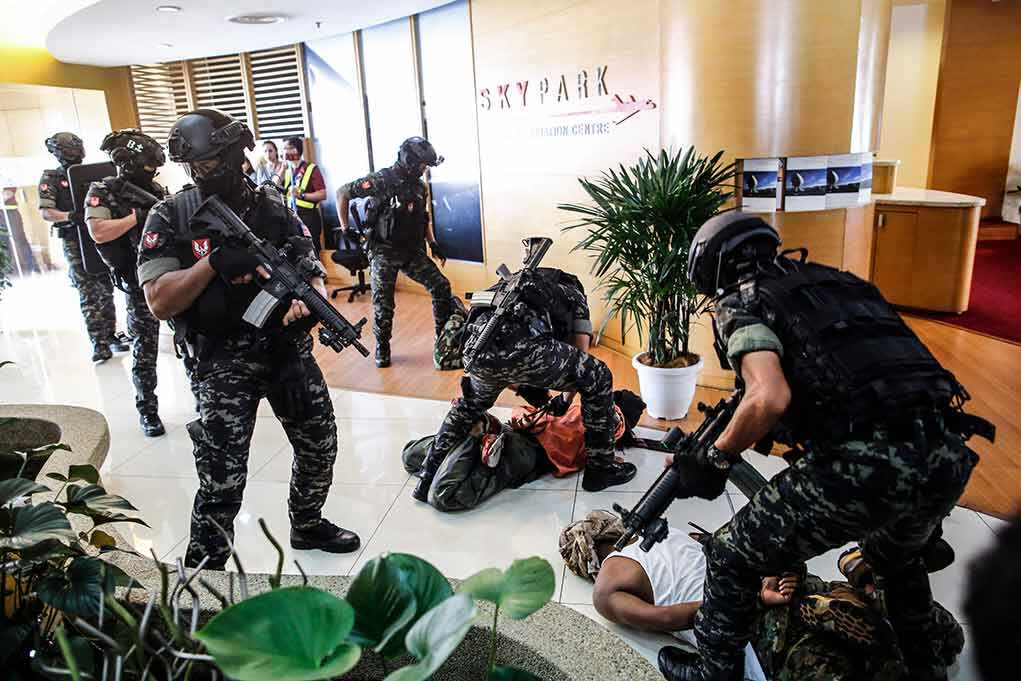
A four-minute window and a single armed guard stopped a rifle-wielding attacker on a crowded Citibank campus.
Story Snapshot
- An armed Citibank security guard fatally shot the gunman within minutes.
- About 3,200 people were on campus during the attack, authorities said.
- One woman was killed; four others had non-life-threatening injuries.
- Deputies flooded the scene and cleared buildings in roughly two and a half hours.
Rapid timeline: calls at 12:11, gunman stopped by 12:15
Hillsborough County deputies began getting 911 calls at 12:11 p.m. from the Citibank complex near Tampa. By about 12:15 p.m., a Citibank security guard engaged the attacker in the cafeteria and shot him, ending the threat, according to the sheriff’s office briefing reported by local media. The speed matters. Seconds decide whether an office runs from chaos or buries coworkers. Here, a guard with a clear lane took it.
Authorities said the shooter drove onto the campus, left his vehicle with a rifle, and killed a woman outside before moving toward the cafeteria. Deputies described the scene as an active threat while thousands sheltered or fled. The cafeteria encounter ended the advance. That sequence aligns with what many companies train for but hope they never see: a moving killer met by a defender who is close, alert, and willing to act.
Crowded campus, contained casualty count
Roughly 3,200 employees were on the property when the shooting began, according to the sheriff’s office and reporters on scene. The crowd size was not theory; it was the midday headcount of a major employer. Yet the casualty pattern stayed limited after the first murder: one woman dead, four people with non-life-threatening injuries, and the gunman down after the shootout with the guard. The facts track with a quick stop, not a long hunt through offices.
The law-enforcement surge was massive. Reports said 367 deputies raced in and cleared the buildings within about two and a half hours. The sight of marked units and tactical teams sends a message to staff and any second threat. But the crucial pivot happened before the convoy arrived. The on-site guard made the life-or-death difference in those first minutes. That is not hype. It is the plain order of events as described by officials and local coverage.
What authorities say about motive and method
The sheriff’s office framed the incident as targeted during the day’s updates, while also treating it as an active threat until the guard shot the attacker. Later reporting cited deputies who said the suspect blamed a $2,500 debt in a dispute tied to the company, which would fit a targeted grievance rather than random selection. The shooter used a rifle, matching a recurring pattern in recent workplace and public attacks, where rifles appear in about one third of active-shooter cases nationwide.
CCTV Footage Shows Citibank Security Officer Fatally Shooting Gunman During Deadly Tampa Attack
Newly released CCTV footage has captured the moment an armed Citibank security officer confronted and fatally shot a gunman during a deadly shooting at the bank’s corporate campus in… pic.twitter.com/q45krO935N
— AfrikTimes (@afriktimesint) November 6, 2026
The Florida episode also mirrors a less common but vital outcome seen in national data. The Federal Bureau of Investigation (FBI) tracks active-shooter incidents and notes that some end when security or police shoot the attacker. That resolution is not the most frequent, but it is a known path that can cap casualties fast when it occurs. The Citibank guard’s action sits squarely in that bucket. Quick proximity, a direct intercept, and decisive fire stopped the advance.
Safety lessons companies can act on today
Layered security beat luck. A trained armed guard who knows the site can buy the minutes that patrol cars cannot. Clear sightlines and controlled entries slow a vehicle-borne approach. Radios that work across buildings cut confusion. Drills that teach staff to move, lock, or shelter stop gridlock in hallways. None of this is political. It is practical. People want to go to work, do a job, and get home alive. Clear plans and capable defenders stack those odds.
Conservative common sense says institutions should not outsource safety to hope. Rapid defense is a duty when many lives depend on it. This case shows how that duty looks under stress: identify the threat, close distance, and end it. The guard did that while thousands depended on someone they had likely never met. The numbers, the timing, and the aftermath all point to one truth: prepared defenders change the ending of these stories.
Sources:
youtube.com, apnews.com, sanluisobispo.com, tampabay28.com, fox13seattle.com, fox35orlando.com
© targetliberty.org 2026. All rights reserved.