

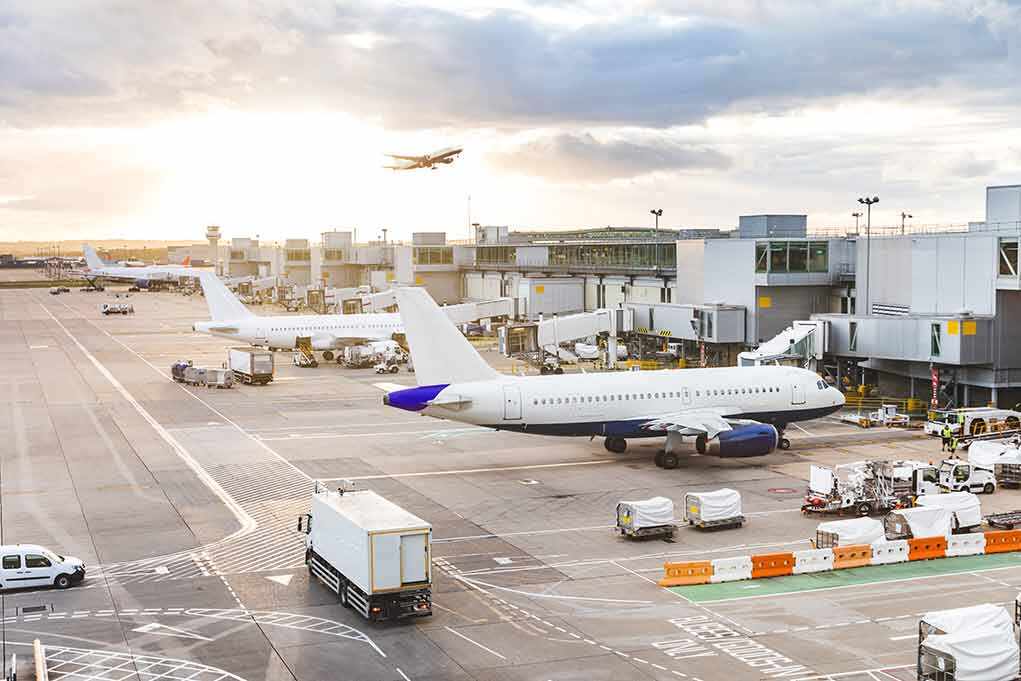
Israel’s flag carrier and a major U.S. airline moved military cargo on civilian passenger routes while most people watched in-flight movies.
Story Snapshot
- Investigations say United ran thousands of military shipments to Israel on passenger flights in 2025–2026.
- An Irish outlet says El Al carried U.S.-funded munitions through Irish airspace from Newark to Tel Aviv.
- Israel equipped its commercial fleet with anti-missile defenses years ago, signaling a hardened dual-use air bridge.
- El Al expanded belly cargo during wartime, moving over 5,000 tonnes to Israel, per a global wire service report.
What the flights carried, and why that matters
United Airlines, according to shipping data cited by an investigative outlet, moved nearly 3,000 loads of military materiel to Israel on 160 civilian passenger flights over seven months in 2025 and early 2026. The report describes a pause and then a plan to resume shipments, framing it as a return to status quo operations that blend travelers and sealed military freight in the same aircraft belly. This claim is specific and testable, which is why it hit a nerve among regulators and activists.
Breaking: Israel Is Using COMMERCIAL AIRLINERS to Move Military Hardwarehttps://t.co/PLPj9vtEbZ
— Dr. Vinnie Boombatz (@Tango711th) September 13, 2026
An Irish investigative site reported that El Al carried six U.S.-funded munitions shipments labeled under Foreign Military Financing from Newark to Tel Aviv, crossing Irish sovereign airspace on a Sunday run. The report attributed the cargo to Elbit Systems of America and said the goods were destined for Israel’s defense forces. The allegation raised a narrow legal question in Ireland and a broader moral one elsewhere: should airlines that carry families and tourists also move tools of war underneath their feet?
How Israeli commercial aviation became hardened
Israel began treating its commercial airliners as potential wartime targets long before the current fights. The government chose a laser-based countermeasure for all Israeli carriers, integrating missile warning sensors and a directed infrared beam into podded units that bolt onto jets. The company behind the system says it protects every Israeli commercial airliner, and foreign air forces and alliances have also adopted variants for tankers and transports. This public choice turned a typical airline into a resilient asset during crises.
Freight capacity followed that logic. During wartime lulls in passenger demand, El Al shifted aircraft to cargo duty and packed more freight into belly holds. A major wire service reported the airline moved more than 5,000 tonnes of cargo to Israel during a surge period, highlighting how a passenger fleet can quickly morph into a supply chain backbone without repainting a single jet. None of that proves any single manifest. It does prove the machine exists to do large, fast lifts when needed.
The legal gray, the moral line, and the practical reality
Civil aviation rules allow declared weapons or parts in checked cargo under strict conditions. Airlines and states set the thresholds, and compliance hinges on labeling, routing, and approvals. The Intercept’s data-driven claims about United, and the Irish outlet’s focus on El Al over Ireland, put a spotlight on those thresholds and on who signs off when military cargo shares a hull with paying passengers. The paperwork may be clean while the optics feel anything but.
From a conservative, common-sense lens, the core test is safety, legality, and clarity. If regulators approve, carriers disclose to authorities, and crews train for hazards, then the practice fits the rulebook. If a government needs supplies fast, using scheduled lift beats waiting on rare freighters. But common sense also demands truth in public: passengers should not learn from activists what airlines and governments could explain in plain terms without spilling secrets that aid enemies.
The bigger pattern: dual-use skies are now the norm
Global air networks already move sensitive cargo under civilians’ feet. Israel sits at the sharp end because adversaries target its airfields and carriers, and because its industry builds both civil and military tech. Directed infrared countermeasures on airliners are not an accident; they are the policy. Wartime belly freight is not a loophole; it is the playbook. The new wrinkle is scale and speed, visible when data analysts stitch together flight logs, manifests, and trade filings.
Breaking: Israel Is Using COMMERCIAL AIRLINERS to Move Military Hardware https://t.co/KZivbyLL7L
— Fion Mor (@terri5464689066) September 13, 2026
Expect more, not less, of this blend. Tankers that refuel jets also haul pallets and people. Passenger jets convert to freighters and back. Airlines flex belly holds as demand swings. The public bargain should be simple: keep it safe, keep it legal, keep it accountable. Tell travelers what you can, and tell elected overseers everything else. In a dangerous neighborhood, secrecy protects lives. But in a democracy, silence breeds distrust faster than any air bridge can fly.
Sources:
youtube.com, theintercept.com, en.wikipedia.org, aerospaceglobalnews.com
© targetliberty.org 2026. All rights reserved.