
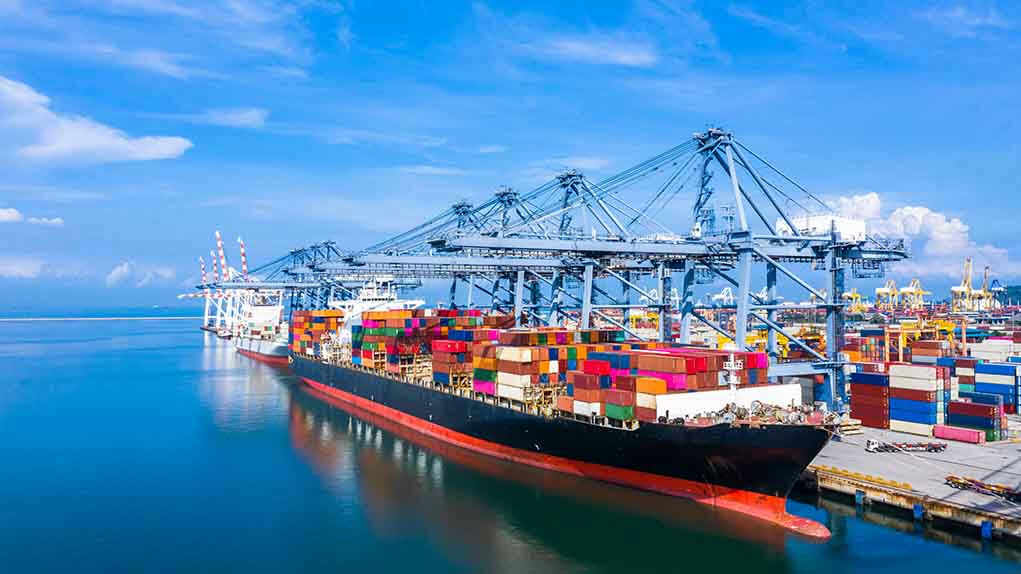
Iran says the world’s energy choke point is shut, while JD Vance says it is wide open and booming.
Story Snapshot
- Iran’s generals just declared the Strait of Hormuz “closed” after accusing the United States and Israel of breaking a ceasefire.
- Tehran’s parliament had already backed closure and new control laws, but does not hold the final shutoff switch.
- Vice President JD Vance insists the strait is open with huge oil flows and calls closure talk “economically suicidal.”
- The real fight is over who controls the tollbooth of global energy, and whether American leverage or Iranian pressure wins.
Why Iran Says Hormuz Is Closed While Ships Keep Moving
Iran’s top war command, the Khatam al-Anbiya headquarters, announced that the Strait of Hormuz is closed to vessel traffic, blaming supposed violations of a ceasefire deal by the United States and Israel in Lebanon.[1] Iranian state-linked media called this a “first step,” hinting that more moves could follow if what Tehran labels aggression continues.[3] At almost the same moment, American officials said they saw no proof of a real blockade and that ships linked to Iran were still moving through the waterway.[4]
That split-screen is not an accident; it is leverage. Iran wants the world to think it can flip a switch and choke off one fifth of global oil. Commanders tied to the Islamic Revolutionary Guard Corps told ships not to approach, warning their safety could be at risk if they did.[1] Yet the United States military said its own blockade targets ships going in and out of Iranian ports, not the strait itself, keeping other traffic moving even as pressure on Tehran continues.[5]
Parliament’s Closure Vote: Signal, Not Final Order
Weeks earlier, Iran’s parliament had loudly backed closure. Lawmakers endorsed a proposal to shut the strait after United States strikes on Iranian nuclear sites at Fordo, Natanz, and Isfahan, in what was called Operation Midnight Hammer.[1] Local coverage said the vote was unanimous and framed as payback for what Tehran called “brutal” attacks on peaceful nuclear facilities.[1] This fits a long pattern where Iranian politicians threaten closure whenever pressure rises or their nuclear program is hit.[18]
Here is the catch that elite media headlines often skip: parliament does not control the gate. The formal authority to actually close the strait rests with Iran’s Supreme National Security Council and, above it, the Supreme Leader.[14] Even Iranian coverage admitted parliament’s role was consultative, not binding, and that the armed forces would only act under higher orders.[17] That means the vote mattered as a political warning and domestic theater, but it was not the legal key that locks the channel.
Legal Control And The Strait’s Real Track Record
Iranian lawmakers have also pushed a broader law to cement “management and sovereignty” over Hormuz, claiming that only Iran and Oman should decide how it is run.[3] Other reports describe a “Strait of Hormuz Management Plan” aimed at taxing global shipping in Iran’s currency and banning so-called hostile vessels.[16] From a common-sense conservative view, that is the classic playbook of an authoritarian regime: use legal tricks to turn a shared sea lane into a cash and power machine.
Yet history shows Iran’s threats often fall short of full closure. Encyclopaedia Britannica notes that the strait has “never been truly closed,” even during major conflicts, though shipping was disrupted and some tankers turned away in fear.[18] After United States strikes on nuclear sites in 2025, the Iranian parliament again authorized closure, but no actual shutoff followed because the Supreme National Security Council withheld final approval.[18] The base line is simple: Iran talks about closing Hormuz far more often than it manages to stop traffic.
Vance’s Message: Blockade Off, Oil On, But Strings Attached
Vice President JD Vance has built the American message around that reality. He told reporters the United States expects the Strait of Hormuz to stay open and toll free for the long haul, and described the current arrangement as a memorandum of understanding that gives sixty days of free passage.[9] Vance said Washington would lift its own blockade, allow Iran to sell some oil, and that in return “they’re going to open the Strait of Hormuz,” adding that this process is already under way.[10]
⚠️ IRAN THREATENS HORMUZ CLOSURE AND BLOCKS IAEA ACCESS AS ISRAELI OFFICIALS WARN OF SHIFTING U.S. SUPPORT AND RISING TURKISH INFLUENCE
⚓ HORMUZ THREATS ESCALATE: Iranian state media and hardline Islamic Revolutionary Guard Corps-linked reports threatened the indefinite closure… pic.twitter.com/TLsCxMjZFF
— Israel Realtime (@IsraelRealtime) June 19, 2026
In a longer interview, Vance said the blockade is off, “the straits are now open,” and pointed to more than twelve million barrels of oil moving through the chokepoint in a single night.[6][13] That volume is not what you see in a real closure. At the same time, he stressed that sanctions relief will snap back if Iran starts funding terror or rebuilds its nuclear weapons program.[6] That trade reflects a basic conservative instinct: use economic leverage and military strength to keep sea lanes open without writing Tehran a blank check.
Who Really Holds The Leverage At The World’s Oil Gate
Beneath the noise, both sides are trying to brand themselves as the gatekeeper. Iran wants regional and legal recognition that it can charge tolls and police who passes.[15][16] The United States insists that international waterways must stay free and that American power in the Gulf is what keeps oil flowing.[15] Analysts warn that if Iran truly blocked Hormuz, it would be close to an act of war and would also punish its own economy by cutting its export lifeline.[1][17]
For Americans watching gas prices and retirement accounts, the lesson is sharper. Tehran’s threats are not just local saber-rattling; they are aimed at your wallet and your country’s freedom of action. The Strait of Hormuz may sit half a world away, but every time Iran claims it is “closed” and Washington says it is “wide open,” what is really being tested is whether the free world still has the will to keep vital commons open against regimes that see chaos and coercion as tools of statecraft.
Sources:
[1] Web – JUST IN: Iran Says It’s Closing the Strait of Hormuz After Accusing US …
[3] YouTube – Iran Parliament votes to back Hormuz closure, top security body …
[4] Web – Iran parliament moves to legislate control over Strait of Hormuz
[5] Web – Iran’s Parliament Speaker Says Strait of Hormuz “Won’t Return to Its …
[6] Web – UN / STRAIT OF HORMUZ RESOLUTION | UNifeed
[9] Web – Strait of Hormuz | International Crisis Group
[10] Web – Vance says U.S. expects Strait of Hormuz to be open ‘toll free’ long …
[13] Web – Trump is urging tankers to sail through Hormuz. Vessels aren’t so …
[14] YouTube – FULL: Vance lays out details in Iran ceasefire deal as oil …
[15] Web – Vice President JD Vance said more oil is now flowing through the …
[16] Web – Vice President Vance pushes back on claims about Iran, saying the …
[17] Web – JD Vance says 12.5m barrels of oil passed through Strait of … – ITVX
[18] Web – Vice President JD Vance said more oil is now flowing through the …
© targetliberty.org 2026. All rights reserved.