In less than two days, a tiny Spanish city in Africa saw up to 60,000 people rush its border, dozens die in the water, and now even the United States is warning Americans to think twice before going there.
Story Snapshot
- Tens of thousands of migrants crossed from Morocco into the Spanish enclave of Ceuta in about 48 hours.
- At least 67 people died, as Spain deployed troops and hardened the border with a new floating sea barrier.
- Spanish leaders called the surge a serious threat to sovereignty and security, not normal migration.
- The United States is now urging Americans to reconsider travel as Europe argues over borders and responsibility.
A tiny enclave becomes the center of a giant border shock
Ceuta is a small Spanish territory on the North African coast, facing Morocco across fences and breakwaters rather than visa lines and airport gates. Late in the week, that calm border turned into a crush of bodies. Spanish officials say about 50,000 people, most from Morocco, entered Ceuta by sea and land in roughly 24 to 48 hours, with local leaders putting the figure closer to 60,000. For a city of about 84,000 residents, that is almost a second city arriving overnight.
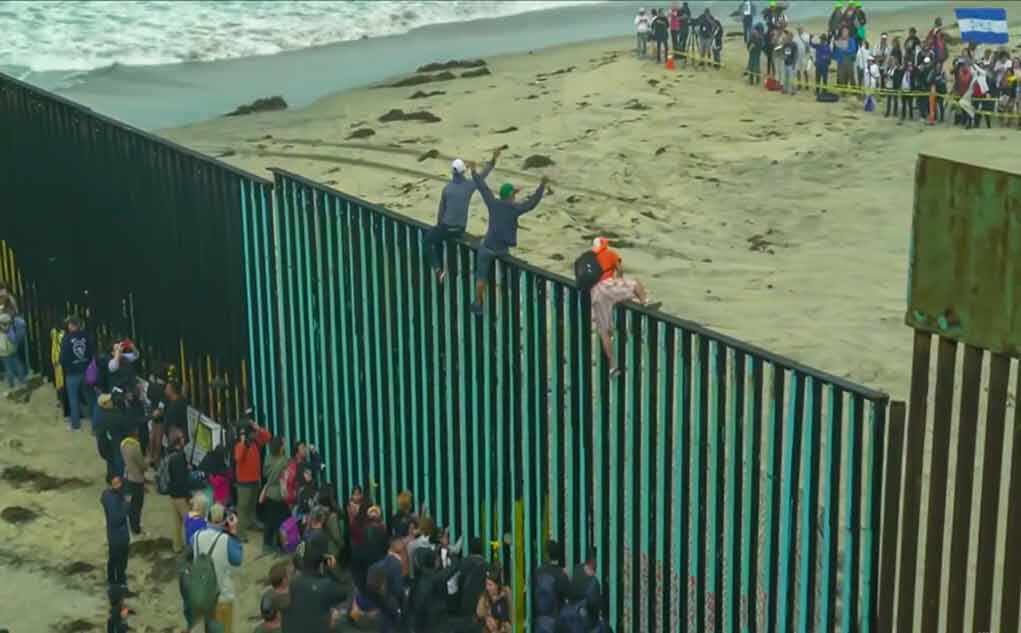
Many migrants swam around the metal border fence or climbed the breakwater that marks the edge of Spanish soil, often with little more than inner tubes or cheap life vests to keep them afloat. Videos show thick crowds pouring past overwhelmed border posts and soldiers dragging exhausted swimmers out of the surf. What looked on social media like a wave of people “storming” Europe’s wall was, up close, a mix of young job‑seekers and desperate families gambling their lives on rumors of a brief opening.
Spain calls it a sovereignty crisis and moves in the military
Spain’s national government did not treat this as just another migration spike. Prime Minister Pedro Sánchez denounced the surge as a “violation of Spanish sovereignty” and promised that those who crossed illegally would be sent back to their countries of origin as quickly as possible. Troops deployed to help the Civil Guard “maintain order” along the border zone, reinforcing fences and patrolling beaches where people had swum ashore. For conservatives, this response lines up with a basic duty: a nation must control its borders or it is not a nation.
Ceuta’s local president, Juan Jesús Vivas, urged Madrid to declare an emergency as he watched his city overwhelmed. Spanish territorial and interior officials described the numbers as “absolutely unsustainable,” and focused on restoring control first, then sorting out humanitarian needs. This framing matters. It signals that, at least in the eyes of Spain’s leaders, a sudden flood of tens of thousands is closer to a security breach than a routine asylum flow. That language echoes American worries about mass illegal crossings on the southern border.
Deadly crossings, fast returns, and a new barrier in the sea
The human cost was severe. Spanish authorities raised the death toll to at least 67 people, with bodies pulled from the water near the Tarajal breakwater on the Ceuta side of the frontier. Some migrants drowned in strong currents. Others were crushed in the chaos trying to climb the rocks and fence as thousands pushed forward at once. This is where common sense and conservative values meet hard reality: border chaos is not merciful. It kills the very people activists claim to help.
The Real Story Behind Blaming Israel For Spain's Border Crisis
Spain just lived through one of its worst border crises ever.
Tens of thousands stormed the fences into Ceuta from Morocco in days, dozens died in the crush, and Madrid had to expel roughly 25,000 people just to… pic.twitter.com/MdQkoVQ1UV
— MAGA Foreign Policy 🇺🇸 🇮🇱 🇵🇪 🇨🇴🇬🇧 (@chomcho) August 3, 2026
Yet the shock was brief. Spain’s Interior Ministry estimates that more than 48,000 of those who crossed returned to Morocco within about 48 hours, many “voluntarily,” after learning that entry did not mean a free ticket into Europe. Police and soldiers escorted large groups back across the land border, and the city emptied far faster than it had filled. The pattern resembles earlier surges in Ceuta and nearby Melilla: dramatic mass crossings, tough political speeches, rapid returns, then a hardened border left behind.
A Supreme Court ruling, social media rumors, and Europe’s fault lines
Spanish officials linked this rush to a recent Supreme Court ruling that limited quick returns of migrants intercepted at sea unless they had crossed a physical barrier into Spanish territory. That legal nuance sent a dangerous message once filtered through rumor. Social media posts in Morocco claimed the path to Ceuta was suddenly easier, stoking hope among unemployed young men and poor families. When thousands act on half‑true legal news, you get a migration shock long before courts or lawmakers can react.
The Ceuta crisis also reopened old splits inside Europe. Italy temporarily suspended its open‑border Schengen rules with Spain and reinstated checks for travelers coming from Spanish territory, citing fears that migrants could disperse deeper into the continent. Spanish leaders demanded “solidarity” and tougher European Union external borders, while activists accused governments of treating human beings as tools in a political tug‑of‑war. From a conservative American viewpoint, the lesson is clear: if Europe struggles this much with one small land border, lax rules and mixed signals invite more chaos.
Why the U.S. is warning travelers and watching its own border
As Spain races to install a 500‑meter floating barrier off Ceuta’s coast, complete with naval buoys and patrol channels, the story has reached Washington. U.S. officials now urge Americans to reconsider travel to Ceuta amid unrest, tightened security, and lingering tension along the frontier, even though crossings have stopped for now. That kind of advisory is not about tourism alone. It reflects wider concern that sudden mass movements can spiral into violence, protests, and diplomatic standoffs far from the initial beach.
Commentators on American networks are already drawing lines from Ceuta to the United States border debate, warning that what happened in a tiny Spanish enclave is a preview of what can happen when traffickers, bad court rulings, and political games meet weak enforcement. The facts from Ceuta support that warning more than they undercut it. Tens of thousands crossed in hours. Dozens died. A city was overwhelmed. Most were quickly sent back only after soldiers, police, and hard barriers reasserted control. Compassion without control failed both migrants and residents. Control with clear rules is what finally stopped the surge.
Sources:
youtube.com, reuters.com, nytimes.com, bbc.com, theguardian.com, forbes.com, telegraph.co.uk, abc.net.au, npr.org, apnews.com
© targetliberty.org 2026. All rights reserved.