

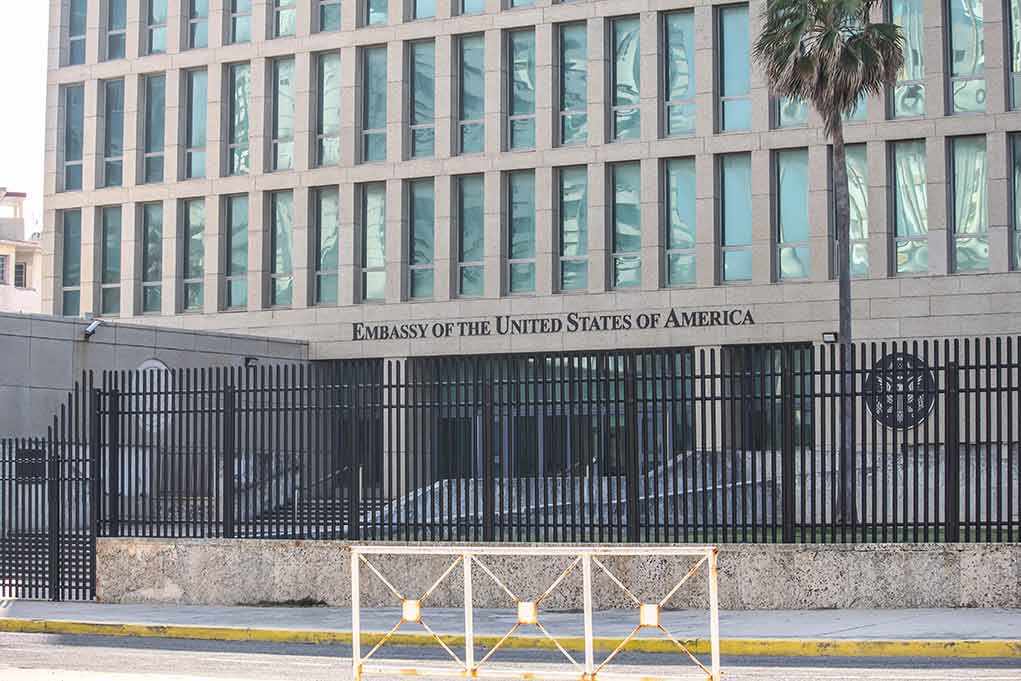
One quiet visa revocation in Washington just exposed how hardball foreign policy really works when President Trump decides enough is enough.
Story Snapshot
- Trump administration canceled the U.S. visa of Brazil’s ambassador, Maria Luiza Ribeiro Viotti.
- Officials say it was a reciprocal move after Brazil blocked Trump’s pick for U.S. ambassador to Brazil.
- Brazil also denied visas to American diplomats before key elections, triggering a sharper response.
- The visa pull stops short of expulsion, but sends a blunt message about costs of crossing the United States.
Trump Uses A Visa To Send A Loud Message
The Trump administration did not need a speech or a sanction list to make its point. It used one powerful tool instead: the visa of Brazil’s ambassador to the United States, Maria Luiza Ribeiro Viotti. A senior State Department official confirmed that the United States revoked her visa after weeks of Brazil blocking formal approval for Trump’s nominee as ambassador to Brasilia and denying visas to several American diplomats. That single action turned a slow dispute into a front-page diplomatic clash.
Trump administration revoked the U.S. visa of Brazil’s ambassador Maria Luiza Ribeiro Viotti.
U.S. officials say it is a reciprocal step after Lula’s government delayed approval of the American ambassador nominee and earlier denied visas to U.S. diplomats.
The ambassador was… pic.twitter.com/um1OdukNzV
— MAGA’s the Fix™ (@MAGAsFix) August 5, 2026
The timing was no accident. Reports describe a growing rift between the two largest democracies in the Western Hemisphere, with tensions rising ahead of Brazil’s presidential election. For an administration that promises to stand up to foreign governments that try to play games with American representatives, allowing Brazil to stall and stonewall would have looked weak. Instead, Trump officials reached for the most direct form of leverage they could use without breaking relations: they took away the ambassador’s right to stay.
What Triggered The Clash Between Washington And Brasilia
The story starts with a simple word that shapes diplomatic life: “agrément.” This is the formal approval a host country gives before a new ambassador arrives. Reuters reports that Brazil had withheld this approval for weeks for Trump’s choice to serve as U.S. ambassador to Brazil, Daniel Perez, deepening frustration in Washington. At the same time, Brazil denied visas to two American State Department officials who planned to visit ahead of Brazil’s elections, saying it feared foreign interference in its politics. Those acts set the stage for Trump’s team to claim reciprocity.
Reciprocity in diplomacy sounds polite, but it can be sharp. When one country blocks an ambassador or refuses entry to visiting officials, it signals that its own political concerns come ahead of normal cooperation. From an American conservative standpoint, allowing that behavior to go unanswered rewards obstruction and invites more of it. Trump’s administration instead responded in kind. If Brazil would not allow U.S. diplomats to do their work or approve a new ambassador, Washington would not guarantee Brazil’s envoy the privilege of remaining on American soil.
Why This Move Stops Short Of An All-Out Break
This was not a full break in relations, and that nuance matters. A senior State Department official stressed that revoking Viotti’s visa did not declare her “persona non grata,” the formal label used to expel a diplomat and force them to leave the country. The official also said the step was reversible. If Brazil granted agrément to Trump’s nominee and stopped blocking visas for American officials, her visa could be restored. That design shows a pressure tactic with an off-ramp, not a permanent divorce.
Brazilian voices called the move blackmail and a diplomatic slap, arguing that their delay and visa denials were based on protocol concerns and fears of interference, not spite. That argument leans more on emotion than on hard records, and it does not directly answer the American claim that multiple U.S. visas were denied or stalled without clear justification. Common sense says that when a partner both blocks your ambassador and turns away your officials, holding their ambassador’s visa in your hand is no longer overreaction. It is a clear cause-and-effect response.
A Broader Strategy Of Using Visas As Foreign Policy Leverage
This is not the first time Trump’s State Department has used visas as a foreign policy hammer rather than a rubber stamp. In July 2025, the department announced visa restrictions and revocations for Brazilian judicial officials and their families over their role in censorship of political speech and abuse of a labor program tied to Cuba. The statement cited a section of American immigration law that lets the Secretary of State find someone inadmissible when their actions harm U.S. foreign policy interests. That legal path turned travel permission into a tool of accountability.
The Trump admin just revoked the visa of Brazilian ambassador to the U.S. Maria Luiza Ribeiro Viotti, after Brazil refused to approve Trump's nominee for U.S. ambassador to Brazil, Daniel Perez
OMG 🤣 pic.twitter.com/ZOEDY5SrJ6
— American Apex 🇺🇸 (@vinzamalo) August 5, 2026
Seen through that record, the hit on Viotti’s visa looks like part of a pattern, not a random lash-out. When foreign officials work against open debate, free elections, or normal diplomatic practice, Trump’s team has chosen targeted visa pain instead of broad economic punishment. Conservatives often prefer tools that defend sovereignty while avoiding endless wars or giant sanction packages that hurt ordinary people. A visa revocation fits that mold. It hits the elite who play games, leaves room to reverse course, and draws a bright red line: you block our diplomats, you feel real, personal cost.
Sources:
nypost.com, cnn.com, washingtonpost.com, bloomberg.com, x.com, facebook.com, br.usembassy.gov
© targetliberty.org 2026. All rights reserved.