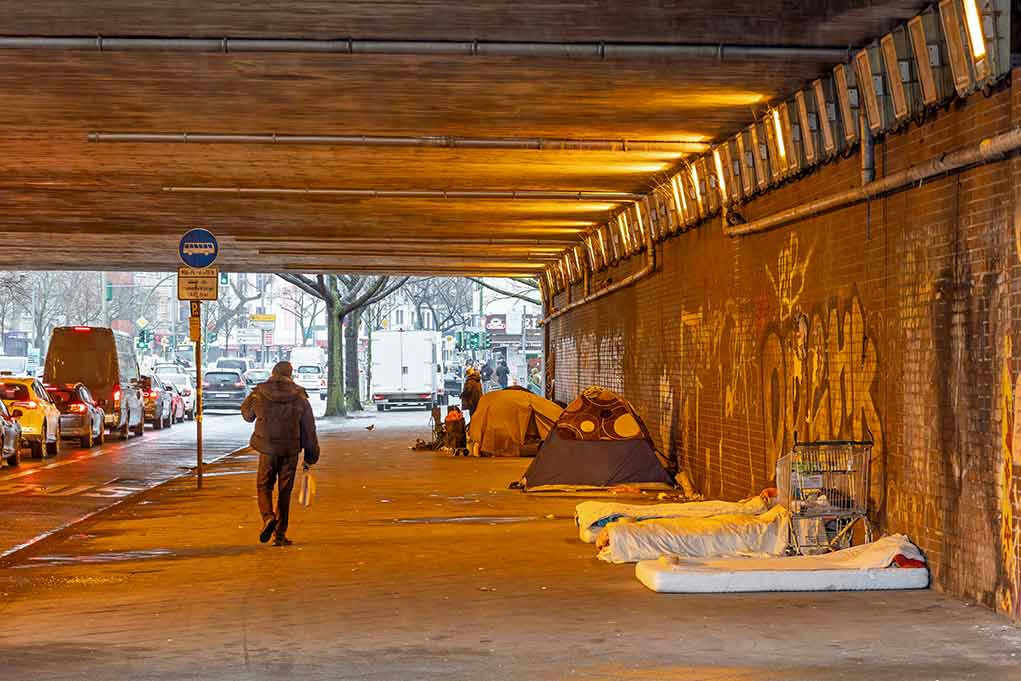
New York’s richest waterfront now doubles as a 12‑block homeless camp, and the mayor who promised compassion is stuck explaining how it got there.
Story Snapshot
- Mayor Zohran Mamdani halted police-led homeless encampment sweeps, then quietly brought them back with new rules
- A massive, trash-strewn encampment has grown along Manhattan’s West Side, drawing anger from residents and national media
- Critics say lenient policies invited disorder; Mamdani insists outreach and housing, not crackdowns, are the real solution
- The fight over this camp shows a larger national pattern where “compassionate” policies collide with public safety concerns
A homeless camp grows in the shadow of Manhattan’s wealth
The encampment that now runs from around West 34th Street to West 46th Street on 11th Avenue did not appear overnight. It grew tent by tent, mattress by mattress, until sidewalks between the Intrepid Museum and the Javits Center turned into a visible belt of street poverty. Reports describe tents, furniture, suspected stolen goods, open drug use, and prostitution scattered along the route, making the area feel less like Midtown Manhattan and more like a failed experiment in urban compassion.
Nearby workers and residents say they filed dozens of complaints to the city’s 311 system as the camp expanded, but saw little real change on the ground. One outlet counted 48 homelessness-related complaints this year on that stretch alone, with most coming in the past month. For people who live or work there, the message feels simple: City Hall told police to back off, but never replaced enforcement with anything that actually restores order. That is where criticism bites hardest.
The promise: end sweeps, focus on outreach and housing
This West Side camp is not some random accident. It is the direct stress test of Zohran Mamdani’s core campaign promise. As mayor-elect, he pledged to stop the destruction of homeless encampments and the practice of carting away people’s belongings, sharply breaking with former Mayor Eric Adams’s approach. He argued police sweeps did almost nothing to move people into real housing. New York Police Department data had shown thousands of camps cleared but only hundreds of people actually placed indoors, which is an embarrassingly small success rate.
From a conservative, common sense view, that data matters. If the old sweeps were expensive, disruptive, and rarely moved people off the streets long term, then simply “doing more sweeps” is not a serious solution. It is security theater. Mamdani tapped into a real frustration: city government looked tough, but delivered results that would get any private manager fired. Many Americans on the right and center can agree on one thing here—if you spend millions and barely house anyone, taxpayers are being played.
The reality: encampments surge, then deadly cold forces a reversal
Once Mamdani took office and paused encampment removals, camps quickly reappeared across Manhattan, including the Upper West Side, Hell’s Kitchen, and the area near the United Nations. Opinion writers warned that ending sweeps would turn New York into a “hazardous wasteland,” predicting more crime, more disorder, and more deaths among the homeless themselves. Those warnings seemed dramatic at first. Then winter hit. Severe cold snaps left at least 19 people dead outdoors, many of them homeless, and the city’s response came under intense scrutiny.
Under mounting pressure, Mamdani reversed course. He announced that encampment sweeps would resume, but with the Department of Homeless Services in charge instead of the New York Police Department. The new protocol requires a notice and seven days of daily outreach before sanitation workers dismantle a camp, with police present only as observers. On paper, this looks like a classic “middle way”: keep order, but lead with services. In practice, critics say it delayed tough decisions while camps like the one on the West Side grew larger and more entrenched.
Mamdani’s answers sound soft next to what people see
When reporters pressed Mamdani about the 12‑block West Side encampment, he repeated his core line. He said the focus is on connecting people to shelter and building a pipeline to stable housing, not just moving them from one block to another. On that specific camp, he promised City Hall would “look into that”. For residents who are walking past needles and tents on their way to work, “look into it” sounds less like leadership and more like a shrug.
MAMDANI HAS NO ANSWERS PERIOD! WATCH WHAT YOU WISH FOR NYC!!!
Mamdani offers few answers as massive homeless encampment sprouts in west Manhattan https://t.co/7trOFbtvPH #FoxNews
— George (@George85337002) July 14, 2026
From a conservative standpoint, this is the heart of the problem. Compassion that never becomes clear action is not compassion; it is moral cover for drift. American cities have run this playbook for decades—Portland, San Francisco, Washington, D.C. all tried softer enforcement, saw encampments expand, then swung back toward crackdowns when public anger boiled over. Broadly, enforcement-only fails to fix root causes, but outreach-only without firm rules turns sidewalks into semi-permanent camps. New York is now replaying the same pendulum swing at high cost.
Hard trade-offs: rights of the homeless vs. duty to the public
Advocates claim sweeps are cruel, ineffective, and harmful to health. They argue that constant displacement breaks fragile ties to services and pushes people deeper into chaos. Many conservatives will agree that you cannot arrest your way out of addiction or mental illness. At the same time, the West Side camp shows what happens when government treats public space as a pressure valve instead of a shared asset. Families, small businesses, and museum visitors are forced to live inside a live‑in policy experiment they never chose.
The honest answer is not comforting. Real solutions cost money and demand discipline. That means more shelter beds that are actually safe, more mental health treatment, and faster pathways from the street to permanent housing. It also means clear rules: sidewalks are not long‑term living rooms, open drug use and prostitution do not get a free pass because government failed upstream. The national research is blunt: cleared encampments by themselves do not solve homelessness, but unmanaged encampments do not solve it either.
Where this leaves New Yorkers on the West Side
For now, the people living in tents along the West Side are stuck between a mayor who does not want brutal sweeps and a public that no longer believes outreach alone will restore order. Mamdani’s seven‑day outreach protocol and homeless services approach may be more humane than simple police raids. Yet the sight of a 12‑block camp in one of America’s showcase neighborhoods sends a message across the country: if you treat enforcement as a “last resort” but never show a clear plan that works, the streets will write their own policy.
Sources:
foxnews.com, nytimes.com, nationaltoday.com, washingtonpost.com, bronx.news12.com, nypost.com, citylimits.org, cbsnews.com, manhattan.institute, facebook.com, apha.org, endhomelessness.org, tandfonline.com, homelesslaw.org, gov.ca.gov, vox.com, gspp.berkeley.edu
© targetliberty.org 2026. All rights reserved.