
The smell hits first in La Guaira’s ruins, where Venezuelan families fight off clouds of flies while digging for the dead with their bare hands.
Story Snapshot
- Twin mega-quakes killed thousands and left entire Venezuelan neighborhoods in ruins.
- Families now search rubble themselves, battling stench, decay, and a shocking lack of heavy equipment.
- Official numbers show over 3,500 dead, 16,740 injured, and more than 17,000 homeless, but tens of thousands remain missing.
- Global aid and American rescue teams arrived, yet fuel shortages and weak government response slow recovery.
Quakes that shattered a fragile country
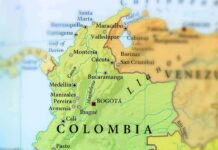
On June 24, 2026, two massive earthquakes struck northern Venezuela within seconds of each other, one magnitude 7.2 and the other 7.5. The shocks ripped through the capital Caracas and coastal La Guaira, toppling apartment towers, cracking hospitals, and turning working-class streets into concrete graves. This was the strongest seismic hit in over a century for Venezuela, a country already crippled by economic collapse, rolling blackouts, and broken public services before the earth even moved.
By July 6, officials put the death toll at 3,535, with 16,740 injured and more than 17,000 left homeless. United Nations officials warned those numbers would rise and quietly ordered 10,000 body bags, bracing for what rescuers would find under the rubble. At least 1,719 deaths were confirmed just five days after the quakes, alongside 12,000 displaced people, even as survivors continued to emerge from collapsed buildings. These figures sit in a grim middle between early lowball counts and later higher estimates near or above 4,400 dead.
Families turned into recovery crews
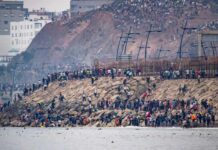
In the heat of La Guaira and the outskirts of Caracas, the battle now is not only against time but against decay. Families climb unstable piles of concrete with shovels, buckets, and their bare hands, trying to recover bodies before they decompose in the tropical summer. Reporters describe scenes where people fend off swarms of flies and endure a heavy stench as they search for loved ones in ruins that no engineer has yet declared safe. This is not normal post-disaster work; it is desperate, improvised, and dangerous.
The missing persons gap turns that desperation into quiet rage. The Venezuelan government has still not released an official figure of how many people remain buried or unaccounted for, while United Nations estimates suggest up to 50,000 could be missing. Independent lists shared online have claimed tens of thousands of names, but they lack formal verification and can be throttled by social media rules or simple chaos. For conservative-minded observers, that silence from the state is not just incompetence; it looks like a choice to avoid accountability for years of neglect that made these buildings and these neighborhoods so vulnerable.
Rescue miracles amid system failure
Against that backdrop, a few extraordinary rescues cut through the gloom. In one case, a 43-year-old security guard was pulled alive from the basement of a collapsed apartment building eight days after the disaster, making headlines as proof that search efforts still mattered even as hope seemed to fade. Another man, 44-year-old Hernan Gil Flores, managed to communicate from under a partially collapsed ten-story building in La Guaira, spurring an intense operation by specialized teams to reach him. These stories are genuine miracles, yet they also highlight how many trapped people never got that level of attention.
United States Southern Command, foreign search teams, and international charities have stepped in as the Venezuelan state struggles. U.S. news outlets report large deployments of American search and rescue personnel and equipment into Venezuela and nearby Caribbean hubs, part of one of Washington’s biggest disaster responses in years. NASA satellite data pointed to nearly 59,000 buildings damaged or collapsed, showing the massive scale that even well-equipped teams face. That level of destruction would strain any country; for Venezuela’s broken system, it was close to unbearable.
Fuel, politics, and the cruel math of aid
On paper, the international response looks impressive. The United States State Department pledged about $150 million in aid, with disaster response experts and logistics teams joining the effort. Groups like International Medical Corps and other relief organizations moved quickly, providing medical support, water, and shelter, while countries from Russia to Israel sent planeloads of supplies and personnel. Global Empowerment Mission and private partners arranged flights loaded with essentials headed for the disaster zone, trying to bridge gaps the state could not or would not fill.
The Venezuelan Embassy in T&T continues to urge concerned citizens and individuals to support its relief drive, following the Galleon’s Passage arrival in Venezuela last Friday with humanitarian aid for that country’s earthquake-hit victims.
Read more:https://t.co/rb0GY0GOFF pic.twitter.com/rZyjcLJM7s
— T&T Guardian (@GuardianTT) July 13, 2026
The hard truth on the ground is more brutal. Fuel shortages and a dysfunctional energy system mean heavy machinery often sits idle, while families dig manually. Interim President Delcy Rodríguez announced a $200 million reconstruction fund using international money, but experts estimate total damage between $4.7 and $8.7 billion, with real costs possibly up to three times higher. That mismatch feeds suspicion that political leaders will chase headlines, ribbon cuttings, and social media praise while underfunding the slow, unglamorous work of real rebuilding.
Why this disaster will not end with the last body
What is happening in Venezuela follows a pattern seen before in fragile states: serious undercounting early, delayed transparency, and families forced to fill gaps left by weak institutions. After more than 600 aftershocks, thousands of landslides, and widespread building damage, engineers warn that many structures still standing may be unsafe. That means this story does not end with the last body recovered. It continues in crowded shelters, unstable apartment blocks, and a generation that has now seen its government fail during the worst moment of their lives.
For older readers watching from afar, the flies and stench in La Guaira are not just grisly details. They are a blunt reminder of what happens when corruption, central control, and economic collapse hollow out a state long before the earth moves. When the shaking stops, the real test is whether leaders let citizens dig alone, or build a system where heavy machinery, honest numbers, and human dignity arrive before the smell does.
Sources:
france24.com, miamiherald.com, vpm.org, news.un.org, nypost.com, nytimes.com, pbs.org, atlanticcouncil.org, internationalmedicalcorps.org
© targetliberty.org 2026. All rights reserved.