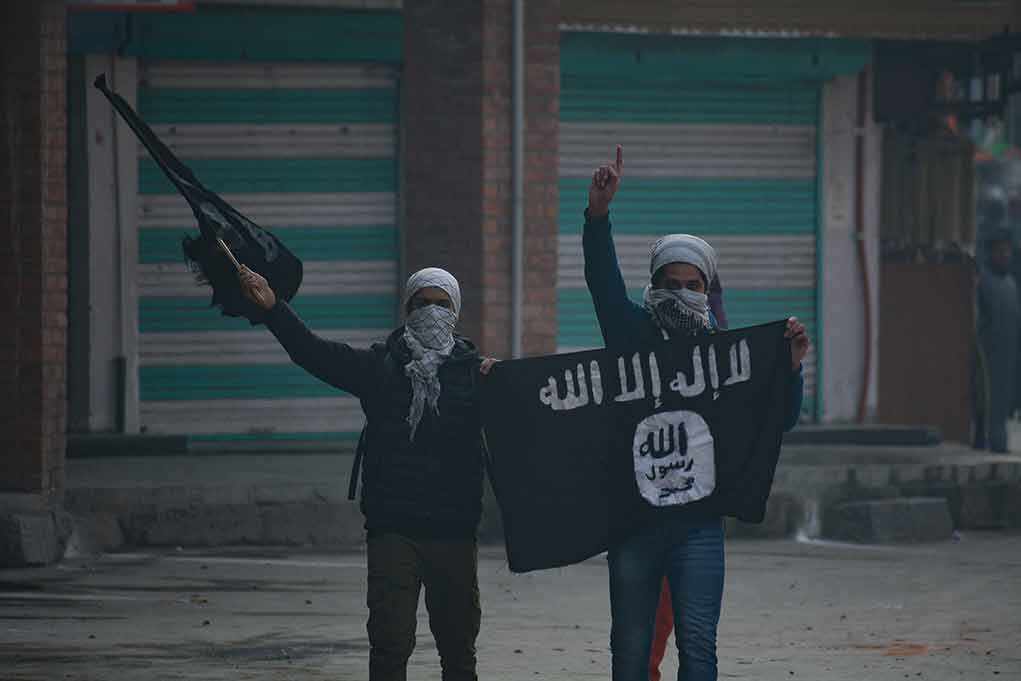
The Islamic State has issued coordinated worldwide calls for attacks on Christians and Jews during their holiest observances, specifically instructing followers to shoot, stab, ram vehicles into crowds, and set fire to churches and synagogues.
Story Snapshot
- ISIS spokesman Abu Hudhaifa al-Ansari released recordings calling for lone-wolf attacks targeting Christians and Jews in the United States, Europe, and Israel as retaliation for Gaza operations
- Recent propaganda specifically timed arson and mass-casualty attacks for Easter 2026, triggering heightened terror alerts across Western nations
- The terrorist organization now operates as a decentralized franchise model with regional branches across Africa, Afghanistan, Philippines, and the Middle East
- Security experts have revised earlier assessments, acknowledging ISIS maintains both capability and intent to inspire sophisticated attacks in Western territories despite territorial losses
- Religious communities face elevated threat levels during major observances, with authorities struggling to prevent opportunistic attacks by individuals inspired through online propaganda
The Easter Threat and Strategic Timing
ISIS leadership released coordinated messaging in early April 2026 calling for arson attacks on churches and synagogues worldwide during Easter weekend. The timing demonstrates calculated exploitation of religious gatherings when worshippers congregate in predictable locations. Security services across Europe and the United States elevated threat levels as authorities monitored online propaganda designed to inspire lone individuals without formal organizational ties. This represents a deliberate strategy to maximize casualties while minimizing operational complexity, allowing radicalized individuals to act independently without centralized coordination or communication that intelligence agencies could intercept.
From Caliphate to Franchise Model
The Islamic State declared itself a worldwide caliphate in 2014, claiming religious authority over all Muslims while controlling significant territory across Iraq and Syria. Between 2017 and 2019, coalition forces dismantled this territorial stronghold, forcing ISIS to evolve its operational structure. The organization transformed into a decentralized franchise model with semi-autonomous regional branches operating across the Sahel, Mozambique, Central Africa, West Africa, Afghanistan, Philippines, Somalia, Syria, and Iraq. This adaptation allows ISIS to maintain ideological relevance despite losing its geographic base, with spokesman Abu Hudhaifa al-Ansari publicly praising attacks in Kerman, Iran and Moscow’s Crocus City Hall as recent victories.
Targeting the Faithful With Specific Instructions
ISIS propaganda documents titled “O Zealous Monotheists” provide explicit tactical guidance for attacks: shootings, stabbings, vehicle ramming, bombings, and arson. The messaging deliberately targets places of worship during Easter and Passover observances, framing violence as religious retaliation for Israeli military operations in Gaza and broader conflicts affecting Muslim populations. This represents a significant escalation from previous generalized calls to action. Regional franchises receive specific commendations for operations targeting Christians in Africa, Americans and Russians in Afghanistan, and government forces in the Philippines. The coordination across multiple continents demonstrates organizational cohesion despite decentralized command structures.
The Reassessment of American Vulnerability
Terrorism analysts at the Brookings Institution acknowledged that conventional security assessments underestimated ISIS’s threat to the United States, focusing instead on European vulnerability. This calculation required revision following ISIS videos threatening Paris-style mass-casualty attacks on Washington, D.C. The organization demonstrated both desire and operational capability to conduct sophisticated attacks in Western territories through the March 2024 Moscow assault and subsequent propaganda campaigns. Intelligence agencies now recognize that geographic distance provides less protection than previously assumed when online radicalization can inspire attacks without physical infiltration or complex logistical support networks that traditional counter-terrorism efforts effectively disrupt.
The Polarization Strategy Behind Religious Targeting
ISIS deliberately frames conflicts as religious warfare between Muslims and “infidels,” pursuing what spokesman al-Ansari describes as face-to-face conflict until “victory of Islam.” This messaging attempts to polarize Western Muslim populations, creating wedges between communities and their governments to increase the caliphate ideology’s appeal. Security experts recognize this as a self-fulfilling prophecy strategy: attacks provoke security responses that radicalized individuals interpret as persecution, feeding recruitment cycles. The Easter 2026 threats follow historical grievances cited across Palestine, Iraq, Syria, Burma, India, and China, constructing a global narrative of Muslim victimization requiring violent response. The strategy succeeds when opportunistic individuals act on propaganda without organizational coordination.
Security Challenges in the Age of Lone-Wolf Operations
Authorities face significant prevention challenges when propaganda inspires independent actors without formal organizational ties or communication trails. Traditional intelligence gathering relies on intercepting communications between coordinated conspirators, but lone individuals inspired through publicly available online content operate below surveillance thresholds until they act. Police and intelligence agencies increased vigilance during Easter 2026, yet security services acknowledge that specific plots require verification beyond generalized propaganda calls. The franchise model compounds these difficulties as regional branches operate semi-autonomously while maintaining ideological alignment with central messaging. Enhanced security protocols at religious institutions create tension between accessibility for worshippers and protection from violence, fundamentally altering community experiences of faith practice.
Christian and Jewish communities worldwide confront an enduring threat as ISIS maintains operational relevance through decentralized structures despite territorial collapse. The organization’s evolution from geographic caliphate to ideological franchise demonstrates adaptability that complicates counter-terrorism efforts. Religious observances that once represented communal celebration now require armed security and threat assessments. The polarization strategy seeks to transform Western societies through fear and division, making every attack a propaganda victory regardless of casualty counts. Security experts emphasize that while ISIS lost its territorial base, its capacity to inspire violence through online radicalization persists as a long-term challenge requiring sustained vigilance and community resilience against ideological manipulation.
Sources:
ISIS Calls for ‘Shoot, Stab, and Ram’ Attacks on Christians and Jews in UK – European Conservative
ISIS Calls for Attacking Christians and Jews Everywhere – Terrorism-Info.org.il
We Were Wrong About ISIS – Brookings Institution
ISIS Urges Worldwide Attacks on Churches and Synagogues at Easter – Premier Christian News