

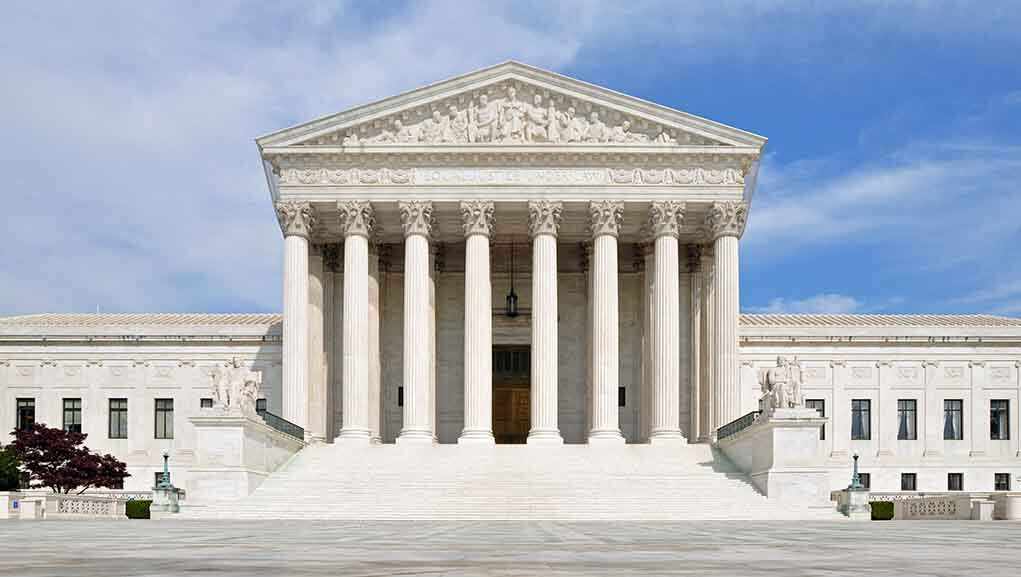
One senator just said out loud what most politicians only whisper: changing the Supreme Court itself is now “on the table.”
Story Snapshot
- Senator Raphael Warnock says adding Supreme Court justices and term limits should be considered when Democrats regain power.
- He ties these changes to anger over Supreme Court rulings that cut back voting rights protections, especially in the South.[5]
- Supporters frame this as “saving democracy,” while critics see raw partisan court-packing that threatens judicial independence.[7]
- The fight exposes a deeper question: is the Court a neutral referee or just another political weapon?
Warnock moves Supreme Court “reform” from fringe idea to live option
Senator Raphael Warnock of Georgia now talks about Supreme Court “reform” as a core part of his political mission, not a side topic.[5] In a long interview on voting rights and the Court, he says the United States needs enforceable ethics rules, term limits for justices, and even expansion of the Court on the table.[5] He repeats a key phrase: “everything should be on the table” when his party gets power back and decides how to respond.
Warnock does not hedge or treat this as a thought exercise. He treats court expansion and term limits as live options for a future Democratic majority.[5] Social media boosters repeat that he told NBC “all options are on the table,” including adding seats to the Court, and cheer that he is “done playing defense” against what they call a corrupted court.[1] This language tells voters he is serious about changing the Court’s structure, not just its decisions.
Voting rights rulings are his fuse for structural change
Warnock builds his argument on recent Supreme Court rulings that narrowed the Voting Rights Act, especially a case out of Louisiana.[5] He says the decision “poured fuel” on a redistricting arms race and calls it a “massive blow” to voting rights.[5] In his view, the same Court that weakened one key section of the law earlier has now hollowed out another section and made it harder to challenge racial gerrymandering in federal court.[5]
He links these rulings to real power, not just legal theory. Warnock claims they help lock in maps that dilute minority voting strength in Southern states like Louisiana and Georgia.[5] He argues that when the Court repeatedly sides with state lawmakers he sees as extreme, it stops being a neutral referee. That is his bridge from “bad decisions” to “we must change the Court itself,” which many conservatives view as a dangerous jump.
Expansion and term limits wrapped in a larger “democracy agenda”
Warnock does not sell court changes as a one-off punishment. He folds them into a larger “expand democracy” package.[5] In his own material, he calls democracy “the house we live in” and accuses “Make America Great Again” politicians, including some on the Court, of “burning and looting” that house.[5] He pushes the John Lewis Voting Rights Advancement Act, national bans on racial and partisan gerrymandering, and even statehood for the District of Columbia alongside court reform.[5]
This framing aims to make expansion and term limits sound like repair work, not a power grab. He also blames “dark money” for capturing the Court and points to the Citizens United ruling, which opened the door to huge corporate and union spending in politics.[5] From a conservative common-sense view, that move is revealing: rather than accept that voters sometimes choose leaders who appoint judges he dislikes, he blames money, structure, and rules whenever his side loses.
What Warnock does not say: details, limits, and constitutional guardrails
For all the strong language, Warnock has not laid out a detailed plan for how many justices he wants, how long terms should last, or how to handle current justices.[5] There is no bill text attached to his name that specifies numbers, transition rules, or the constitutional path. Legal experts across the spectrum note that the Constitution gives federal judges life tenure “during good behaviour,” which makes fixed terms by simple statute a serious constitutional stretch.[6][7]
That gap matters. When a senator talks about changing the Court but skips the mechanics, opponents can argue he wants a blank check to add seats until he gets the rulings he likes. American conservatives usually see that as the textbook definition of court-packing. They also point out a basic norm: if you change the rules every time you lose, you no longer have a stable system that protects any minority, including tomorrow’s conservatives.
Sen. Raphael Warnock Says Packing The Supreme Court and Imposing Term Limits ‘On The Table’ When Democrats Take Back Power (VIDEO) * The Gateway Pundit * by Ben Kew https://t.co/Aa07ZbD2ap
— DLW 🔥#MAGA (@Dlw20161950) June 15, 2026
Power politics versus principle: what is really “on the table”
Warnock links his reform talk to a clear political plan. He says Democrats need to win elections, then use that power to pass voting laws and consider ethics rules, term limits, and expansion.[5] That is honest as far as it goes: he is explicit that these changes come after his side regains control. He also wraps the push in civil-rights language, invoking Martin Luther King Jr. and John Lewis to cast today’s fights as the next chapter of that movement.[5]
Critics see something else. They see a senator responding to court losses by threatening the Court’s basic structure and dressing it up as “democracy protection.” From a conservative standpoint, the real test of principle is simple: would you accept the same tools in the other side’s hands? If not, then the country is not debating “reform.” It is debating who gets to swing the biggest hammer at the last branch of government that still has life tenure and claims to stand above the political brawl.[7]
Sources:
[1] Web – Sen. Raphael Warnock Says Packing The Supreme Court and Imposing Term …
[5] Web – Senator Raphael Warnock sits down with the hosts of Politically …
[6] Web – Sen. Raphael Warnock – AFL-CIO
[7] Web – Raphael Warnock believes that The Supreme Court “has committed …
© targetliberty.org 2026. All rights reserved.