

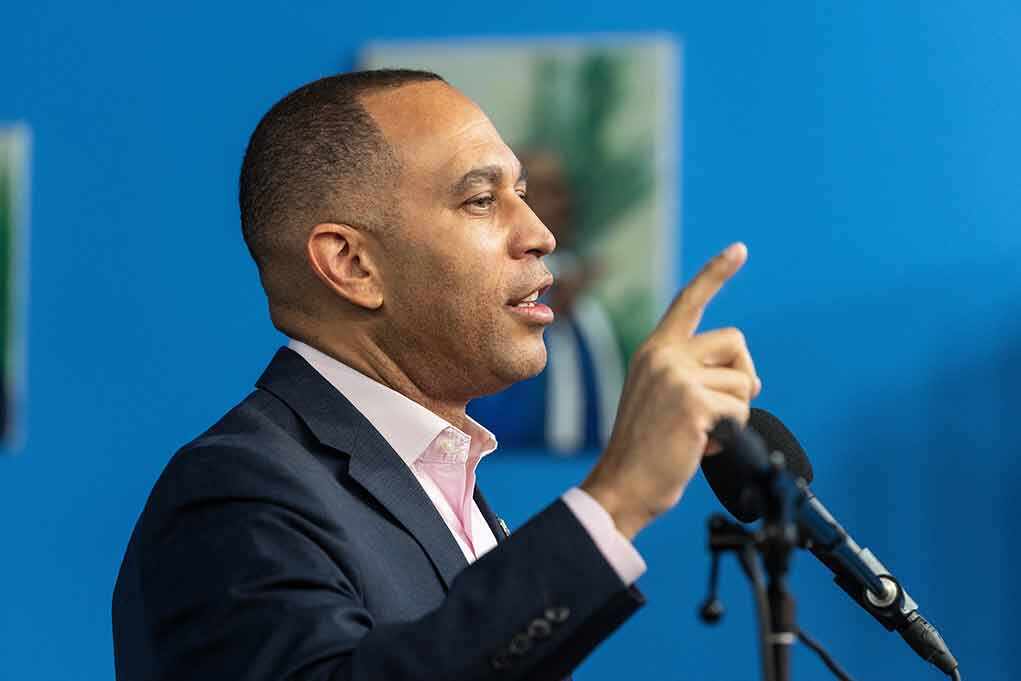
Hakeem Jeffries set a clear marker: move the American Dream and Promise Act early and put millions of long-settled immigrants on a defined, screened path to legal status.
Story Snapshot
- Jeffries pledged early House action on a pathway to citizenship bill for certain immigrants.
- The bill sets strict entry dates, background checks, and education rules for eligibility.
- Critics call it “amnesty” and warn of strain on agencies and courts.
- A discharge petition sat one Republican signature short of forcing a vote.
What Jeffries Promised And Who Would Qualify
House Democratic Leader Hakeem Jeffries said Democrats would move the American Dream and Promise Act early in the next Congress. He named recipients of Deferred Action for Childhood Arrivals and Temporary Protected Status as first in line for protection and a path forward. The current bill, H.R. 1589, does not cover everyone. It requires people to have entered as minors, lived here since January 1, 2021, pass a background check, and meet education-related steps before gaining full status.
Congress wrote the process to be staged, not instant. Qualified applicants could earn conditional status for up to 10 years. They could then apply for permanent status after meeting set milestones within three years of enactment. That keeps the gate narrow and time-bound, not open-ended. Past versions also protected applicants’ personal data from immigration-enforcement use, a guardrail meant to let honest people come forward without fear.
What The Bill Does Not Do
The bill excludes dangerous criminals. That rule appeared directly in Senate hearing records on the earlier version, which stated that dangerous criminals would not be eligible. This aligns with the claim that the plan is a screened legalization program, not a blanket giveaway. The text sets firm dates and category limits. It covers people brought here as children and certain recipients of Temporary Protected Status and Deferred Enforced Departure. It does not offer status to every undocumented person.
The plan’s backers say it restores a lawful path for people who grew up in the United States and have roots here. That argument tracks two decades of the same policy model: earned steps, military or school progress, and vetting. The pattern is familiar, even if Congress has failed many times to finish the job. The fight now is less about whether this model is new and more about what to call it and how to run it well.
Why Opponents Say It Is “Amnesty”
Opponents call the bill amnesty because it offers permanent residence and a path to citizenship for multiple groups. A Senate hearing featured testimony that more than 4.4 million people could be eligible, and that the plan could overwhelm United States Citizenship and Immigration Services and federal courts. An advocacy analysis repeats the 4.4 million claim and adds that the bill would block interior enforcement for millions who look eligible on its face. Those are serious charges that deserve scrutiny.
Jeffries pledged that if Democrats retake the House, the Dream and Promise Act amnesty will be among the first bills in the next Congress. He also called ICE 'totally out of control' and wants its $75 billion funding redirected. Amnesty and ICE funding are now a midterm issue.
— Jack (@usaJAckLaw) November 18, 2026
Some House Republicans argued the bill had no border enforcement resources and would drive more illegal crossings. One cited a $34.6 billion price tag, far beyond DACA’s scope, and called it mandatory amnesty. Another warned it would reward criminals and expand public benefits, while doing nothing to stop new arrivals. These claims rest on broader concerns about costs, system strain, and signals to would-be migrants. They challenge the bill to prove its screens work and its scope is narrow in practice.
How To Judge The Competing Claims
Legislative text should be the baseline. The bill sets fixed dates, childhood entry, and background checks. It creates a long conditional period and bars dangerous criminals. Those features oppose the idea of a blank check. Critics must then show where the gates fail or where numbers soar beyond intent. The 4.4 million figure comes from testimony and advocacy, not an official score. That makes it a warning light to verify, not a settled fact.
Common sense asks two more questions. First, can agencies verify “continuous presence,” education, and clean records at scale without error or fraud? Second, what will the price tag be? Backers need a clear plan from United States Citizenship and Immigration Services and a budget score. Without those, critics will own the narrative on cost and capacity. Voters who want order, fairness, and the rule of law deserve numbers, timelines, and audits—not slogans.
The Path To A Vote And What Comes Next
A discharge petition to force a House vote sat one Republican signature short. Jeffries said Democrats would bring the bill up early if the petition failed. That shows urgency but not inevitability. The Senate and President also matter. Until a complete fiscal and operations plan is public, the debate will continue to hinge on labels. The strongest case for passage will pair strict screens and clear dates with proof the system can handle the load.
Sources:
redstate.com, congress.gov, washingtonsun.com, jeffries.house.gov, iaproject.org, reschenthaler.house.gov
© targetliberty.org 2026. All rights reserved.