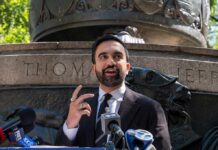


The fight over whether Tyler Robinson can face execution now turns on one contested phrase: great risk to others.
Story Snapshot
- Defense asks the court to remove the death penalty, saying the state showed no valid aggravator.
- Prosecutors allege Robinson created a great risk of death to others, making the case capital-eligible.
- The judge found a prosecutor in contempt for media comments but kept death eligibility in play.
- Utah law requires at least one proved aggravating factor to pursue death at sentencing.
What the Defense Wants—and Why It Matters
Lawyers for Tyler Robinson filed a motion to strike the lone aggravating factor that makes him death-eligible. They argue prosecutors did not present enough evidence at the preliminary hearing to show he knowingly created a great risk of death to anyone besides Charlie Kirk. This is not a small ask. In Utah, no aggravator means no death case, now or later. The filing says the shot was single and targeted, which undercuts a claim of danger to the crowd.
The defense also attacked hearsay shortcuts and media leaks, asking the judge to keep the case inside the rules. One request sought to block reliance on certain constitutional and evidentiary provisions to back-fill weak proof at this stage. Another aimed to penalize the state for a prosecutor’s public comments about evidence. The court agreed the comments crossed a line and issued a contempt finding. It still refused to toss the death penalty option on that basis.
The State’s Capital Theory and the Narrow Target
Prosecutors charged aggravated murder and plan to seek the death penalty. Their capital theory rests on one aggravator: Robinson allegedly created a great risk of death to someone other than Kirk. That claim keeps the door to death eligibility open if proved. The state previewed this theory through hearings and filings, not only media talk, and the judge left their path intact for now. Under Utah law, aggravators are the gatekeepers to any capital sentence.
The legal hinge is simple to state and hard to prove. Utah’s scheme demands a qualifying aggravator be shown before a jury can even weigh death later. If the aggravator survives to trial and a conviction follows, a jury must then find that aggravation outweighs mitigation beyond a reasonable doubt to justify execution. That is a high bar by design, meant to narrow death to the worst cases, consistent with modern capital standards.
The One-Shot Argument vs. Crowd-Risk Claims
The defense says one bullet hit one target and did not endanger others. That undercuts the “great risk” aggravator, which often turns on crowd exposure, crossfire, or shots into groups. Public reporting does not show prosecutors releasing a detailed ballistics map that places bystanders in a lethal cone of fire. The state may have such proof, but without it on the public record, the defense’s clean line-of-fire theory gains traction at this stage.
Prosecutors say Tyler Robinson admitted in writing at least 11 times that he killed Charlie Kirk, including messages allegedly sent to a Discord group and to his roommate.
The claim came in a July 28 filing from the Utah County Attorney’s Office, which is asking a judge to order…— Dee_Lay 🇺🇸 (@DrexelGlen19289) August 13, 2026
Common sense says a packed venue raises risk. But the statute needs more than a vibe; it needs evidence that the shot created a high probability of death to another person. Courts typically look for proof like trajectory analysis, witness positions, or expert testimony. If prosecutors bring forward a clear reconstruction showing bystanders in that zone, the aggravator strengthens. If not, the single-shot claim may clip the wings off the death case.
Why the Judge’s Rulings Cut Both Ways
The judge blasted the prosecutor’s media comments and issued a contempt ruling, which signals that rules matter in high-profile cases. At the same time, the court kept the prosecution team on the case and declined to remove death eligibility as a sanction. That balance protects due process while keeping the focus on evidence. From a conservative lens, this is the right call: punish misconduct, but do not let a press quote decide a capital question.
What to Watch Next
Expect a fight over the preliminary record and whether it fairly supports the aggravator. The state can shore up its case by filing detailed ballistics, crowd-density evidence, and any expert work that maps the risk zone. The defense will press the one-shot narrative and argue the state’s proof is thin. Utah’s capital framework is clear: if the great-risk aggravator stands, the death penalty stays on the table; if it falls, it is off, full stop.
Sources:
youtube.com, abcnews4.com, supremecourt.gov
© targetliberty.org 2026. All rights reserved.