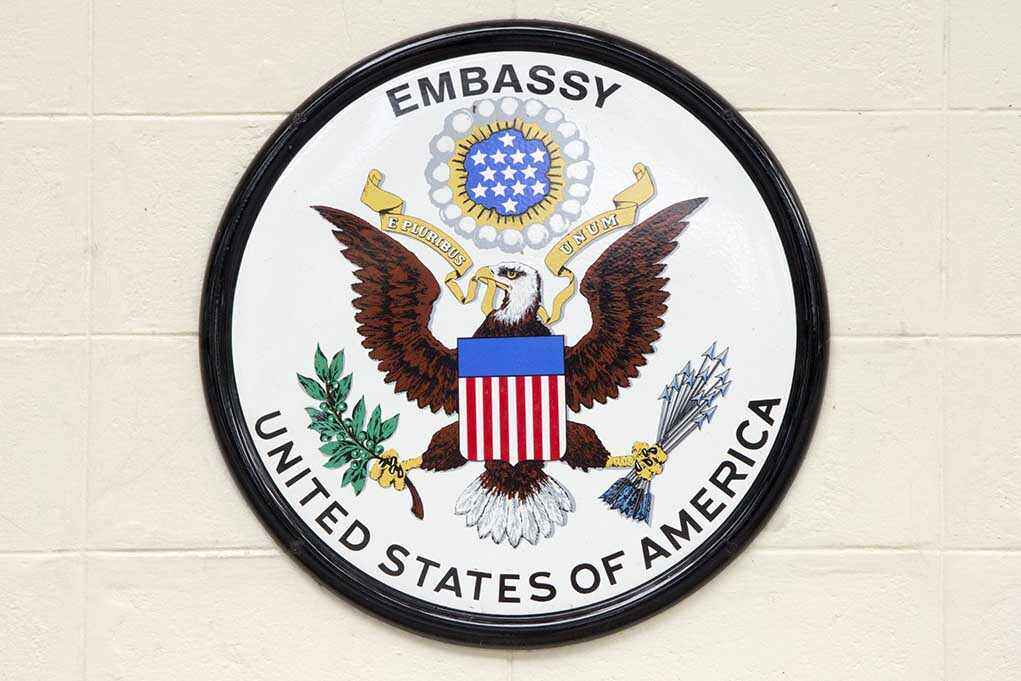
When the State Department quietly tells Americans at the Jerusalem embassy they can leave “today,” it’s a flashing warning that the Middle East may be closer to a wider war than Washington wants to say out loud.
Story Snapshot
- The U.S. authorized non-emergency embassy personnel and family members to depart Israel on Feb. 27, citing unspecified “safety risks.”
- Ambassador Mike Huckabee urged staff by email to leave immediately if they wanted to go.
- The move follows a separate drawdown at the U.S. Embassy in Beirut earlier in the week amid regional threats.
- The advisory lands as Geneva nuclear talks continue, even while the U.S. builds military pressure and reviews strike options on Iran.
State Department Signals Elevated Risk in Jerusalem
U.S. officials on Feb. 27 authorized the voluntary departure of non-emergency U.S. government personnel and family members from Mission Israel in Jerusalem, citing “safety risks.” The public guidance also urged people to consider leaving while commercial flights remain available, a practical detail that matters when security conditions deteriorate quickly. The advisory warned that U.S. personnel could face added restrictions on travel, including to sensitive areas such as Jerusalem’s Old City and parts of the West Bank.
US allows non-emergency embassy staff to leave Israel, cites safety risks https://t.co/FOdwlnUBqM pic.twitter.com/JnRy5BCC3h
— Hürriyet Daily News (@HDNER) February 27, 2026
Ambassador Mike Huckabee reinforced the urgency in an internal message reported by multiple outlets, telling employees to depart “today” if they wished. The order does not appear to be a mandatory evacuation, but it is not routine either. When diplomats are told to leave while airlines still operate normally, it typically reflects concern about rapid escalation—whether from missile threats, terror activity, or sudden closure of airspace that would trap families in place.
Military Posture Rises While Nuclear Talks Continue
The timing is the story. The authorization came as the Trump administration weighed military options and continued diplomacy over Iran’s nuclear program. Reports describe President Trump receiving briefings on potential strike paths, even as U.S. and Iranian representatives stayed engaged in talks in Geneva, with additional technical discussions planned for Vienna. Iranian officials described the negotiations as constructive, but U.S. reporting suggested optimism remained limited given the long-running gaps over verification and enforcement.
Regional history explains why “talks” don’t calm nerves on the ground. The research points back to the June 2025 “12-day war,” when U.S. and Israeli strikes hit Iranian nuclear sites and Iran answered with missile barrages against Israel and U.S. interests. That precedent matters because it established a pattern: a limited attack can quickly trigger retaliation across borders, even if both sides insist they want to avoid a broader conflict. The State Department’s latest guidance fits that reality.
Why Allies and Airlines Are Also Moving
Diplomatic warnings rarely happen in isolation. Other governments have issued their own alerts and relocation instructions across the region, and at least one major airline move underscored the security concerns. KLM announced flight cancellations to Tel Aviv beginning March 1, a step airlines usually take when insurers, intelligence assessments, or operational risks shift. These non-government actions can be useful for ordinary Americans to watch because carriers often respond quickly to changing threat conditions.
What This Means for Americans—and for Constitutional Priorities at Home
For U.S. citizens in Israel or nearby, the most concrete takeaway is logistical: travel options can narrow fast when security alerts pile up, and official advisories explicitly recommend leaving while flights are still available. For Americans watching from home, the political takeaway is that the administration is attempting a balancing act—projecting strength through deterrence while still leaving space for diplomacy. The research does not confirm a strike is imminent, but it shows multiple indicators that planners are preparing for rapid escalation.
Conservatives who remember years of foreign-policy drift and “leading from behind” will see why clarity matters now. The State Department did not publicly name Iran in the advisory’s “safety risks,” even though much reporting links the danger to U.S.-Iran tensions and retaliation threats. That gap—serious action paired with careful wording—can fuel distrust among voters who want straight answers. The best-supported facts here are operational: personnel were authorized to depart, flights were highlighted, and risk conditions were treated as credible.
Sources:
https://www.axios.com/2026/02/27/trump-iran-war-decision-israel-embassy-evacuation
https://www.middleeasteye.net/news/us-allows-non-essential-staff-evacuate-jerusalem-embassy
https://www.jpost.com/israel-news/defense-news/article-888204
https://il.usembassy.gov/travel-advisory-february-27-2026/