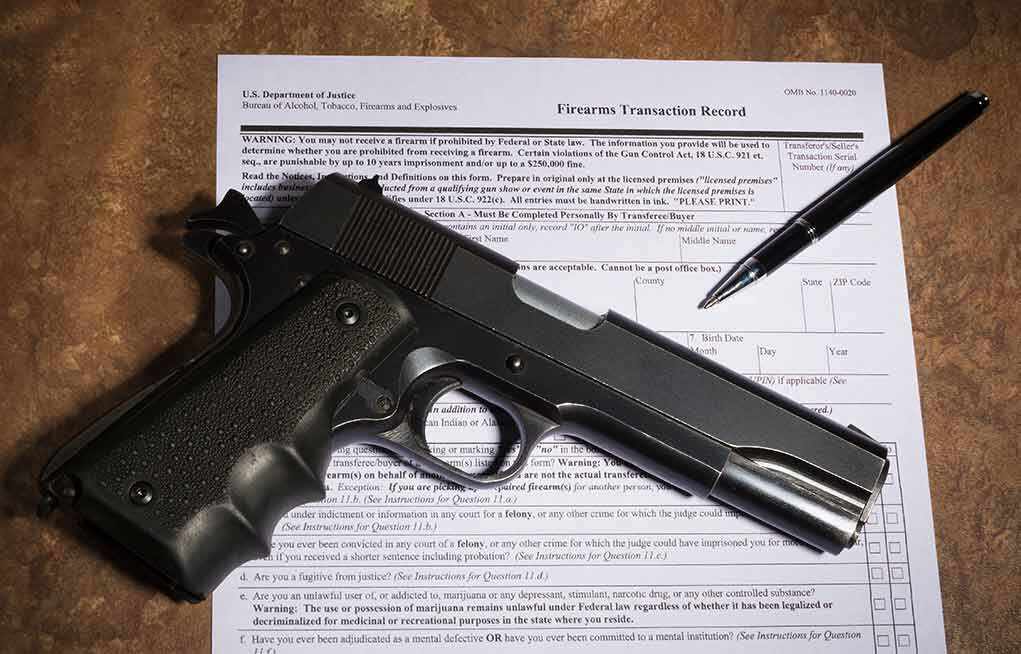
A 92-year-old gun law just hit a wall, and the Justice Department’s silence speaks volumes.
Story Snapshot
- A federal court struck down core National Firearms Act rules for untaxed firearms as unconstitutional under Congress’s powers.
- The judge entered final judgment and a permanent injunction, then paused it for only seven days to allow an appeal.
- Republican lawmakers urged the Department of Justice to accept the ruling and apply it broadly through rulemaking.
- By the effective date, reports said the Department of Justice had not appealed, allowing the injunction to take hold for the plaintiffs.
What The Court Actually Did And Why It Matters
A federal district court in Texas ruled that key parts of the National Firearms Act cannot be enforced against untaxed firearms and entered a final judgment with a permanent injunction for the plaintiffs and their members. The judge said Congress’s Article I powers do not support these approval and registration rules once the related taxes drop to zero. The order targeted sections 5812, 5822, 5841, and 5861, and related rules, as applied to untaxed items.
The court framed the law as a tax scheme with paperwork designed to collect revenue. When Congress set the relevant tax to zero for certain items, the paperwork lost its tax purpose. That is the court’s pressure point, not a sweeping Second Amendment ruling. The judge did not erase the law nationwide. The injunction binds the government only as to the plaintiffs and, where noted, their customers and members. That narrow scope tempers bold headlines.
The Seven-Day Clock And The Government’s Next Move
The judge stayed the final judgment for seven days to let the Department of Justice seek help from the appeals court. That short fuse signaled the district court saw its work as done and pushed any further fight upstairs. As the stay expired, national outlets reported the Department of Justice had not yet filed a stay or appeal, and that the injunction took effect as to the covered parties. Reporters stressed that appeal time remained, but the window had opened for real-world change.
Capitol Hill Republicans seized that opening. Representative Andrew Clyde and nearly 50 colleagues sent a letter urging Attorney General Todd Blanche to drop any appeal and adopt the district court’s rule nationwide through formal action. They framed the step as both legally sound and administratively clean. That letter also served a political purpose: it boxed the Department of Justice in the court of public opinion while the litigation clock ticked.
What This Means For Gun Owners, Dealers, And States
The immediate winner is narrow but important: the plaintiffs and their networks can proceed without the enjoined approvals and registration for untaxed firearms covered by the order. Everyone else still lives under the National Firearms Act unless and until they gain coverage or a higher court affirms and broadens the rule. Dealers and buyers outside the circle should not treat this as blanket amnesty. Proceeding as if the law vanished would be a costly mistake.
GOA Members to Make History with First Suppressor Transfers Without NFA Registration Since 1934
Leander, TX — Gun Owners of America (GOA), along with lead plaintiff Silencer Shop, made history tonight as GOA members Brandon Herrera and Wes Virdell lawfully acquired suppressors… pic.twitter.com/lP2YxgPB2w
— Firearms Guide (@FirearmsGuide) August 14, 2026
States with strict gun codes will push back. Expect officials to claim that any federal loosening raises public safety risks and to enforce state rules as hard backstops. Advocacy groups argue silencers and short-barreled guns are uniquely dangerous and should stay tightly controlled. Those claims do not change the Texas court’s order, but they preview a long policy fight that will now run in courts, agencies, and legislatures, not just on cable news.
The Conservative Lens: Power, Process, And Prudence
The court’s reasoning fits a core conservative view: Congress must use only powers the Constitution grants, and agencies cannot bootstrap paperwork when the tax that justified it is gone. That is common sense. If a tax is zero, a tax office cannot demand a permission slip to collect it. Supporters should still keep expectations in check. One district court, one set of plaintiffs, and one week of Department of Justice quiet do not equal a national repeal.
The smarter read treats this as a hinge moment. The Department of Justice can hard-appeal and ask for a stay, accept the ruling and cabin it to the plaintiffs, or write rules that apply it more broadly. House and Senate Republicans already urged the last approach. If the Department of Justice takes that path, it would mark a rare federal retreat from a Prohibition-era gun framework without Congress passing a new law. Watch the docket, not the hashtags.
What To Watch Next
First, check whether the Department of Justice files a notice of appeal or a stay motion in the Fifth Circuit. That single filing will tell you if this is a pause or a pivot. Second, look for guidance from the Bureau of Alcohol, Tobacco, Firearms and Explosives to dealers and buyers tied to the plaintiffs. Implementation memos reveal more than press chatter. Third, track copycat suits in other districts. If other judges adopt the tax-power logic, the map changes fast.
Fourth, expect renewed scholarship wars on the tax-versus-police-power history of the National Firearms Act. Even advocates who dislike the outcome will need to answer the zero-tax problem on the merits. Finally, prepare for Congress to test fixes, either by restoring a nonzero tax or by drafting a different statutory hook. That debate will force a blunt choice: regulate through clear constitutional power, or step back and trust law-abiding citizens.
Sources:
zerohedge.com, derya.us, bt-usa.com
© targetliberty.org 2026. All rights reserved.