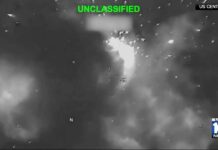

Defense Secretary Pete Hegseth stood before reporters insisting a ceasefire holds firm even as U.S. destroyers obliterated Iranian military boats in the Strait of Hormuz, raising the question whether words or weapons define wartime reality.
Story Snapshot
- U.S. Navy destroyers destroyed 6-7 Iranian military boats while escorting commercial vessels through the Strait of Hormuz on May 4, 2026
- Iran simultaneously launched missiles and drones at both U.S. naval assets and UAE oil facilities, marking the first major attack on a Gulf ally since April’s ceasefire
- Defense Secretary Hegseth declared “the ceasefire is not over” despite active combat operations that included destroying Iranian vessels
- Project Freedom initiative seeks to reopen the strategic waterway that handles 20% of global oil supply, with 1,600 commercial ships previously stranded
- Iranian Foreign Minister Abbas Araghchi maintains diplomatic talks are “making progress” while warning against military escalation
When Ceasefires Include Combat Operations
The Pentagon briefing on May 5 presented a peculiar diplomatic calculation. Hegseth and Joint Chiefs Chairman Gen. Dan Caine addressed reporters about military exchanges that would typically signal war resumption. Iranian forces fired missiles, launched attack drones, and deployed small boats against U.S. Navy destroyers transiting the Strait of Hormuz. American forces responded with decisive force, eliminating multiple Iranian military vessels. Yet Hegseth maintained the ceasefire negotiated in April remains intact. This semantic gymnastics suggests both nations prefer maintaining diplomatic fiction over acknowledging reality.
The contradiction reflects calculated positioning by both sides. President Trump warned Iran on May 3 that blocking strait access would be “dealt with forcefully,” establishing justification for military action. When Iranian forces attacked the next day, U.S. destroyers defended themselves and two commercial vessels under Project Freedom protection. Admiral Brad Cooper confirmed successful defense of both naval assets and commercial shipping, framing the engagement as protective rather than offensive. This distinction allows both nations to claim adherence to ceasefire terms while actively exchanging fire.
The Strait of Hormuz Chokepoint
Understanding this conflict requires appreciating the Strait of Hormuz’s strategic significance. This narrow waterway channels approximately 20% of global oil supply, making it critical infrastructure for international commerce and energy security. Iran’s geographic position gives it leverage over this chokepoint, a power it has repeatedly threatened to exercise during tensions with the West. Approximately 1,600 commercial vessels found themselves stranded when conflict erupted in late February 2026, creating supply chain disruptions with global economic implications.
Project Freedom represents the Trump administration’s branded initiative to restore commercial shipping access. The program’s first test on May 4 involved escorting two U.S.-flagged commercial vessels through contested waters with naval destroyer protection. Iran’s response demonstrated its unwillingness to cede control without resistance. The sustained barrage of missiles, drones, and small boat attacks tested American resolve and military capability. U.S. forces passed that test by protecting the commercial vessels and destroying Iranian military assets without sustaining reported casualties.
Dual Front Iranian Aggression
Iran’s May 4 operations extended beyond confronting U.S. naval forces. Iranian missiles targeted a UAE oil facility, marking the first major attack on a Gulf ally since the April ceasefire. UAE air defense systems engaged 12 ballistic missiles, 3 cruise missiles, and 4 drones in what represented a significant escalation. Iranian forces also targeted a South Korean commercial vessel, demonstrating willingness to threaten international shipping from multiple nations. This multi-front approach suggests strategic calculation rather than isolated incidents.
The UAE attack carries particular significance for regional security dynamics. America’s Gulf allies depend on U.S. military commitments for protection against Iranian aggression. Each successful Iranian strike without overwhelming American response weakens confidence in those security guarantees. The UAE’s energy infrastructure vulnerability became evident as Iranian missiles reached their targets, though air defense systems prevented catastrophic damage. Regional partners now assess whether American protection justifies alignment with Washington against Tehran’s interests.
'Is the Ceasefire Over?' Hegseth Grilled on US Exchanging Fire With Iran https://t.co/bhzzW3ufzg
— Mediaite (@Mediaite) May 5, 2026
The Negotiation Theater
Iranian Foreign Minister Abbas Araghchi’s public statements reveal Tehran’s diplomatic strategy. He emphasizes that “there’s no military solution” to the conflict while warning against being “dragged back into quagmire by ill-wishers.” These comments accompanied claims that negotiations are “making progress” toward longer-term agreements. Yet these diplomatic assurances occurred simultaneously with Iranian military operations targeting American and allied assets. The contradiction suggests Iran seeks negotiating leverage through military pressure while maintaining diplomatic channels.
Trump’s response follows a familiar pattern from his first administration. He publicly downplayed the exchanges, stating “It’s not heavy firing and we have it under control” while adding his characteristic “One way or the other, we win. I always win.” When pressed by Hugh Hewitt about ceasefire status, Trump notably refused explicit confirmation, allowing ambiguity about the agreement’s actual status. This approach maintains flexibility for escalation while avoiding responsibility for ceasefire collapse. Both nations appear invested in preserving diplomatic fiction that serves their strategic interests.
What Comes Next
Fox News military analyst Gen. Jack Keane assessed the situation bluntly, stating “It’s inevitable that we return to combat operations.” This expert skepticism about ceasefire viability reflects military realities on the ground. Each incident testing ceasefire boundaries increases escalation risk. Accidents or miscalculations during these exchanges could trigger full conflict resumption regardless of diplomatic intentions. The pattern of attack and response creates dangerous momentum toward renewed warfare despite both sides’ stated preferences for negotiated settlement.
The ceasefire’s sustainability depends on whether these military exchanges represent acceptable parameters or violations requiring response. Current positioning suggests both nations accept limited engagements while maintaining ceasefire framework. This arrangement allows face-saving for both sides while advancing strategic objectives. American forces demonstrate capability to protect commercial shipping and regional allies. Iranian forces demonstrate willingness to contest American military presence and threaten regional stability. Whether this balance holds or collapses into renewed warfare remains the critical question as diplomatic negotiations continue alongside military operations.