
The real shock in this story is not an “illegal alien mother” suing, but how much power federal agents now claim over your front door.
Story Snapshot
- Immigration officers are using internal memos to justify entering homes without judge-signed warrants.
- Civil rights groups and ordinary families are hitting back with lawsuits over raids, injuries, and fear.
- Courts have already caught immigration officers breaking consent decrees that limit warrantless arrests.
- How this “anxious, hair loss” lawsuit plays out will signal how far government power can reach into any home.
How a mocked lawsuit points to a much bigger fight
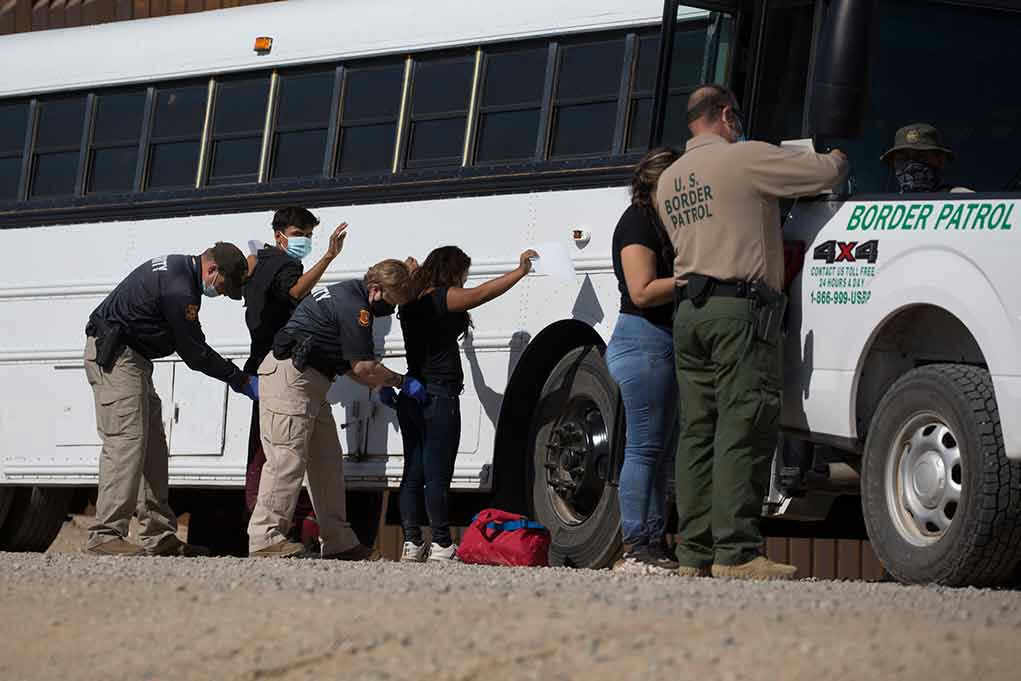
Conservative media framed this as an “illegal alien mother” suing the government because masked agents scared her so badly she now has anxiety and hair loss. That headline is built to make you roll your eyes and swipe past. But pull back from the snark, and it lands in the middle of a serious, ongoing legal war over how far Immigration and Customs Enforcement can go when it shows up on a doorstep. Multiple class actions already challenge suspicionless stops, racial profiling, and warrantless arrests of people who have done nothing more than look like they might be foreign-born, including citizens.[1][2]
That is why this one mother’s claim matters, even if we do not yet see her actual court filing. Her story plugs into a wider pattern that is well documented: immigrants and citizens suing over surprise raids, violent tackles, and officers who never show a judge-signed warrant. One federal judge has already ruled that immigration agents violated a consent decree when they arrested at least twenty-two people without warrants, then extended that decree and ordered officers retrained.[23] Strip away the labels, and the core dispute is simple: does the government answer to the Constitution at the front door, or do we?
The quiet memo that tried to move the Fourth Amendment line
For decades, the common understanding was basic: to come into your home to arrest you, the government needs a warrant signed by a judge, based on probable cause, or your clear consent. An internal Department of Homeland Security memo, first reported by the Associated Press, tried to move that line by telling immigration officers they could rely on an administrative “warrant of removal” instead of a judicial warrant to enter homes.[10] That document is signed by the executive branch itself, not a neutral judge. From a conservative, rule-of-law lens, that is a serious shift: the same agency that wants to enter your house now claims its own paperwork is enough.
Legal analysts from right and left have shredded that logic. The Brennan Center explained that a federal court in California already concluded these administrative warrants do not authorize home entry and that the memo “is inconsistent with basic Fourth Amendment principles.”[15] The American Immigration Council calls it a “secret policy” to allow forced entry without a judicial warrant.[16] When an agency decides it can write its own warrant and break your threshold, that is not toughness. That is the kind of unchecked power conservatives normally reject on sight.
Patterns of raids, ruses, and people fighting back
Advocacy groups have not sat still. The American Civil Liberties Union sued the federal government in Minnesota over suspicionless stops and warrantless arrests of Somali and Latino residents, arguing that immigration officers racially profiled and seized people without valid cause.[1] In Colorado, immigrant rights groups filed a similar case challenging unlawful arrests and racial targeting.[2] Other lawsuits attack a “home entry policy” that lets officers show up with no judge’s warrant at all.[17] These are not just policy debates. They are families telling judges that masked or unmarked agents banged on their doors, pushed inside, and took people away while children watched.
The tactics are not a mystery. The American Civil Liberties Union has documented immigration officers impersonating local police, using fake stories, and hiding badges to get into homes they could not lawfully enter otherwise.[19] The Immigrant Defense Project describes agents wearing vests labeled “POLICE,” claiming to investigate fake crime suspects, and using those ruses to coax open doors or gather information they otherwise would not have.[21] Whatever you think of immigration levels, tricking your way past a family’s front door by posing as local cops should make any citizen uneasy. A government that lies to “them” today can lie to “you” tomorrow.
Courts, consent decrees, and the hard limits on enforcement power
Federal judges have started to push back when immigration agents ignore legal limits. In the Castañon Nava case, a judge found that officers violated a consent decree by arresting people without warrants and ordered immigration authorities to lift release conditions for twenty-two unlawfully detained individuals.[23] The court extended that decree to early 2026 and required the agency to reissue clear rules on probable cause, retrain violators, and provide ongoing reports of warrantless arrests.[20][23] That is not open-borders activism. That is a judge enforcing the basic idea that, in America, government agents have rules and cannot improvise their own authority.
On the flip side, Washington has defended broad enforcement tools. The Justice Department under Trump sued Philadelphia and New Jersey over laws that limited cooperation with immigration officers or tried to restrict mask use for police and immigration agents.[7][8] Federal courts have blocked some state efforts to ban masked officers, which means immigration agents can still cover their faces and obscure their identities. From an accountability standpoint, that is a problem. A masked agent who can force your door without a judge’s warrant is the exact combination the Fourth Amendment was written to prevent.
So what about the “anxiety and hair loss” claim?
Here is where the media framing does the most damage. There is, so far, no public court docket tying a specific immigrant mother and her hair loss to a named lawsuit. The medical link between a raid and physical symptoms like hair loss also needs real evidence: doctors, records, and expert testimony. Without that, conservative readers are right to hold some skepticism. At the same time, mockery of her alleged suffering dodges the central question she raises. If masked agents entered or stormed a home without a proper warrant, that is not a punchline. That is a civil rights problem that should concern citizens first and partisans second.
Sources:
[1] Web – Illegal Alien Mother Sues Government Over Anxiety, Hair Loss After …
[2] Web – ACLU Sues Federal Government to End ICE, CBP’s Practice of …
[7] Web – ICE Facing Billions in Claims After Violent Arrests – Jeelani Law Firm
[8] Web – The Justice Department filed a lawsuit Thursday challenging …
[10] YouTube – The legal battle over ICE agents wearing masks
[15] YouTube – Internal memo says ICE agents can enter homes without a warrant
[16] Web – DHS Warrantless Home Entry Memo’s Fourth Amendment Problem
[17] Web – ICE’s Secret Policy to Forcibly Enter Homes Without a Judicial …
[19] YouTube – Internal government memo says ICE officers don’t need a warrant to …
[20] Web – This Deceptive ICE Tactic Violates the Fourth Amendment – ACLU
[21] Web – Court scrutiny of ICE mounts as judge rules warrantless arrests …
[23] YouTube – ICE memo gives agents broad authority to arrest those they believe …
© targetliberty.org 2026. All rights reserved.