
targetliberty.org — A 21-year-old who thought he was Jesus opened fire outside the White House gates, and what happened next exposes both the strength and the blind spots of modern presidential security.
Story Snapshot
- Gunman approached a White House checkpoint, pulled a pistol from a bag, and opened fire before agents shot him.
- The president stayed safe inside, but a bystander was wounded amid a barrage of 20 to 30 rounds.
- The suspect had prior run-ins with the Secret Service and apparent mental-health issues.
- Competing media narratives now battle to define whether this was “contained” or a near-disaster.
The Shootout That Turned A Tourist Zone Into A Battlefield
Saturday early evening on 17th Street and Pennsylvania Avenue, the usual backdrop is tourists angling for selfies and reporters doing live shots. Instead, a young man walked toward the White House security checkpoint, reached into a bag, and drew a handgun. Secret Service officers say he fired three rounds toward the checkpoint. Agents answered with an estimated 20 to 30 shots, sending journalists and bystanders scrambling for cover as the North Lawn went from postcard to crime scene in seconds.[2]
The suspect, identified as 21-year-old Maryland resident Nasire Best, went down under that return fire and was transported toward a hospital, where he was pronounced dead.[1][2] Another person was struck by gunfire during the chaos; investigators have not yet confirmed whether that civilian was hit by the gunman or caught in crossfire.[2] No Secret Service officer was injured, and while bullet counts differ slightly across outlets, all agree the exchange was intense, fast, and loud enough to shake seasoned White House correspondents.[2][7]
How Close Did He Really Get To The President?
The reassuring headline is simple: the president was inside the White House, unhurt and “not impacted,” and the gunman never breached the grounds.[2][5][7] The shooting took place at or near an outer security checkpoint, not within the building itself. That matters. Protective design assumes the true fight, if it comes, happens at the perimeter, where agents can absorb the shock away from the principal. By that metric, the system worked as advertised: threat appears, perimeter absorbs, president lives his evening mostly unchanged.[2][7]
Yet the details make that comfort more complicated. Reporters on the North Lawn dove for cover and were rushed into the briefing room. The White House went into lockdown, a step not taken lightly, then gradually reopened once officers cleared the area.[2][7] A civilian lay wounded. That is not a “nothing to see here” disturbance. For anyone outside the reinforced walls, the experience was a gunfight in a supposedly locked-down federal core. Calling that simply “contained” risks sounding bureaucratic instead of honest about what it feels like to the public.
A Known Name With Troubling Warning Signs
The timeline of Nasire Best’s prior behavior raises sharper questions than the gun battle itself. Multiple reports say Best already had a history with the Secret Service: months earlier, he allegedly flagged down agents, made threats, and, within weeks, entered a restricted area despite commands to stop.[1] Court-related reporting says that during one of those encounters he told officers he was Jesus Christ and wanted to be arrested, signaling delusional thinking wrapped around fixation on the White House.[1][7]
Fox-linked reporting and other outlets describe a history of mental illness and note that investigators suspect his attack stemmed from that instability.[2][5][7] The public does not yet see medical files or formal psychiatric evaluations, so these claims rest on unnamed sources and court summaries, not clinical charts.[1][2] Still, the pattern—religious grandiosity, repeated attempts to access sensitive areas, escalating behavior—matches how genuinely disturbed individuals often move from yelling at barriers to testing them. Common sense asks why a man who already pierced the perimeter once could return again with a pistol.
When Mental Illness Meets A Gun And A Symbol
Law enforcement now tries to answer three basic questions: why he did it, how he got the gun, and whether anyone else knew what he planned.[2][5] So far there is no public indication of accomplices or a broader network; this looks like the all-too-familiar lone actor whose inner world spiraled around the idea of the presidency and the White House as symbols.[2] Some reports say he believed he was an incarnation of God, which, if accurate, fits a pattern where delusions latch onto the most powerful, visible institutions available.[5]
UPDATE: CIVILIAN EXPECTED TO RECOVER AFTER BEING SHOT DURING SHOOTING NEAR WHITE HOUSE: MPD has released information stating the decedent has been identified as 21 year old Nasire Best, of Dundalk, MD. An adult male civilian that was struck by gunfire is receiving treatment and… pic.twitter.com/SUbxPn3pyi
— NEWS FROM THE CONCRETE (@NFTC_News) May 24, 2026
Media coverage leans heavily on that mental-health framing, and for good reason: it explains why an otherwise obscure 21-year-old would walk into almost certain death. But mental illness can become a lazy catch-all that ends accountability discussions. If officials knew he had already penetrated a restricted zone and claimed he was Jesus, the hard question is not just “Was he sick?” but “What did the system do with that warning?” Conservative instincts emphasize both compassion for the mentally ill and responsibility from institutions paid to connect obvious dots before bullets fly.
Security Worked, But Was It Good Enough?
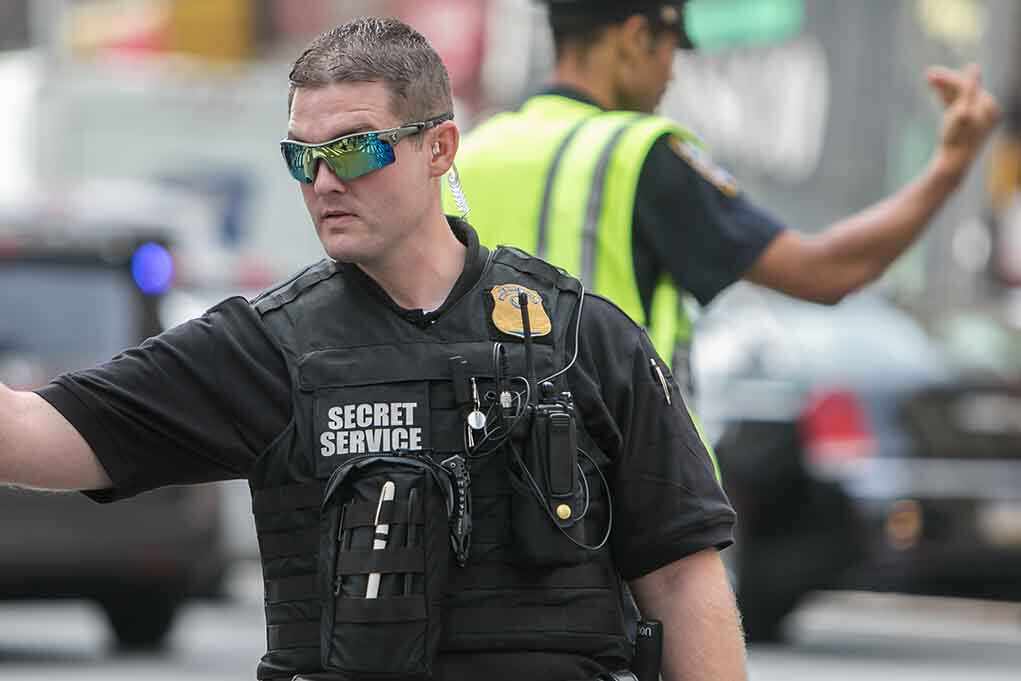
On paper, the Secret Service response followed its textbook: engage, stop the threat, keep the protectee safe, secure the scene. Agents did not hesitate, and that decisiveness almost certainly prevented a worse outcome.[2][7] At the same time, the volume of rounds and the wounded bystander raise tactical questions that only ballistics reports and after-action reviews can answer. Did officers have a clear backdrop for their shots? Could a different angle or formation have reduced the risk to innocents while still neutralizing Best quickly?[2]
The other failure, if there is one, may lie upstream. A man previously detained near the White House, allegedly proclaiming divinity and desiring arrest, should land squarely in a file marked “do not ignore.”[1][7] Americans accept that freedom means we cannot preemptively lock away everyone who sounds odd near a fence. But they also expect that when someone crosses from ranting to restricted-area intrusion, federal protective services, local police, and mental-health authorities coordinate more than a shrug and paperwork. The unanswered story here is not just how Best died, but how many chances there were to change his path while he was still alive.
Sources:
[1] Web – Maryland man, 21, involved in White House shootout …
[2] YouTube – 21-year-old suspect dead after opening fire | FOX 10 Phoenix
[5] YouTube – Another Assassination Attempt on Trump? 21-Year-Old …
[7] YouTube – White House reporter ducks for cover as gunman opens …
© targetliberty.org 2026. All rights reserved.