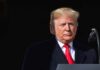

President Trump has declared he will blow up Iran if the country refuses to reopen the Strait of Hormuz, escalating weeks of profanity-laced threats into what may become one of the most volatile foreign policy standoffs in recent memory.
Story Snapshot
- Trump issued a 48-hour ultimatum to Iran demanding the Strait of Hormuz be reopened or face military strikes against energy infrastructure and potentially the entire country
- The deadline has shifted multiple times since March 21st, with the current April 6th cutoff approaching as Trump doubles down on threats in interviews
- One-third of the world’s maritime oil trade passes through the Strait of Hormuz, making this chokepoint critical to global energy security
- Trump’s rhetoric includes warnings that Iran will be “living in hell” and statements that “all hell will rain down” if demands are not met
- The president has sent contradictory signals, alternately claiming the U.S. could “easily open it and take the oil” while also saying “it is up to other countries”
The Strait of Hormuz Crisis Explained
The Strait of Hormuz represents more than a narrow waterway between Iran and Oman. This 21-mile-wide passage carries approximately one-third of the world’s seaborne oil, making it arguably the most strategically important maritime chokepoint on the planet. When Iran closes or restricts access to this strait, it holds a dagger to the throat of the global economy. Trump’s ultimatum centers on forcing Iran to reopen this passage, transforming what could be diplomatic negotiation into a countdown to potential military action.
The stakes extend far beyond U.S.-Iran relations. Every major economy dependent on Middle Eastern oil watches this standoff with anxiety. European nations, Asian manufacturing powerhouses, and developing economies all rely on unimpeded passage through these waters. Trump understands this leverage, which explains his willingness to threaten overwhelming force. The question remains whether Iran will blink before the deadline expires or call what they may perceive as a bluff.
A Timeline of Shifting Deadlines and Escalating Language
Trump first issued his ultimatum on March 21st, giving Iran 48 hours to open the Strait of Hormuz or face bombing of energy infrastructure. Days later, he announced talks were progressing and pushed back the deadline. The goalpost moved again to April 6th. Then on April 4th, Trump reset the clock, declaring 48 hours remained before “all hell will rain down on them.” This pattern of deadline extensions followed by renewed threats creates confusion about American resolve and credibility.
The president’s latest statements have intensified rather than softened. Trump told interviewers that without a deal, “we’re blowing up the whole country.” This represents a dramatic escalation from targeting specific energy facilities to threatening total destruction. The profanity-laced posts and inflammatory rhetoric mark a stark departure from traditional diplomatic language. Critics argue this approach undermines serious negotiation, while supporters contend only maximum pressure will force Iranian compliance.
The Contradictions in Trump’s Strategy
Trump has simultaneously claimed the United States could “easily open it and take the oil for itself” while also stating “it is up to other countries.” These contradictory messages muddle American intentions. Does the U.S. plan unilateral military action or expect a coalition response? Will America seize Iranian oil fields or simply restore freedom of navigation? The ambiguity may be intentional negotiating tactics or evidence of an undefined strategy.
Analyst commentary has criticized Trump’s approach, particularly threats against civilian infrastructure. Rohde, among others, characterizes such threats as ineffective against Iran, a nation that has weathered decades of sanctions and isolation. Iran’s leadership has proven remarkably resistant to external pressure, raising doubts about whether ultimatums will produce the desired capitulation. The regime may calculate that standing firm against American threats strengthens its domestic position, even at the cost of military strikes.
What Happens When the Deadline Arrives
As April 6th approaches, the world faces three potential outcomes. First, Iran could reopen the Strait of Hormuz, giving Trump a victory and avoiding conflict. Second, Trump could extend the deadline again, further eroding the credibility of future ultimatums. Third, the United States could follow through with military strikes, triggering unpredictable consequences across the Middle East and global markets.
The third scenario carries extraordinary risks. Military action against Iran would likely provoke retaliation against American forces, regional allies, and commercial shipping. Oil prices would spike, potentially triggering global economic disruption. Regional powers including Saudi Arabia, Israel, and Gulf states would face pressure to choose sides or become targets themselves. The common sense approach would involve exhausting diplomatic channels before launching strikes that could ignite wider conflict, yet Trump appears committed to his deadline. Whether that commitment holds or shifts again remains the critical unknown as hours tick away.
Sources:
Trump Sends Final Warning To Iran